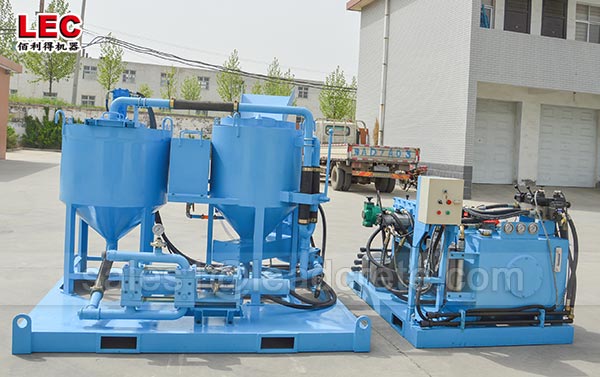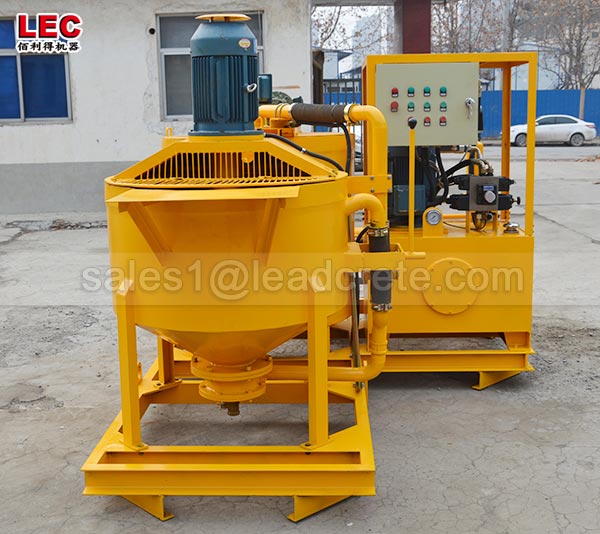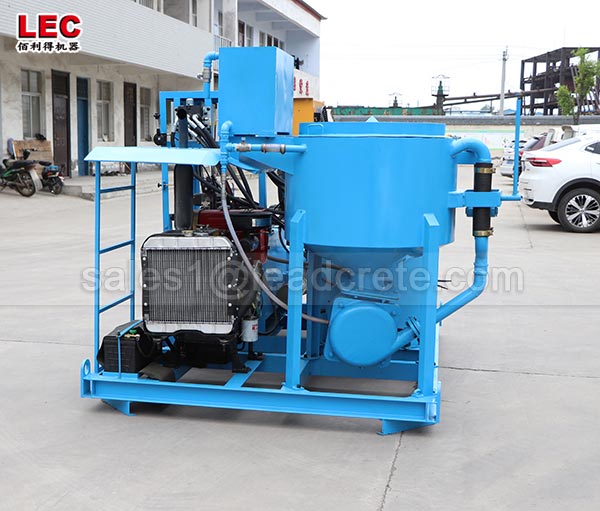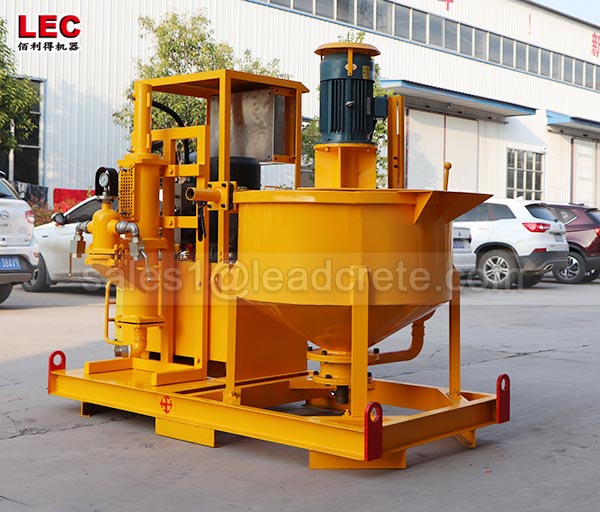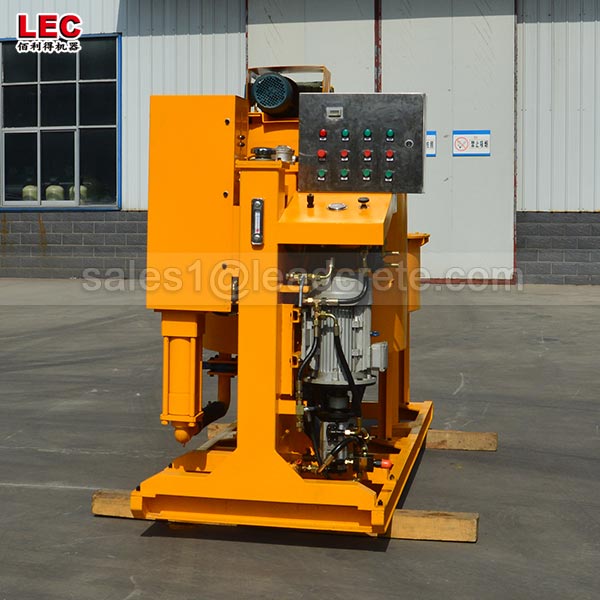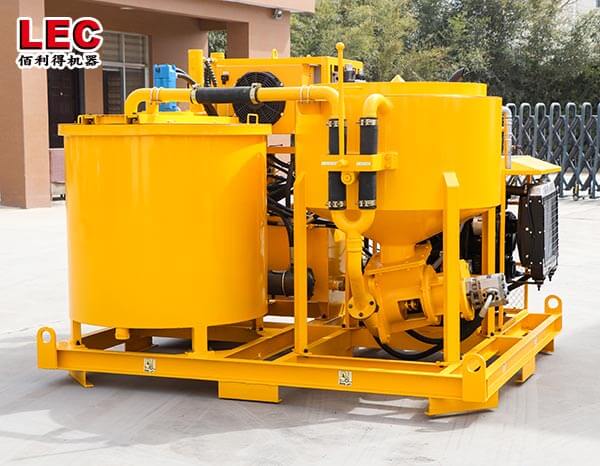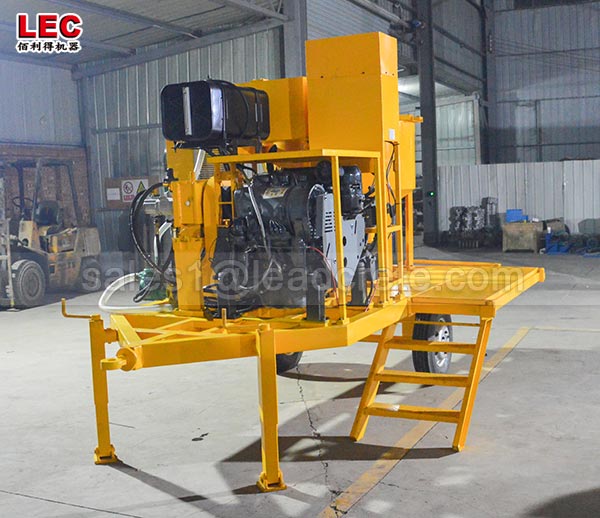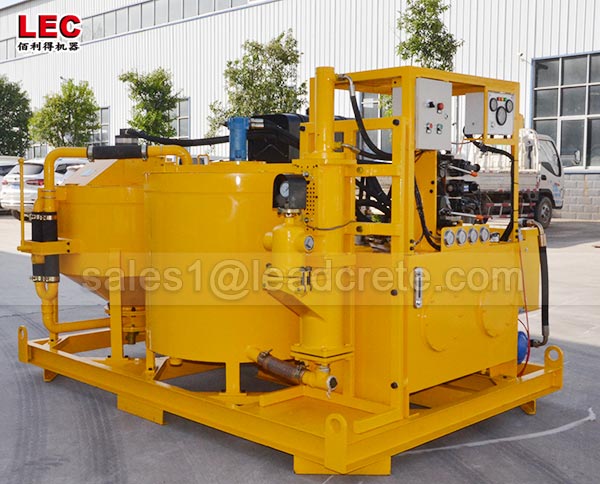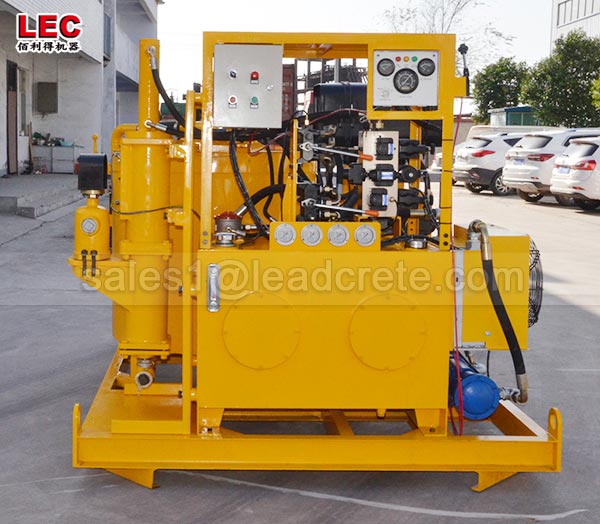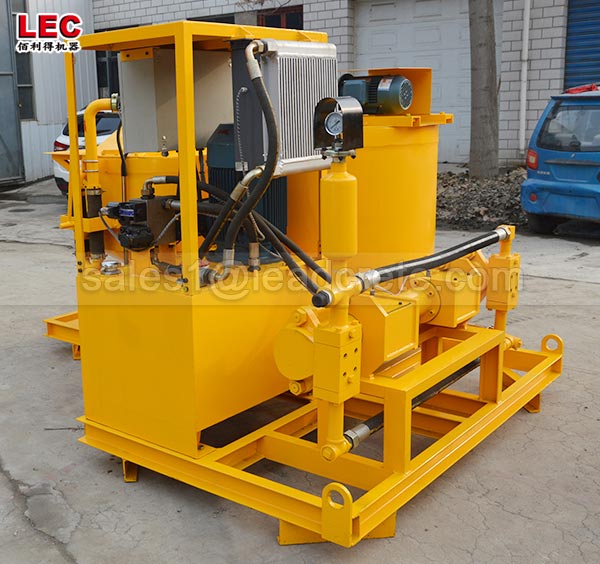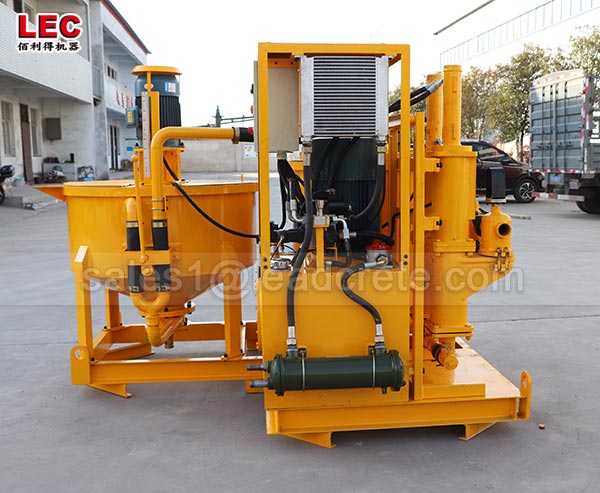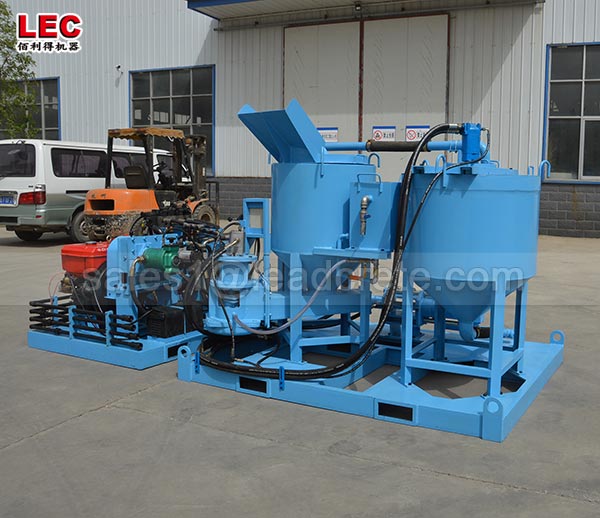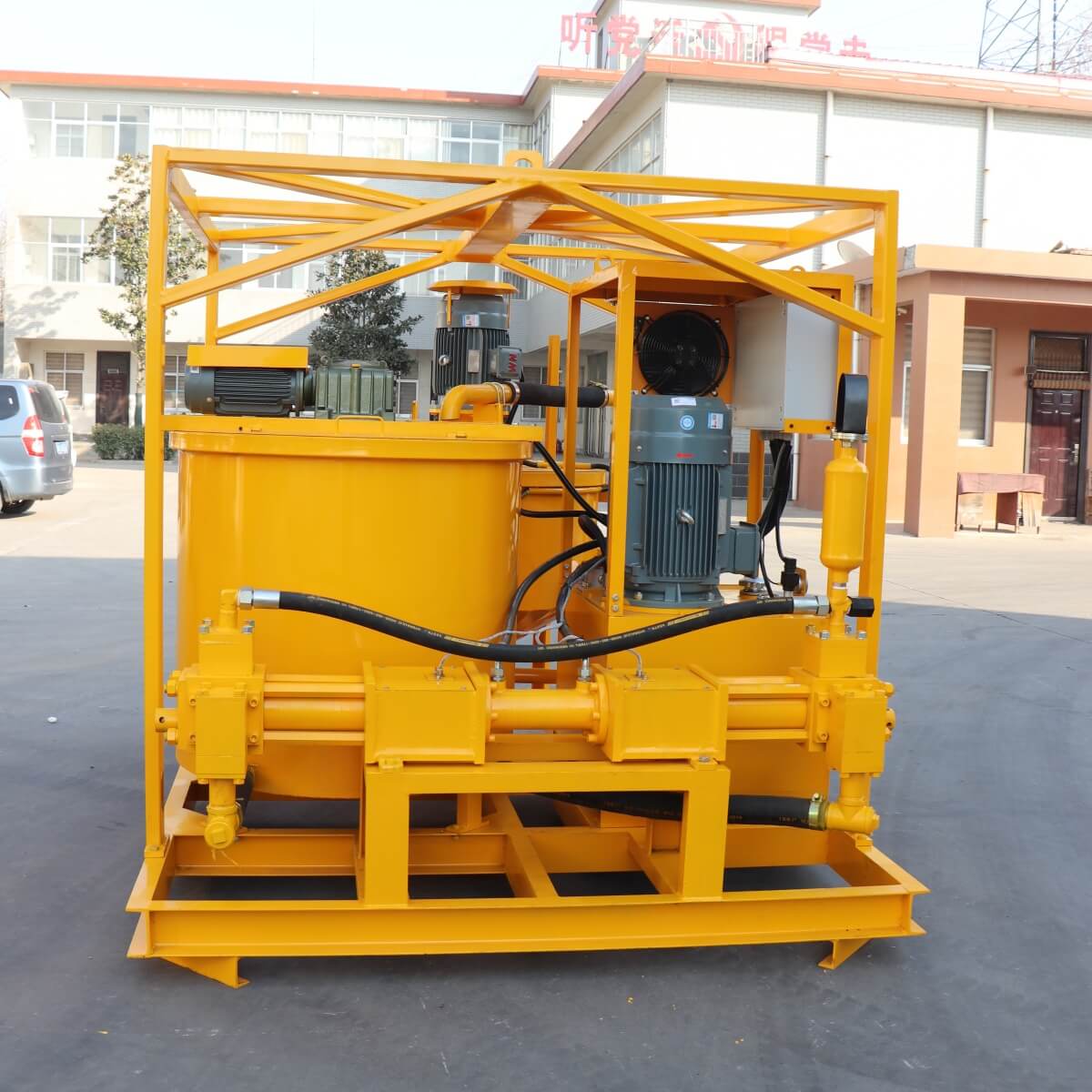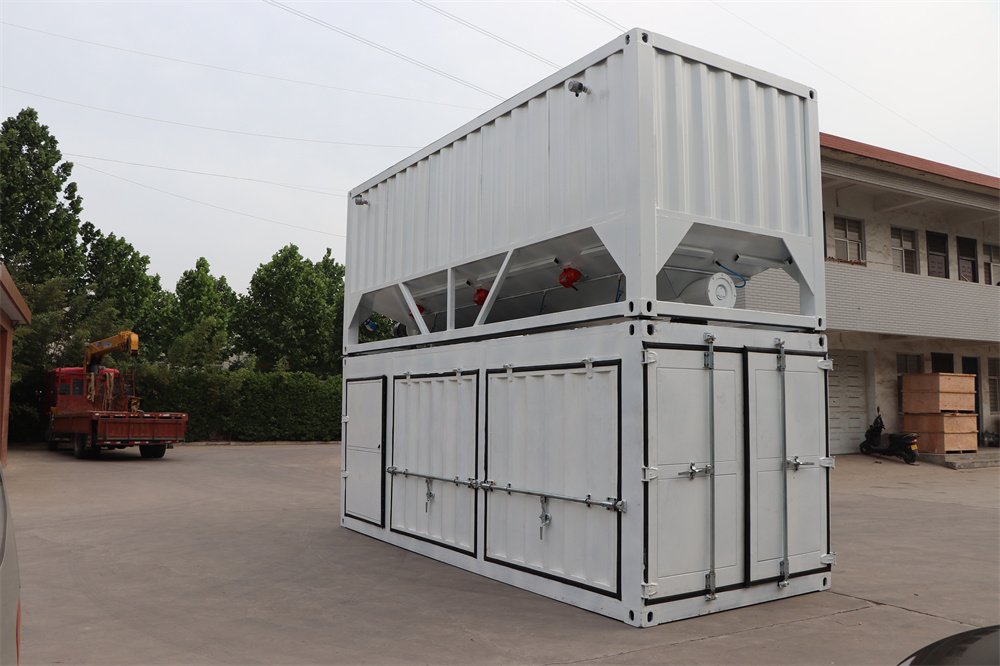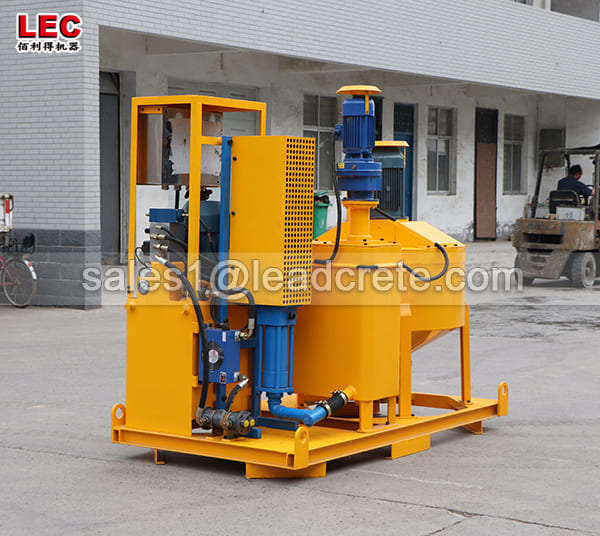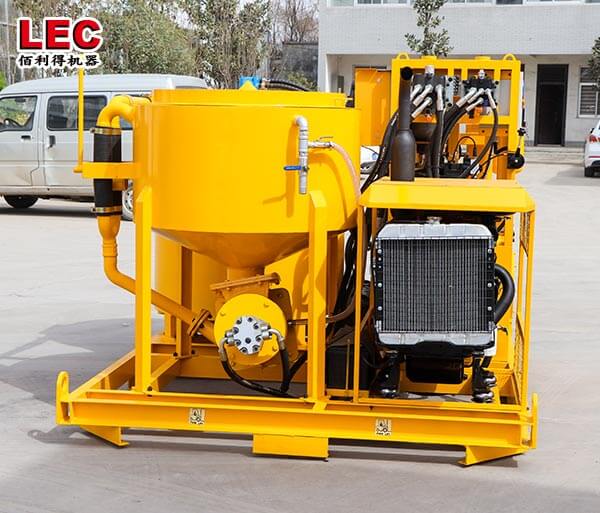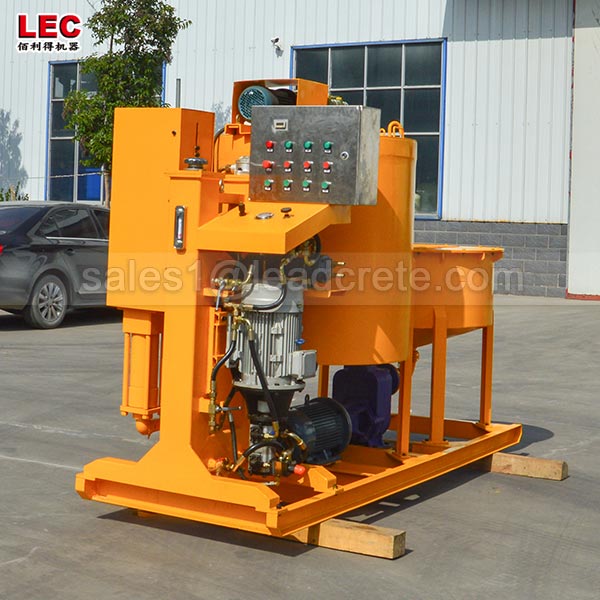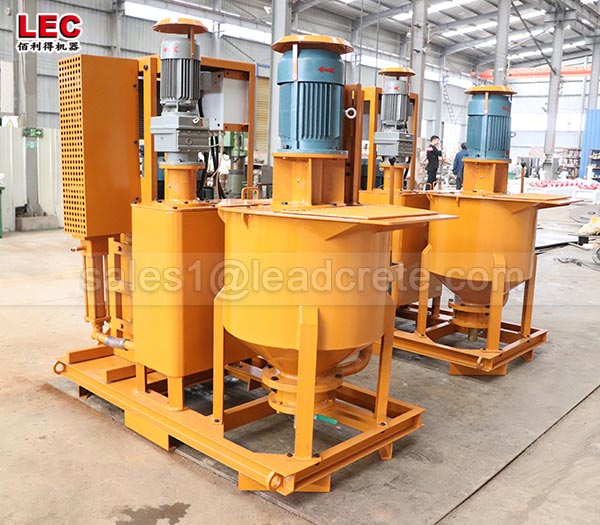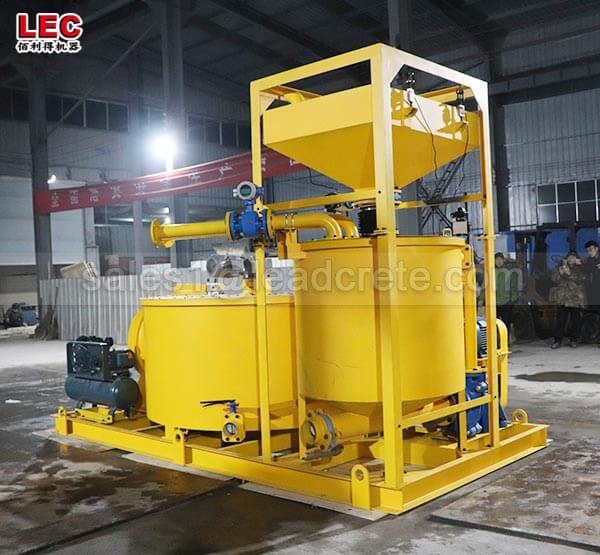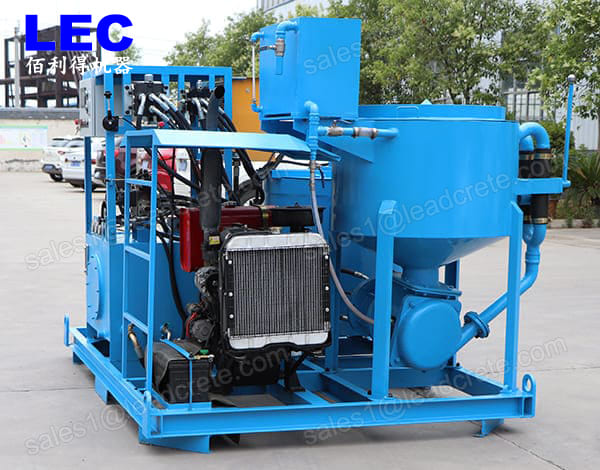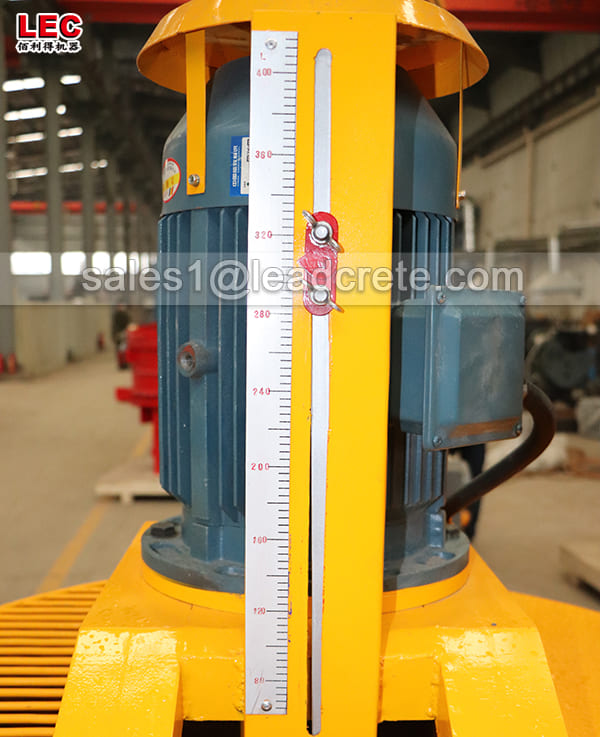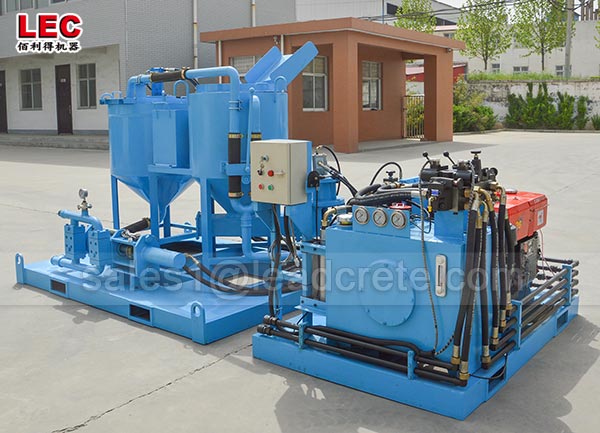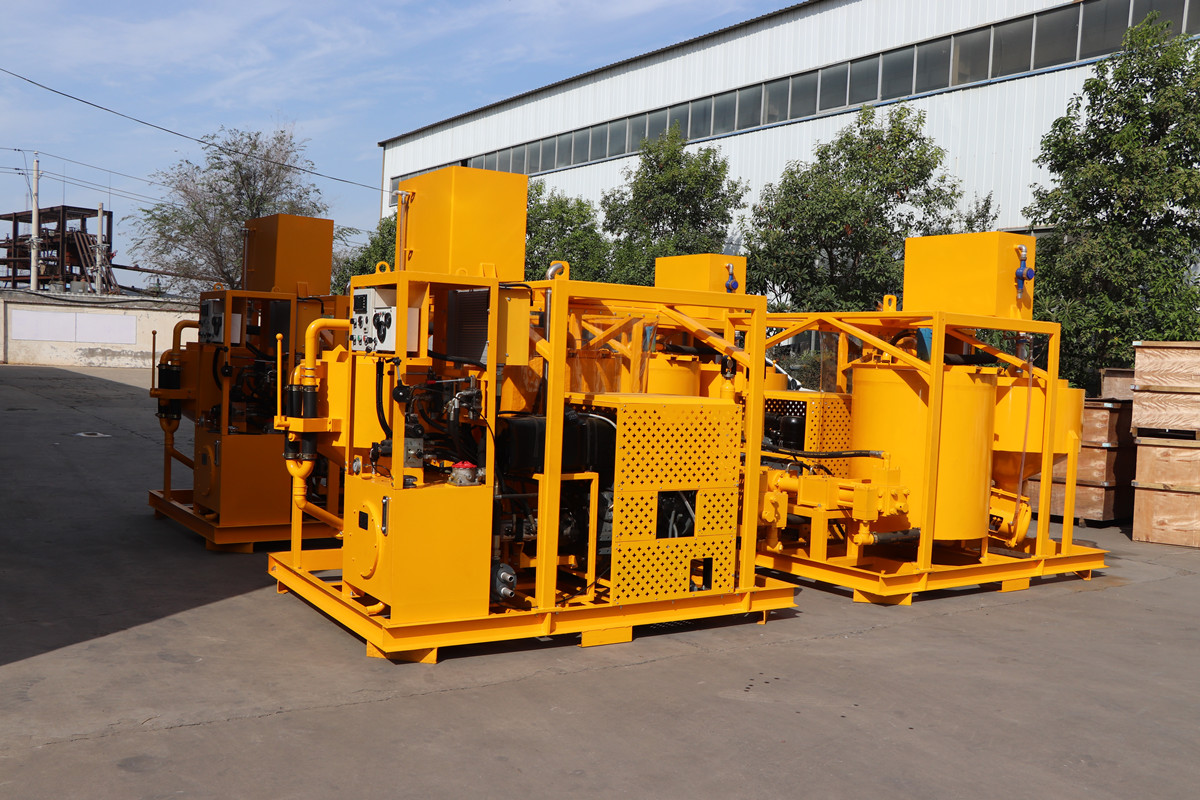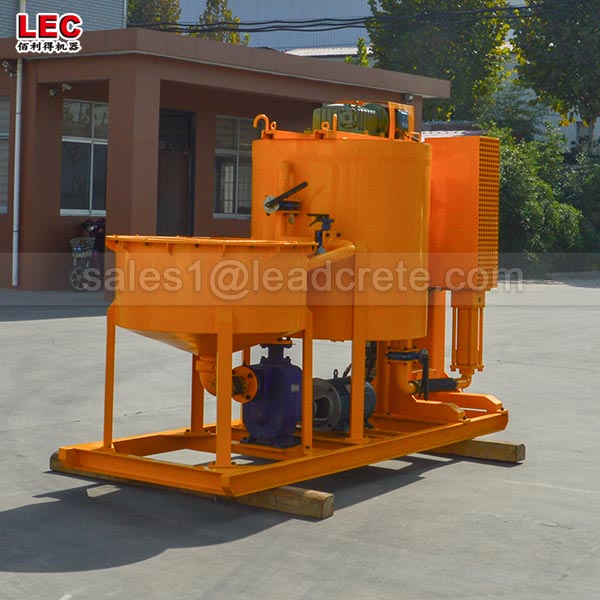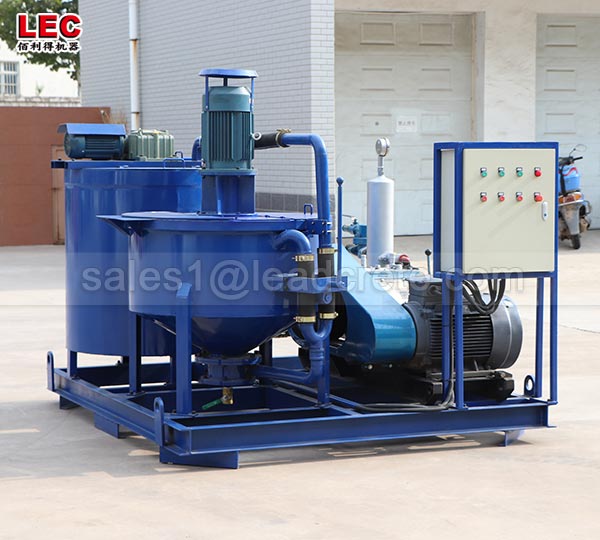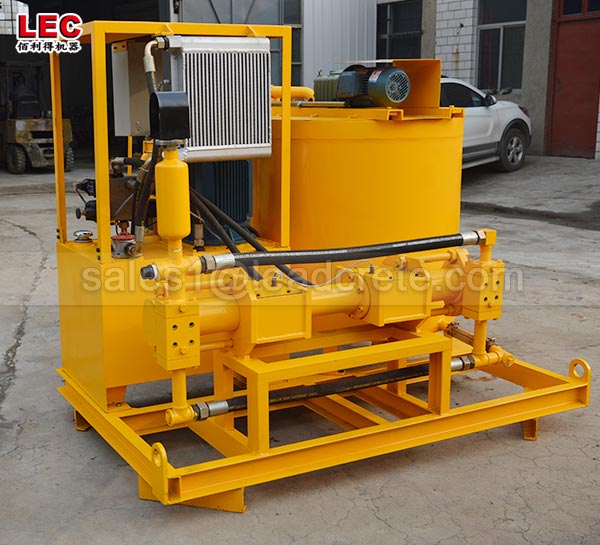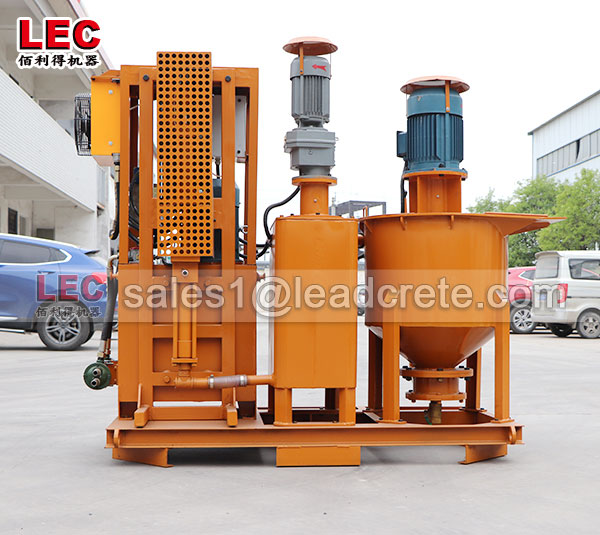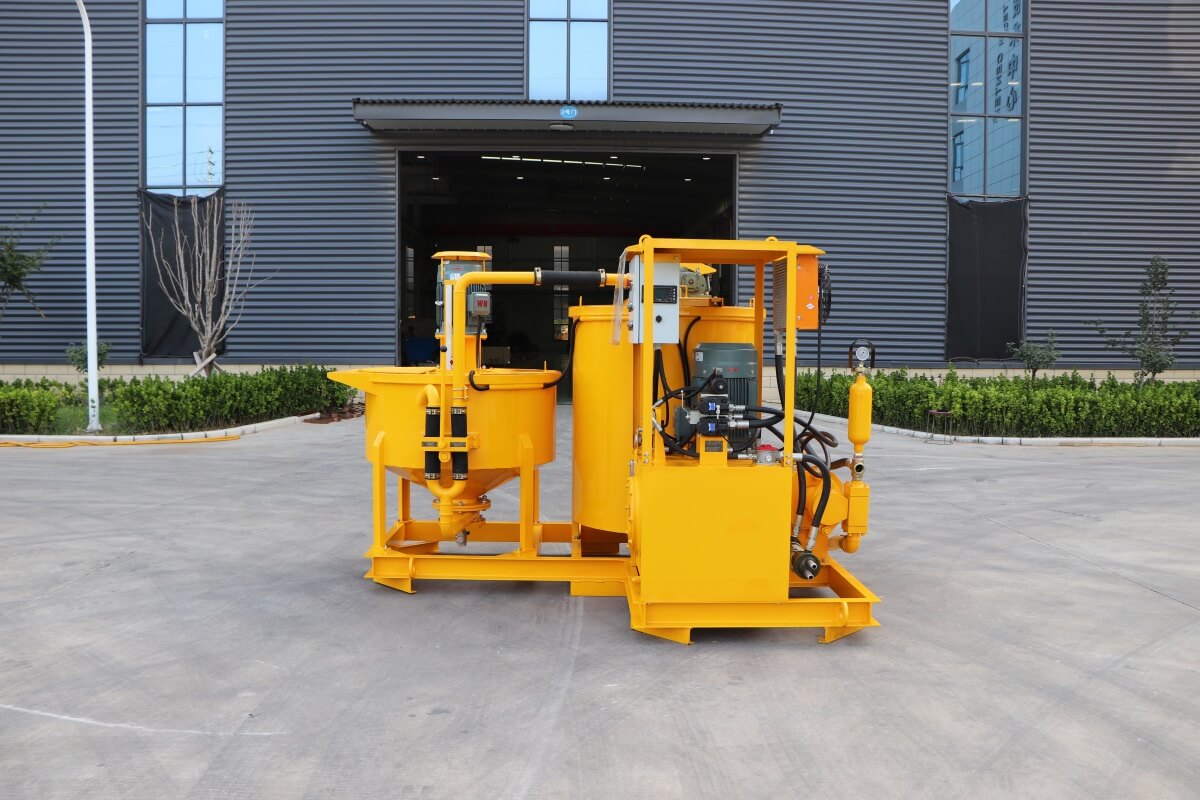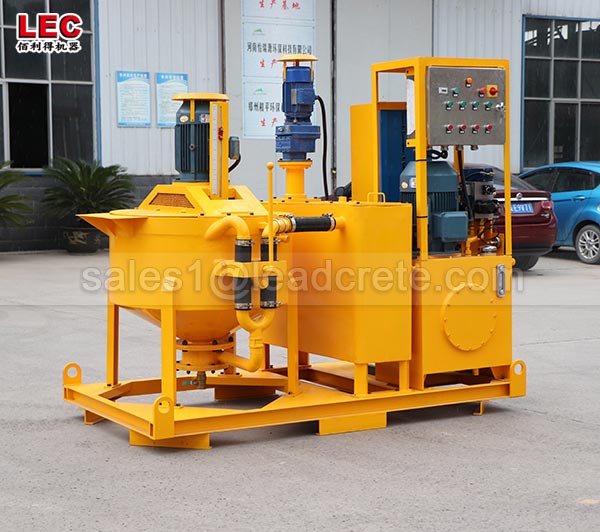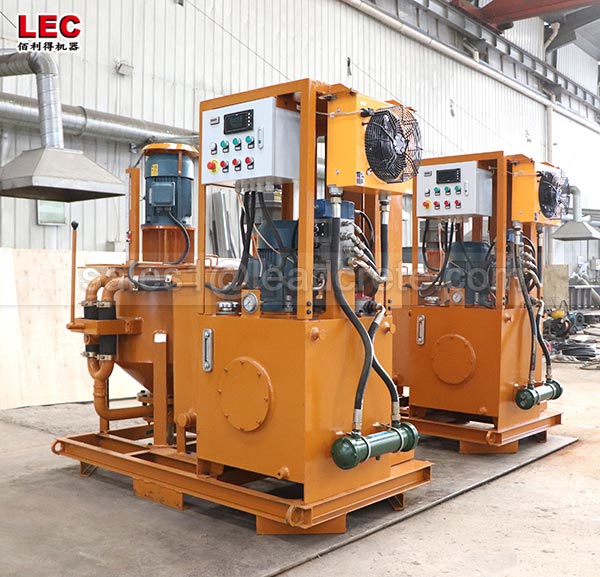
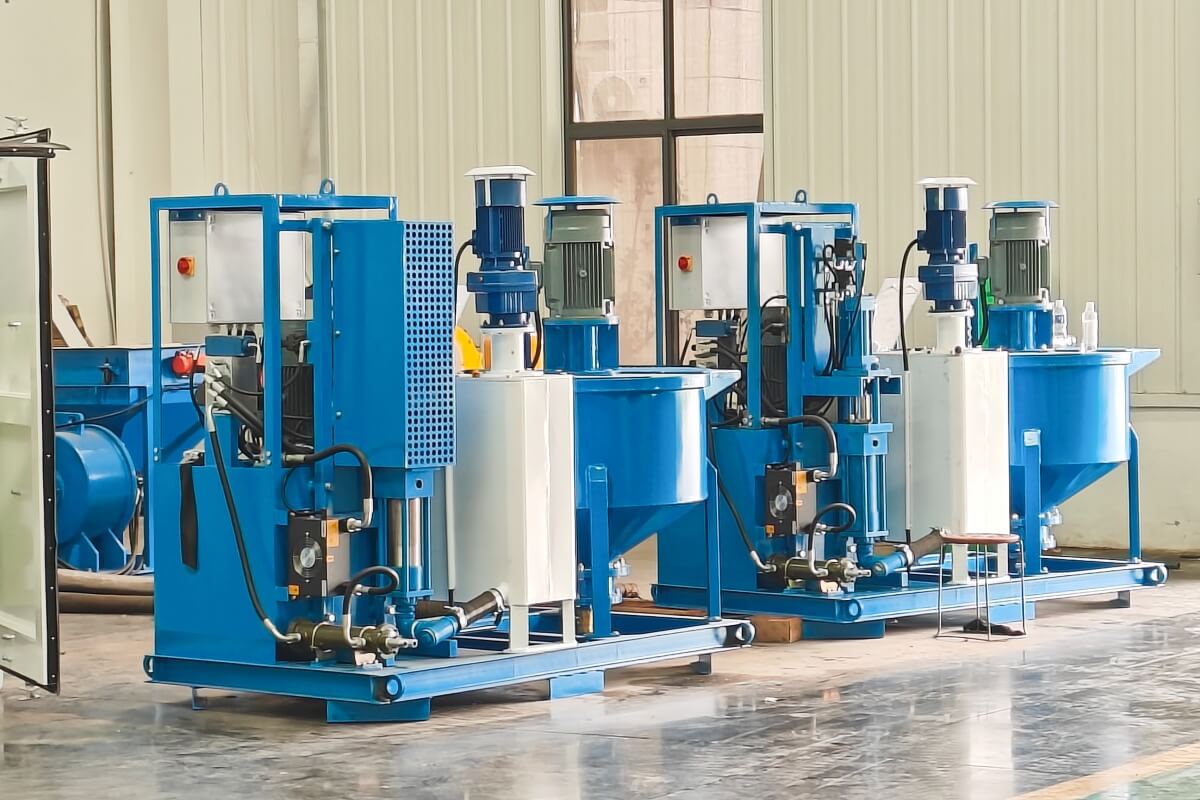
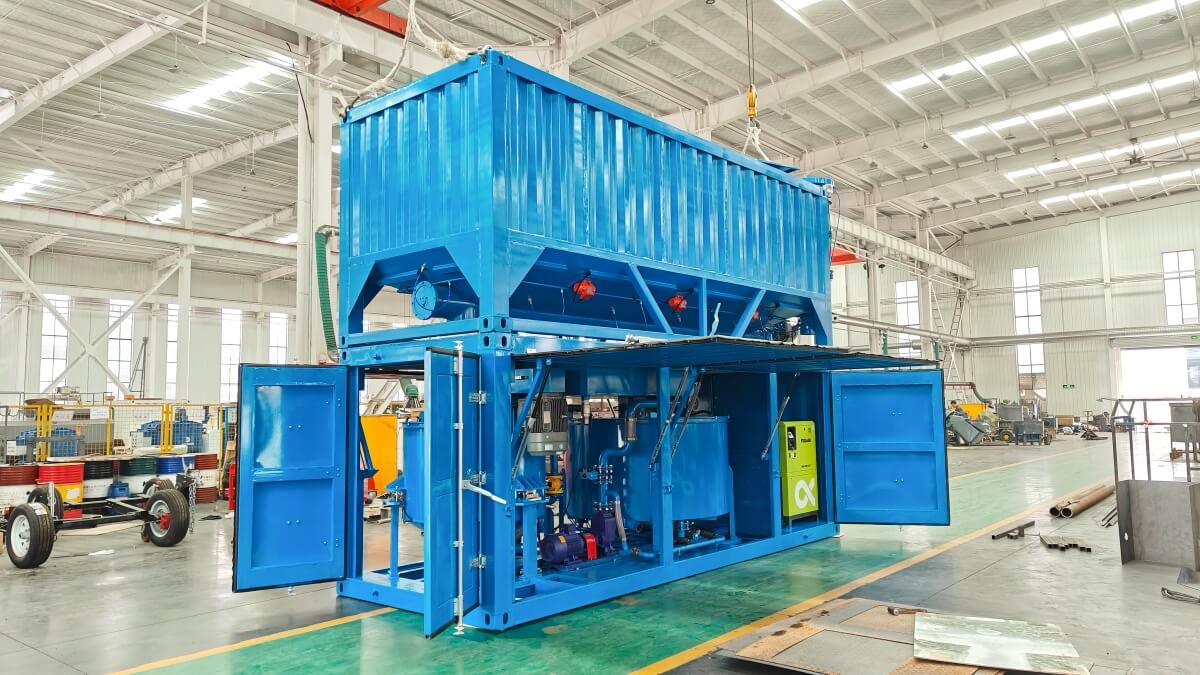
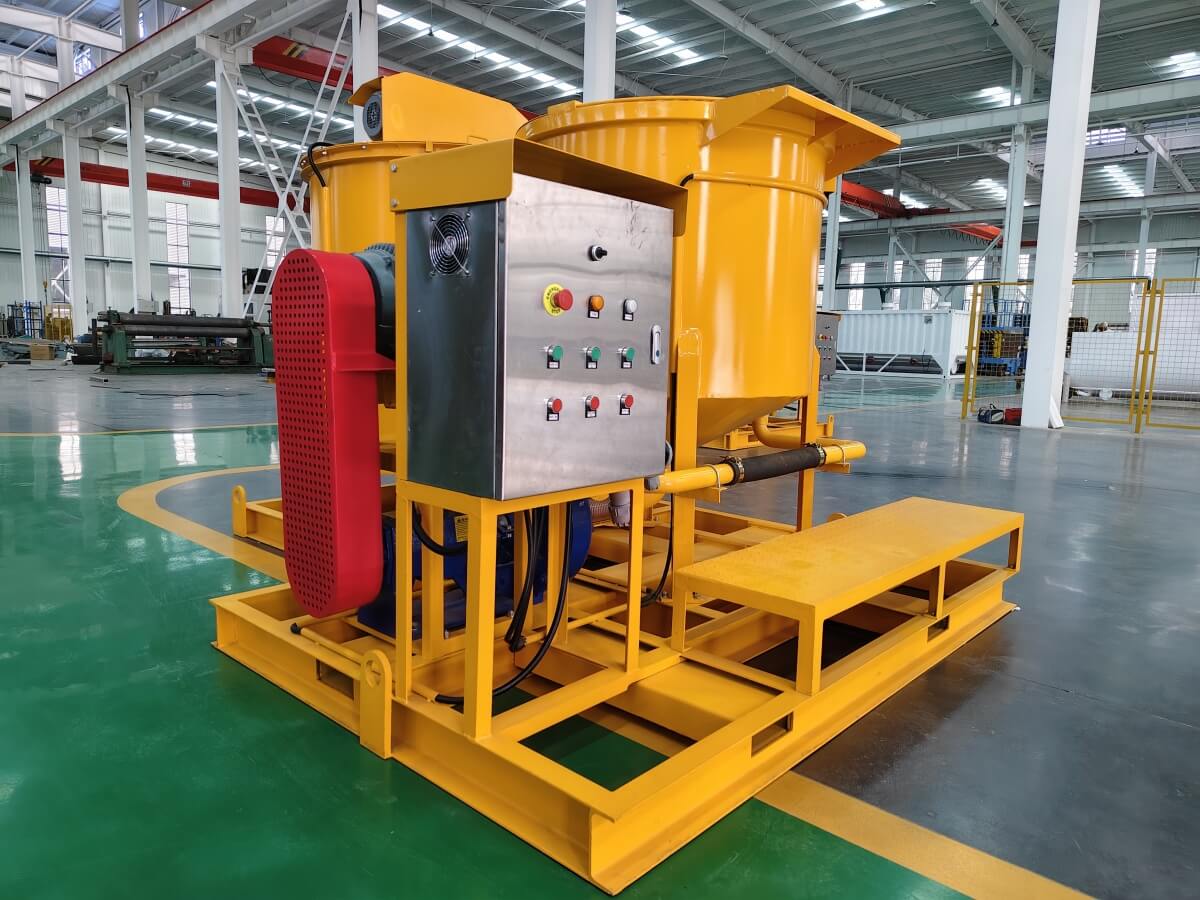
Today, Lead Equipment received an inquiry from a Russian client regarding grouting equipment. The client plans to assemble a high-pressure jet grouting system suitable for JET1/JET2 processes and is considering the LGP400/700/320/100TPI-E Grout feeding station to handle grout preparation and supply for a 90 MPa high-pressure pump.
The focus of this inquiry is to verify whether the mixing station can operate in tandem with the high-pressure plunger pump, meeting inlet requirements while delivering a continuous grout supply flow of at least 120 L/min. The client also requested separate quotations for the mixing station and the optional high-pressure jet grouting pump, along with details on spare parts, technical documentation, and delivery.
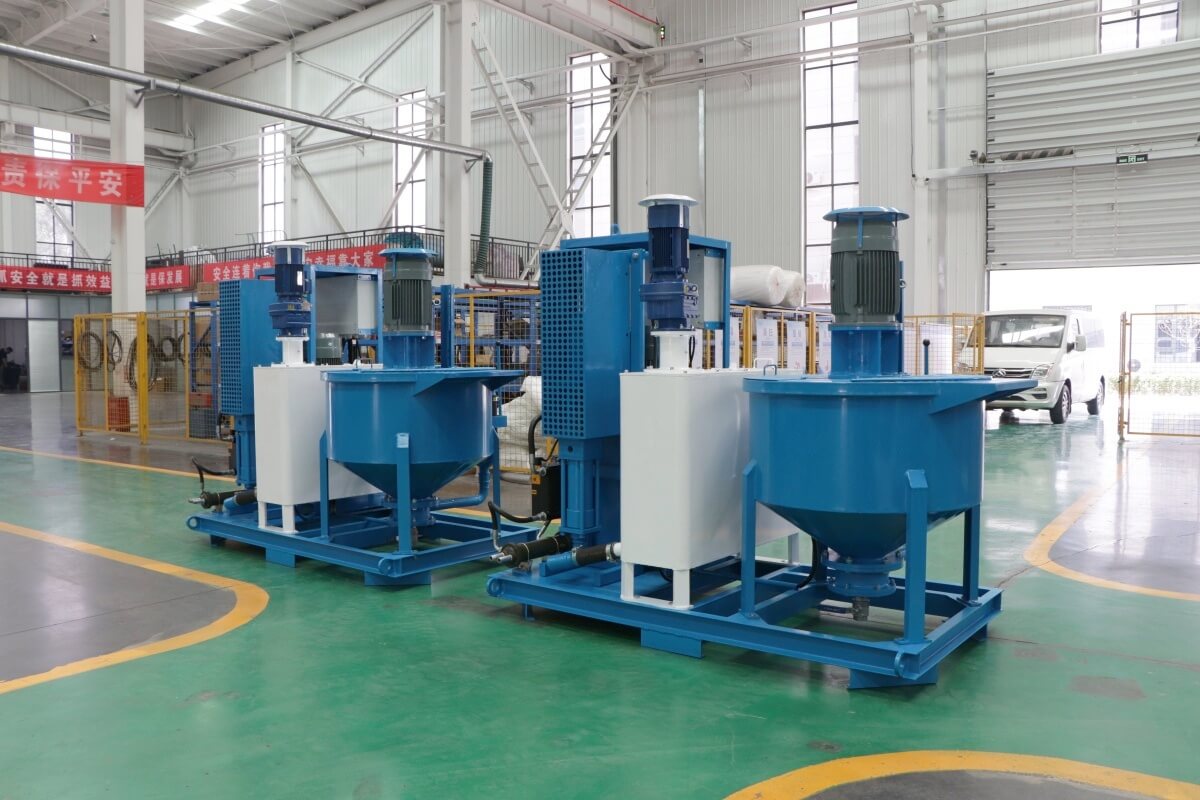
Providing Matching Grout Preparation and Supply for High-Pressure Jet Grouting Systems
In the client’s planned equipment configuration, the mixing station is responsible for grout preparation, storage/agitation, and downstream supply, while the final jetting pressure is generated by a separate 90 MPa high-pressure pump. Therefore, the selection of the grout feeding station hinges on mixing efficiency, continuous supply capacity, and interface compatibility between the two units.
The client indicated that an output pressure range of 2.2–10 MPa for the mixing station is acceptable; however, actual integration requires verifying the high-pressure pump’s permissible inlet pressure, supply method, and piping configuration. The supply-side pressure cannot be determined solely by the mixing station’s maximum capacity; it must also comply with the downstream high-pressure pump’s inlet requirements.
Verifying Continuous Supply Capacity Based on Actual Operating Points
The client’s requirement of 120 L/min equates to a grout output of 7.2 m³ per hour. Consistently meeting this demand requires evaluating the grouting pump’s output, the single-batch mixing cycle, material feeding speed, and the storage buffer capacity.
Regarding the LGP400/700/320/100TPI-E model, selection requires verifying flow rates at various pressure settings; the maximum flow rate and maximum pressure indicated in the model designation should not be assumed to represent a simultaneous operating point. Continuous grout supply must be verified against the specific grout mix design and delivery conditions.
Optimizing the grout mixing and storage workflow allows the next batch to be prepared while the current batch is being fed to the high-pressure pump, thereby minimizing supply interruptions during batch transitions. For jet grouting systems requiring continuous operation, this process coordination is a critical factor in ensuring overall equipment compatibility.
Verifying system interfaces for JET1/JET2 processes
As the client plans to accommodate both JET1 and JET2 construction methods, the compatibility assessment between the mixing station and the high-pressure pump must align with the final construction process. In addition to flow rate, key parameters to verify include the grout mix ratio, permissible particle size, inlet filtration requirements, and control logic—such as start/stop sequences and low-grout protection.
For this type of cement grout mixing and feeding station, features such as liquid level monitoring, supply status indication, and interlock configurations between units should be discussed to ensure operators can monitor the supply status in real-time. Specific functionalities should be clearly defined in the technical proposal to facilitate integration with the client’s existing or planned high-pressure equipment.
Separate quotation for high-pressure pumps; defining testing and scope of supply
In addition to the mixing station, the client has requested a separate quote for the XPB-90 series high-pressure jet grouting pump, along with specifications and documentation/video evidence of testing at 1.25 times the operating pressure.
These requirements must be specifically addressed in the technical evaluation of the high-pressure pump, covering the test subject, testing methodology, applicable conditions, and data recording. Clearly outlining the performance specifications and supply boundaries for both the mixing/feeding equipment and the high-pressure injection equipment will assist the client in comparing proposals and organizing the procurement of the complete system.
The client also inquired about pricing for spare parts, such as 2-inch high-pressure hoses, nozzles, and connectors. Accessory selection requires identifying whether components are installed on the supply side or the high-pressure injection side, followed by matching the appropriate pressure rating, connection type, and operational requirements.
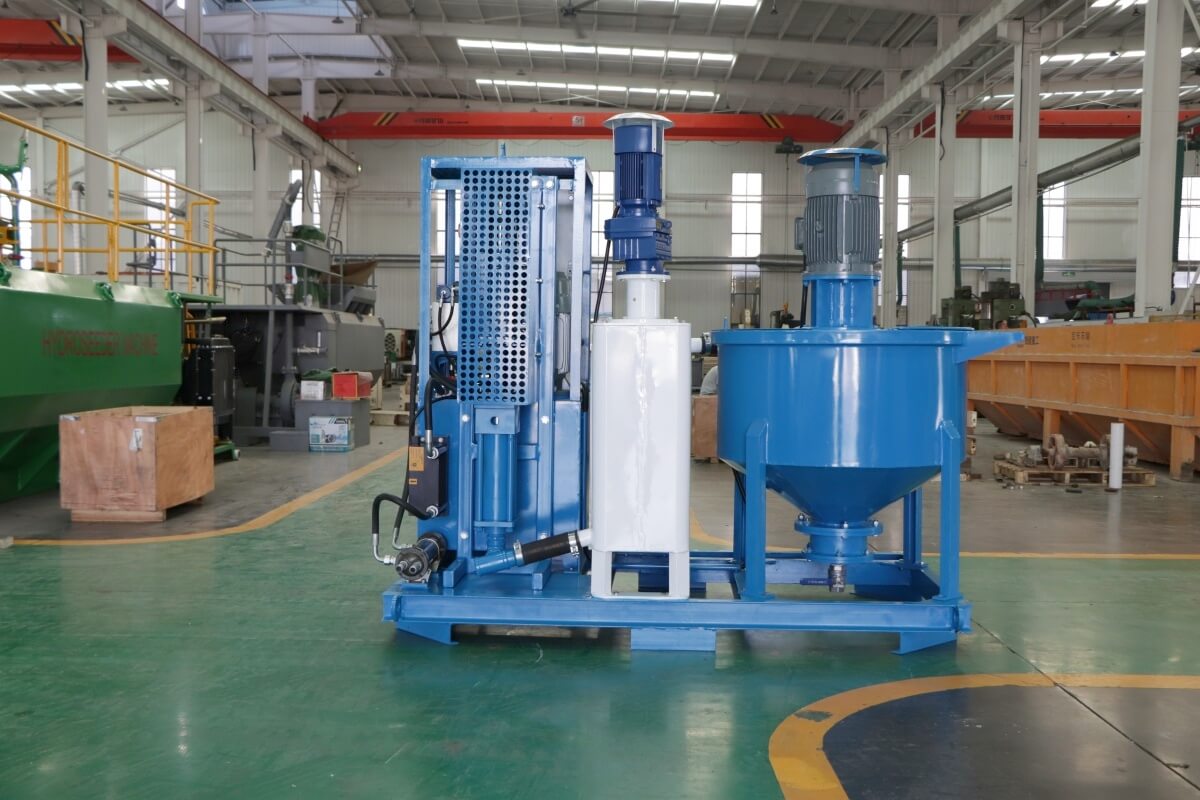
Providing a clear basis for procurement—from equipment configuration to delivery documentation
The Russian client has requested an FOB quotation and is focused on production lead times, warranty terms, CE certification documentation, and the supplier’s export experience regarding Russia and the CIS region. For these items, the quotation should clearly specify the port of shipment, scope of supply, documentation list, and after-sales support details, enabling the client to evaluate both technical suitability and delivery terms.
Lead Equipment can select the appropriate grout mixing station and assess supporting equipment based on the client’s specific grout formula, continuous supply requirements, and downstream high-pressure pump inlet conditions; the quotation will outline the achievable parameters, optional configurations, and any items requiring further confirmation.
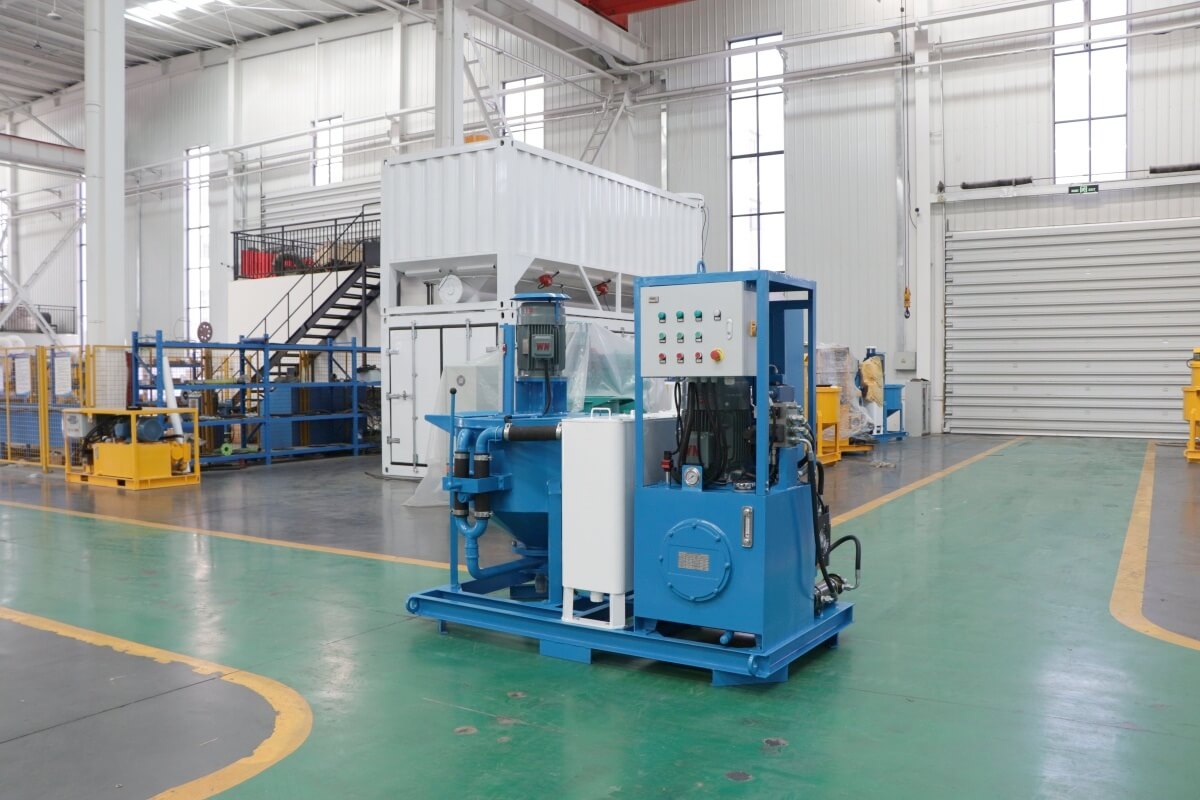
If you are seeking grouting and supply equipment for a high-pressure jet grouting system, please provide Lead Equipment with your target flow rate, grout specifications, and high-pressure pump inlet parameters to receive a technical proposal and quotation. Email address: sales1@leadcrete.com
Applications of the Grout Feeding Station:
Jet Grouting: Prepares cement slurry and feeds a separate high-pressure pump for ground improvement works. Mixing output and feed conditions are matched to the downstream pump’s requirements.
Foundation Grouting: Supplies grout for injection into suitable ground voids and rock fissures as part of foundation treatment and reinforcement projects.
Rock Bolting and Ground Anchoring: Prepares and delivers cement grout for filling the space around bolts and anchors, helping establish load transfer after curing.
Micropiles and Soil Nailing: Provides grout for drilled holes in micropile foundations, excavation support, and slope stabilization systems.
Tunnel Grouting: Supports contact grouting and backfilling behind tunnel linings, with pump configuration selected to suit the grout material and required injection conditions.
Dam and Rock Foundation Treatment: Supplies cement-based slurry for consolidation and curtain grouting designed to strengthen fractured rock or reduce seepage.
Void Filling: Mixes and pumps suitable cement-based grouts into cavities beneath concrete slabs or within rock formations, according to the project’s filling requirements.