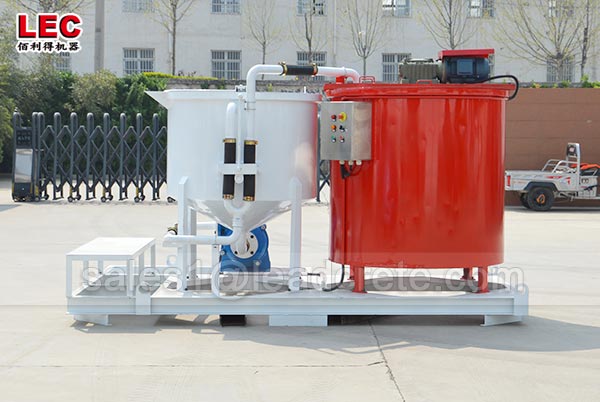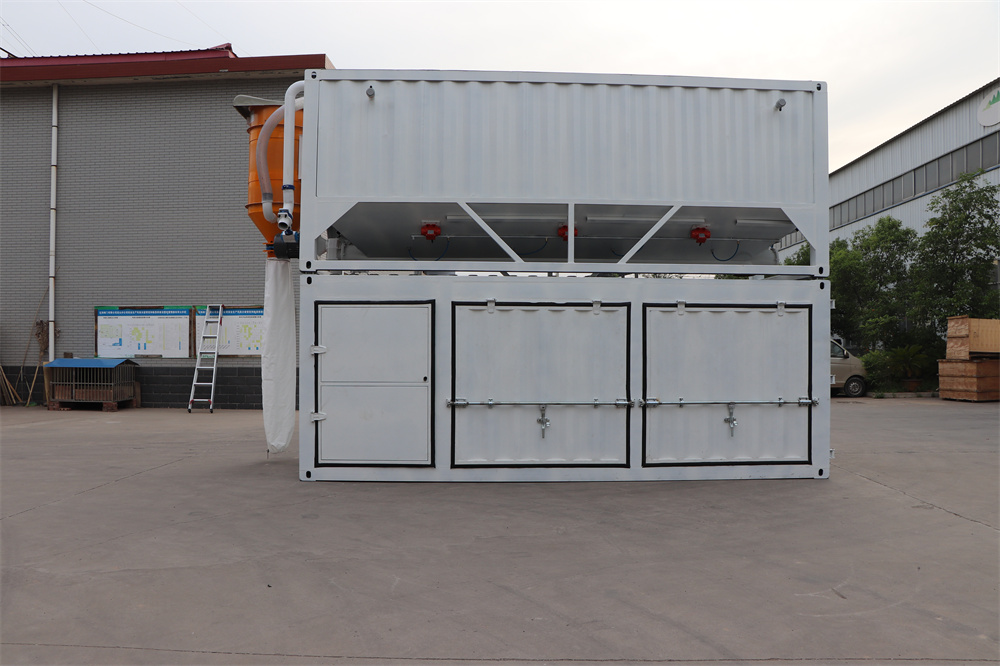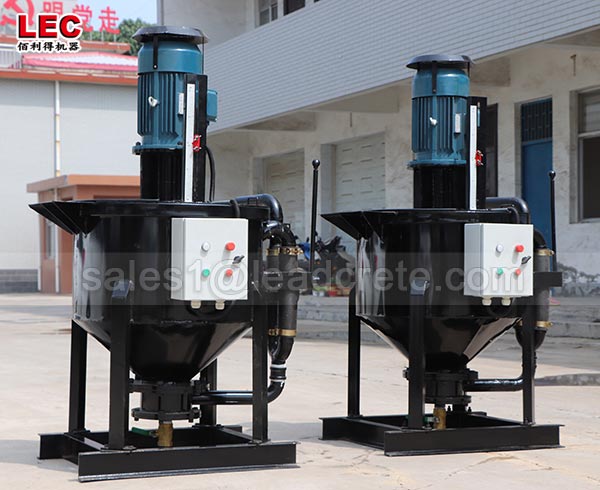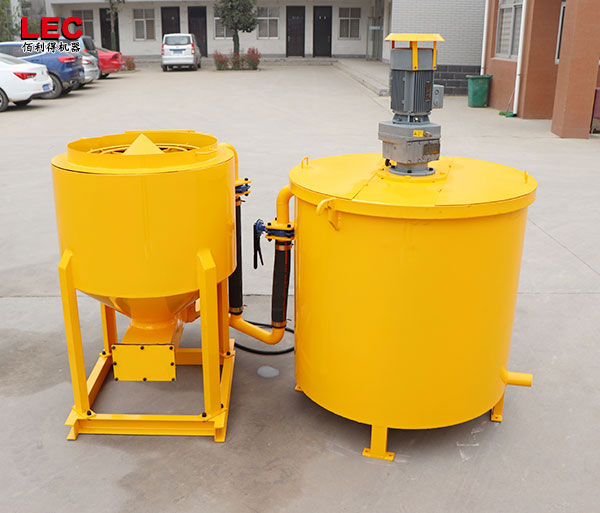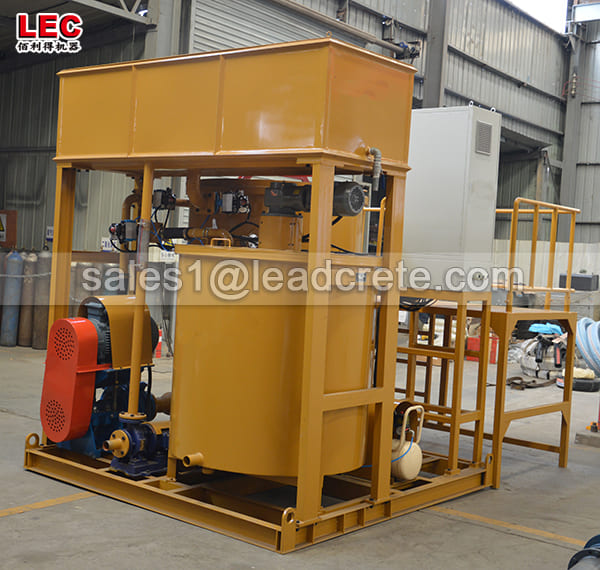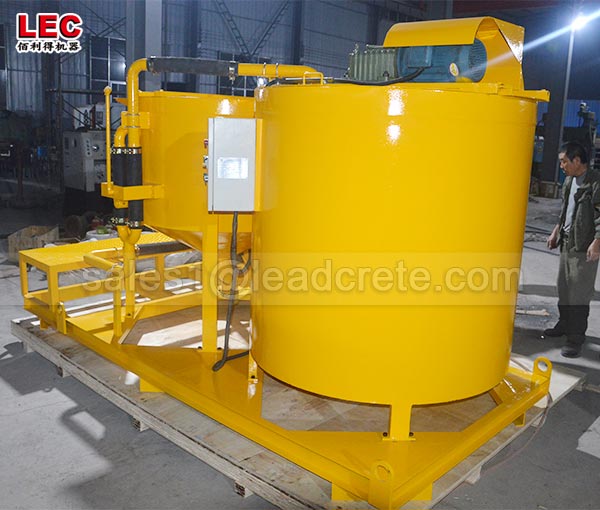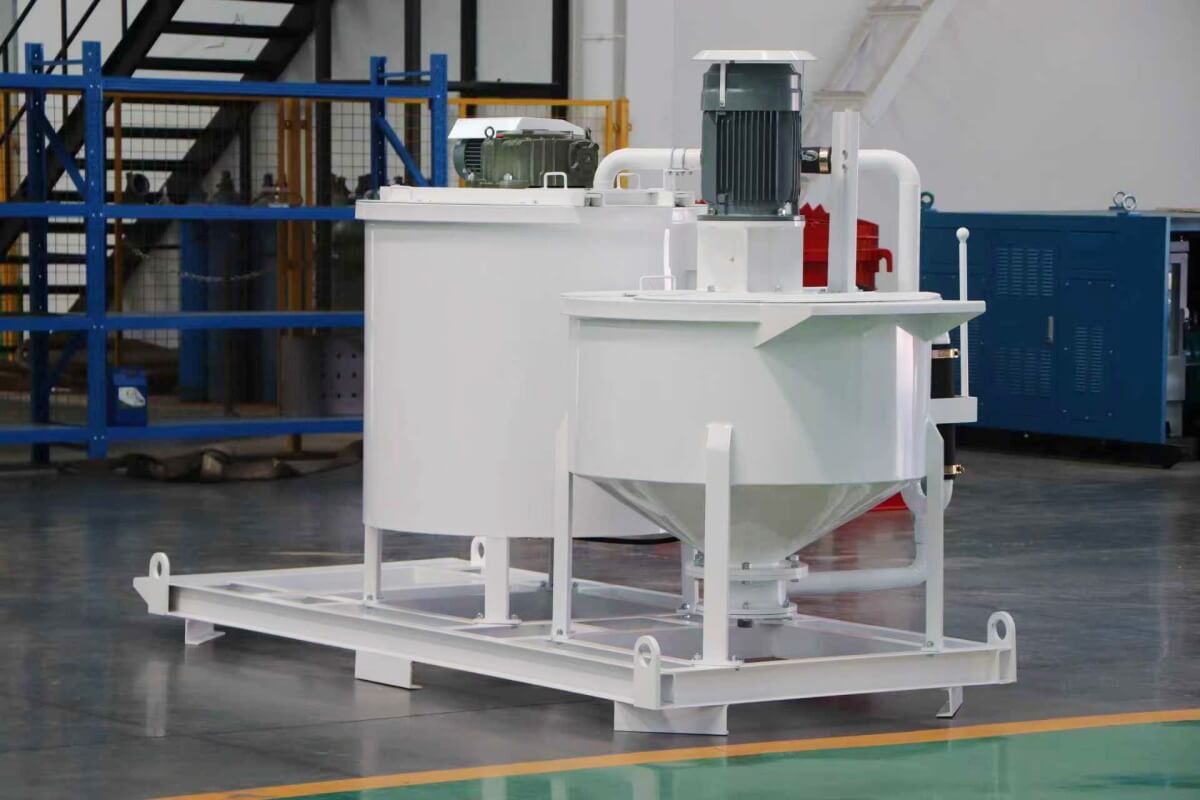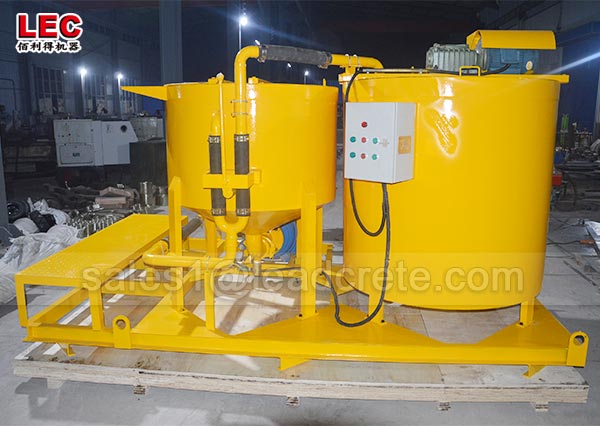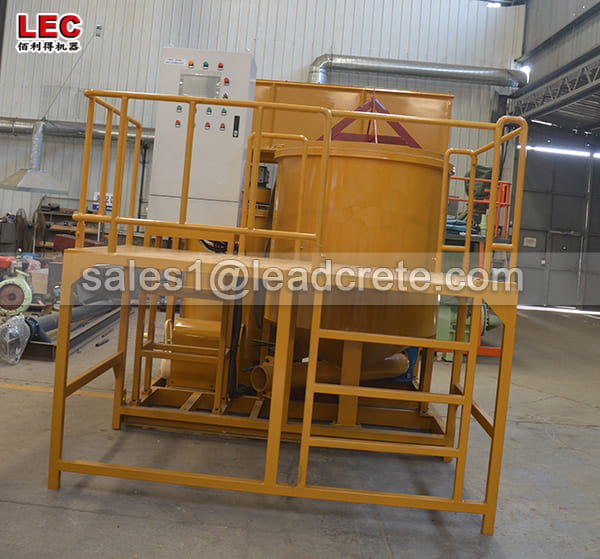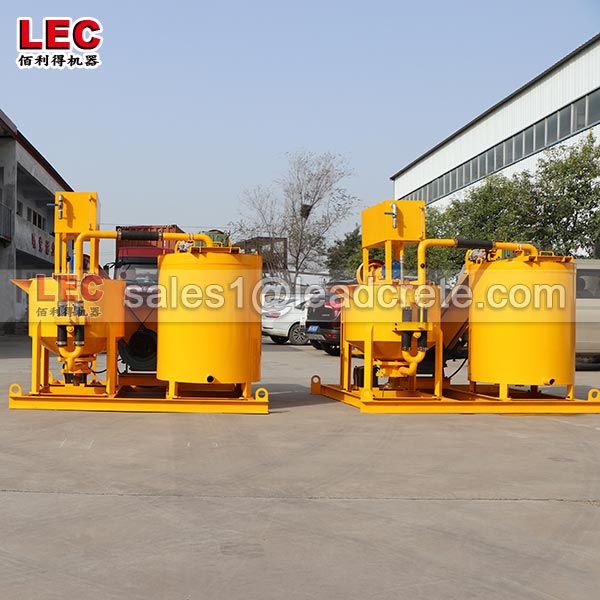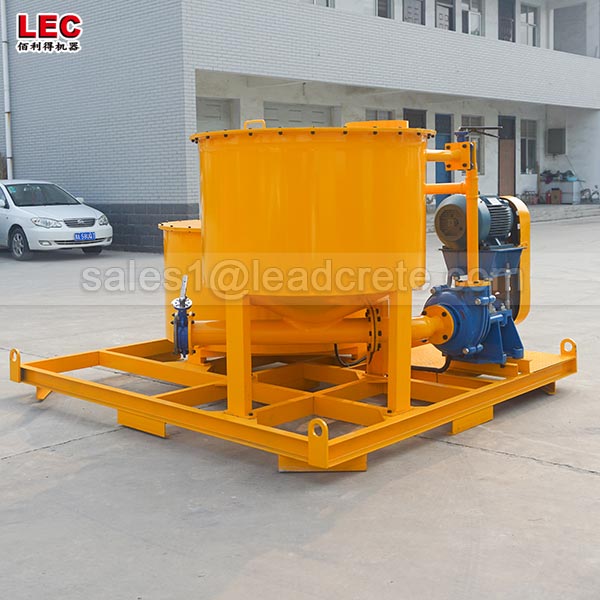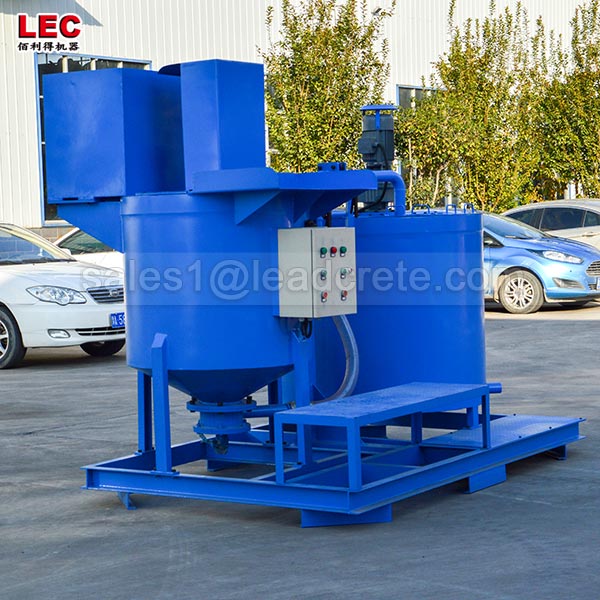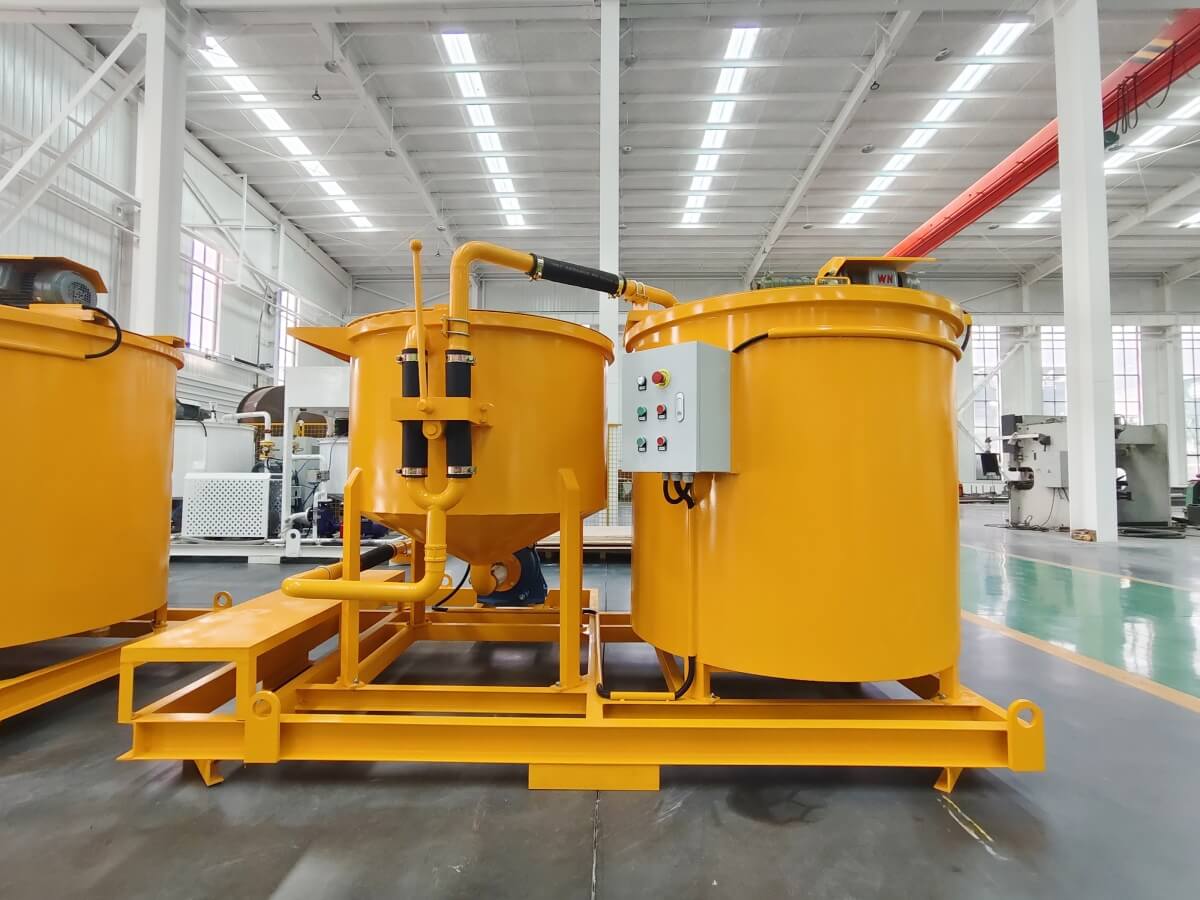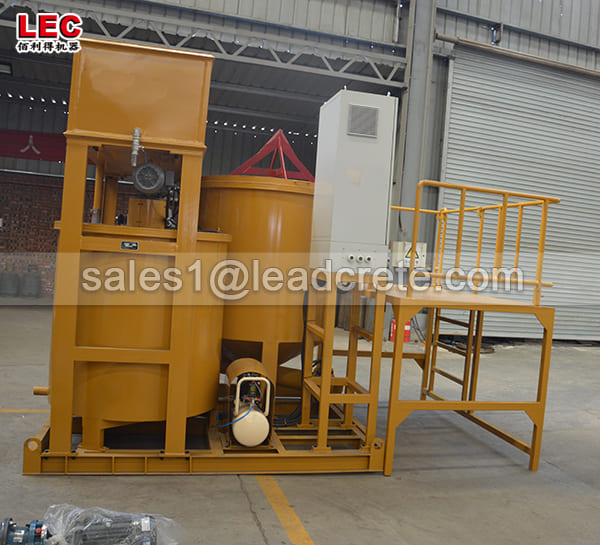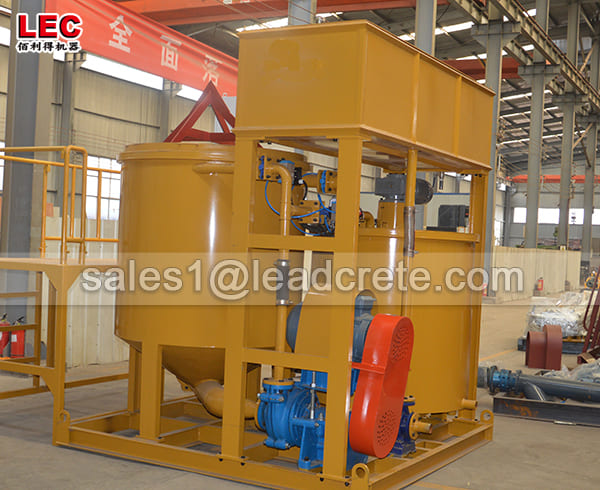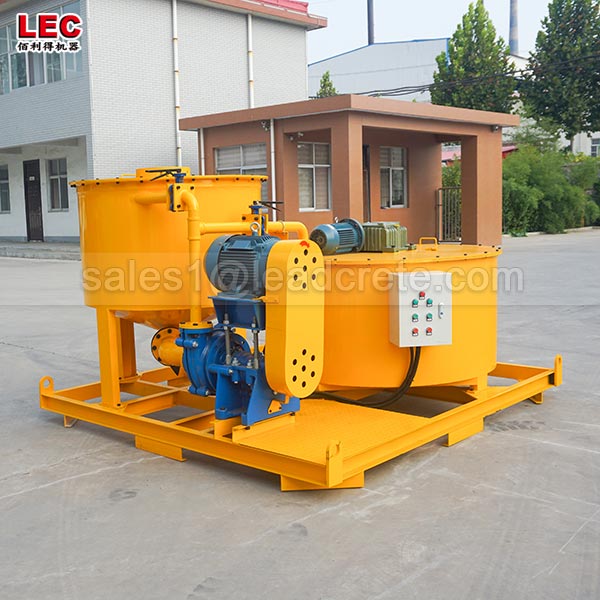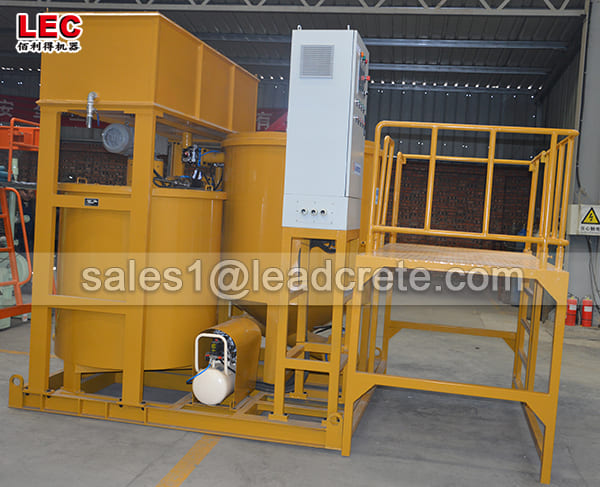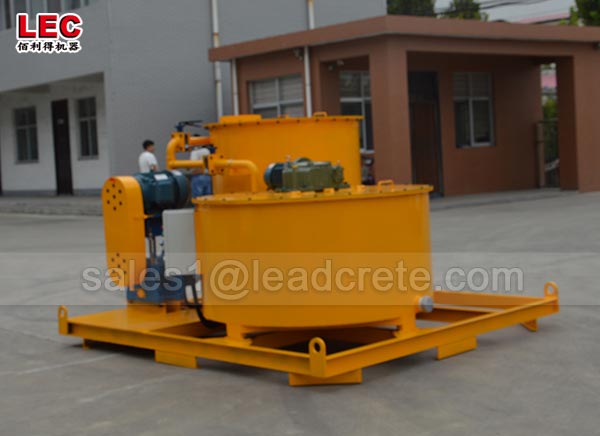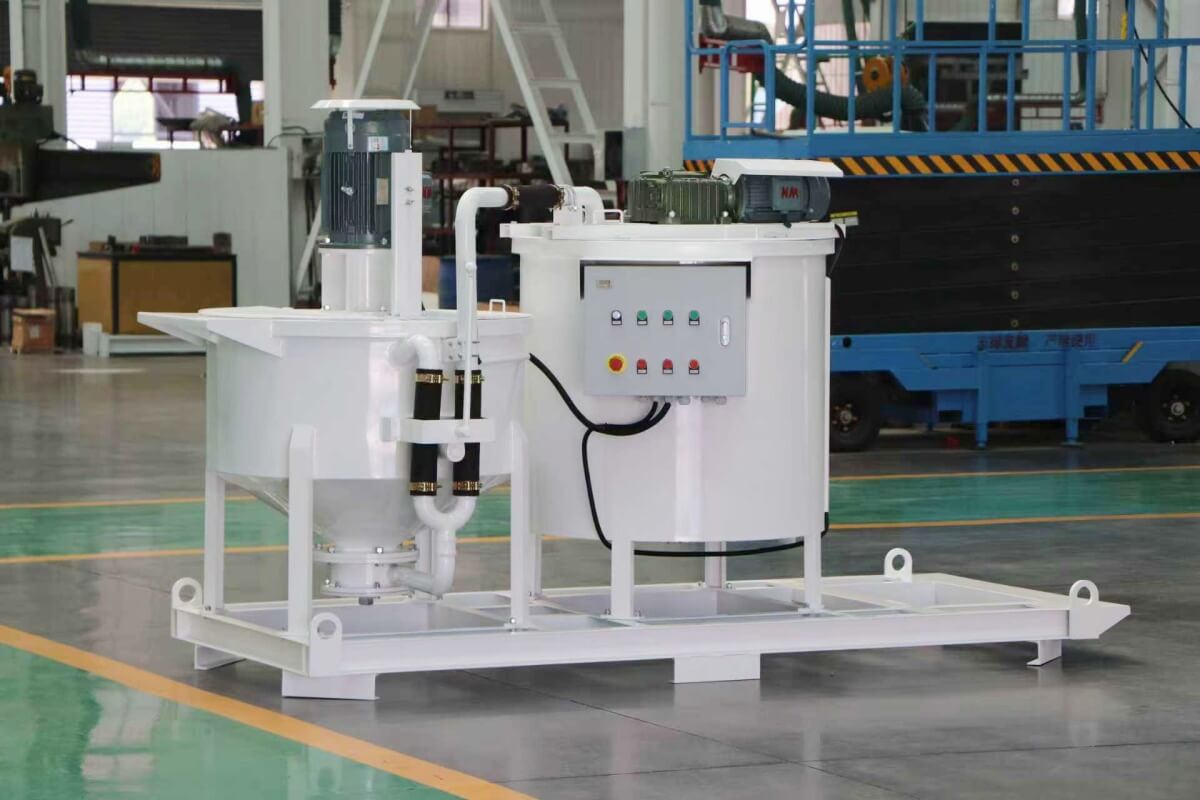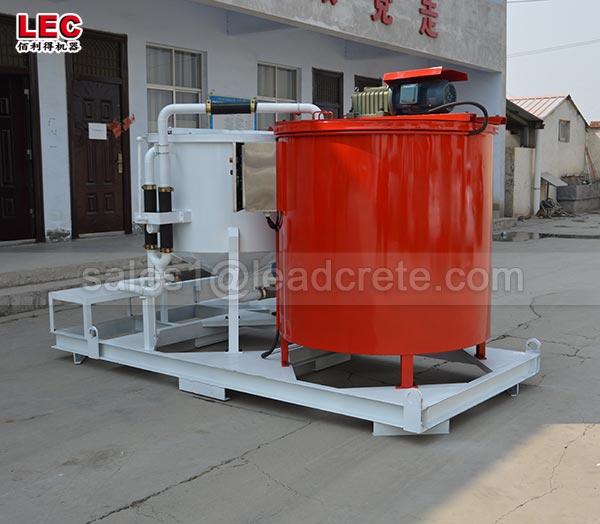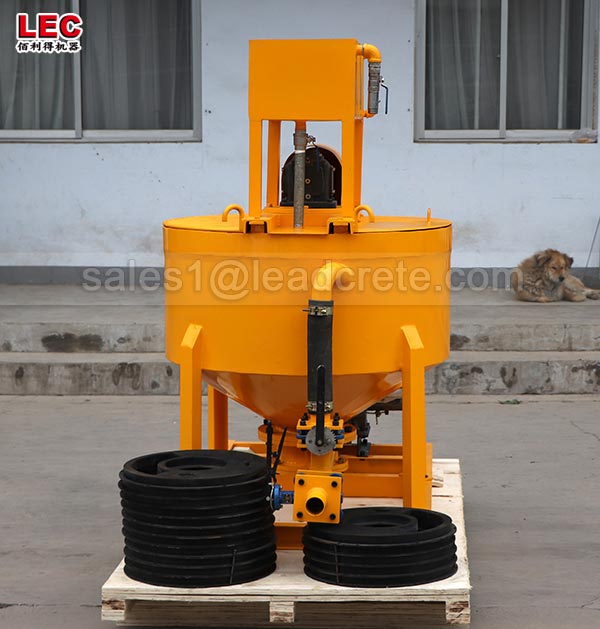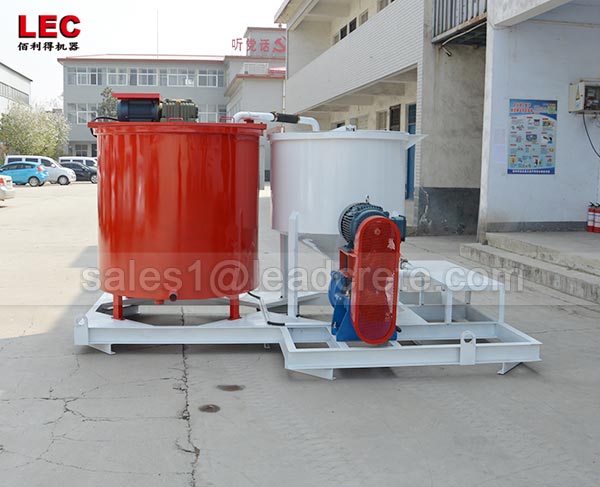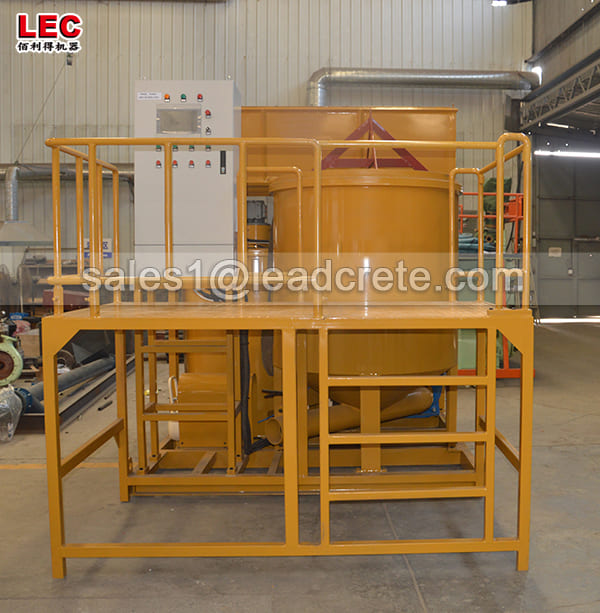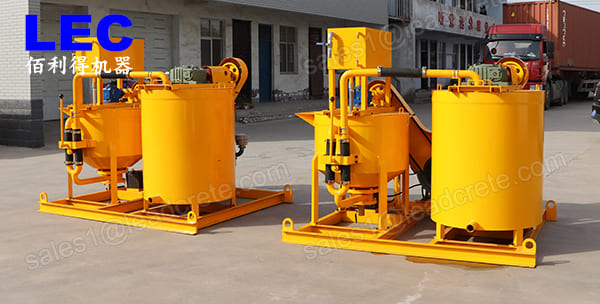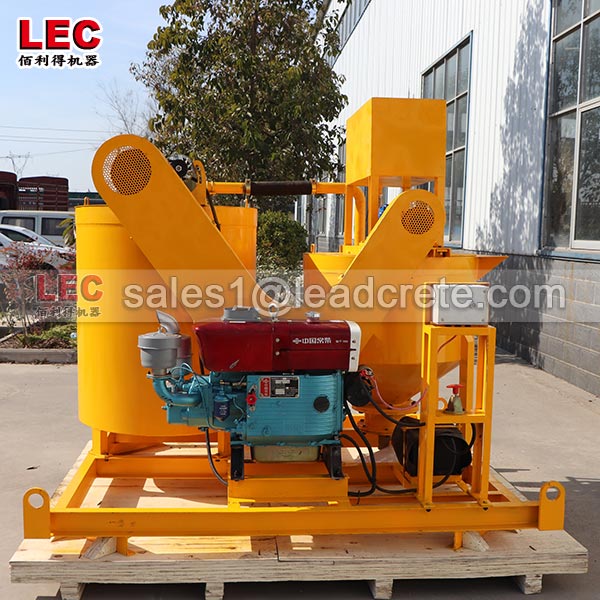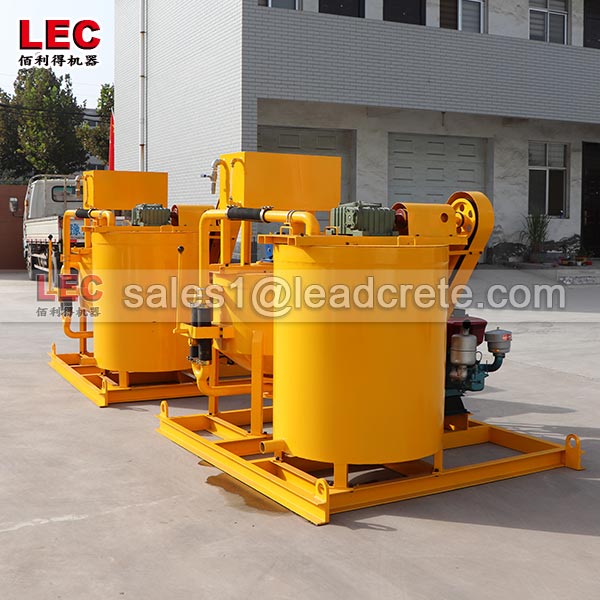
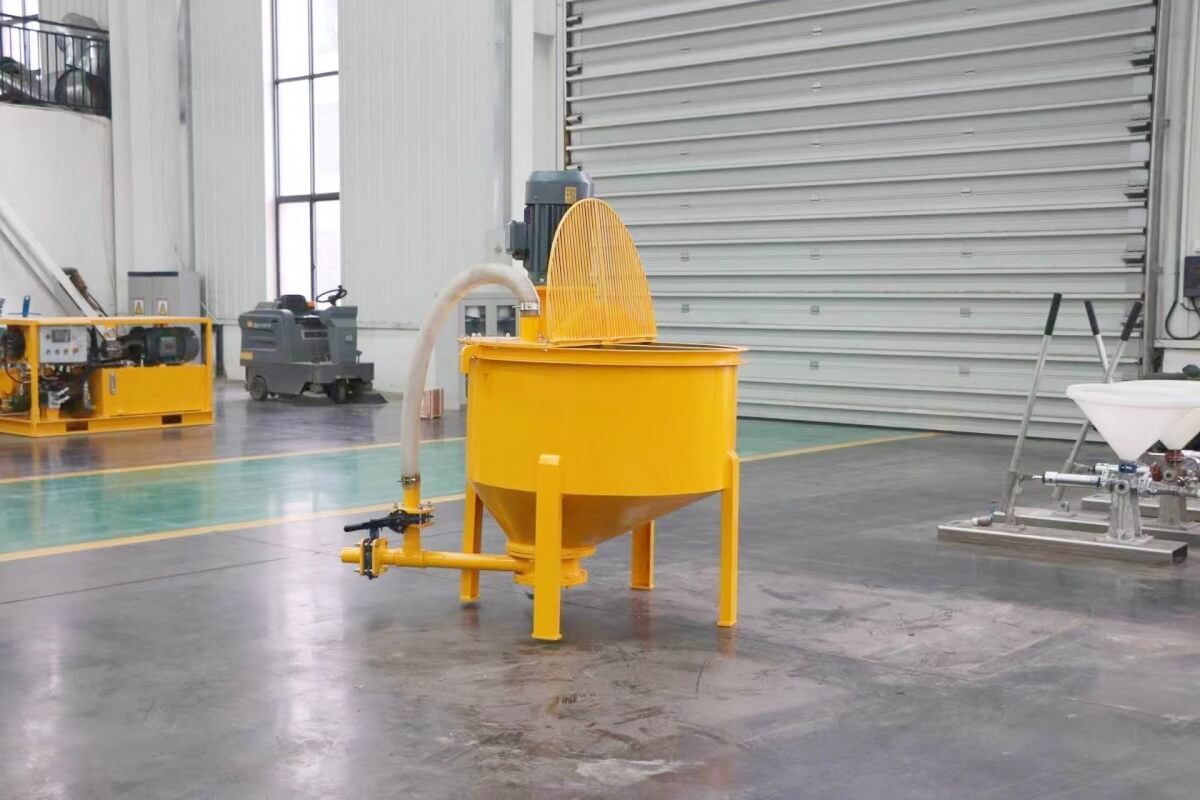
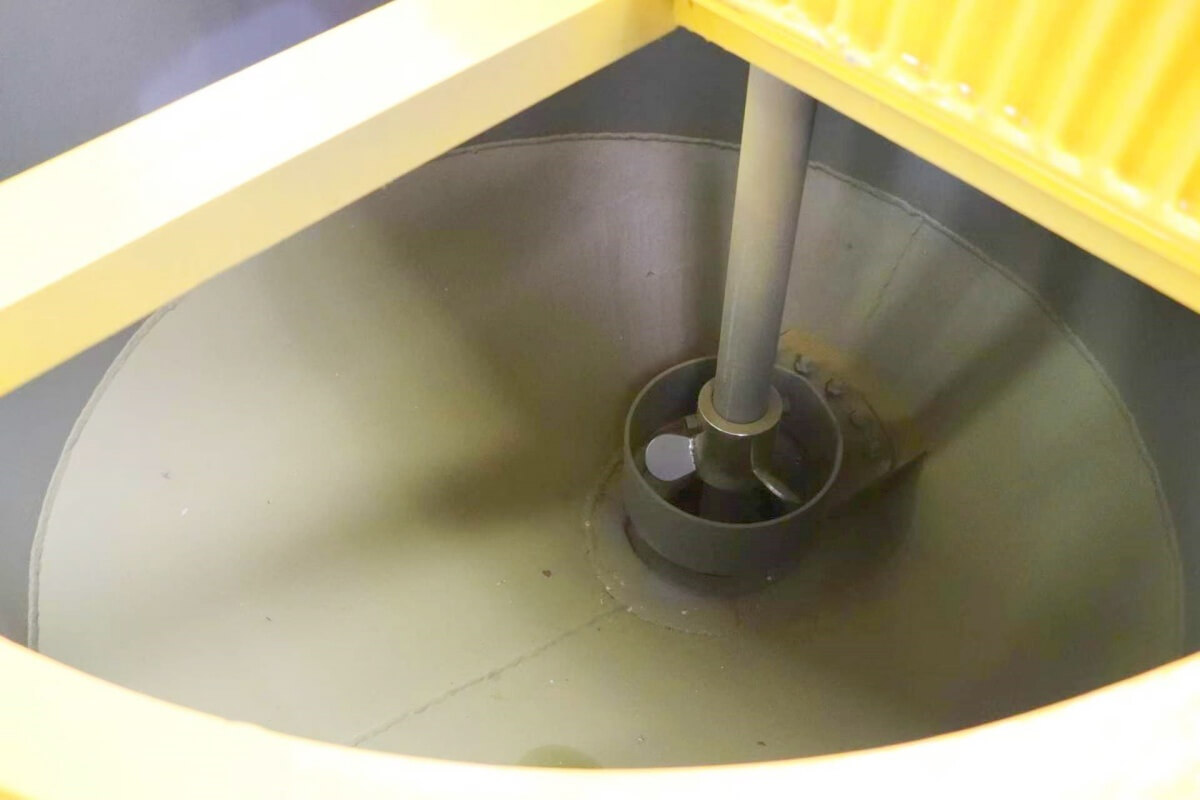
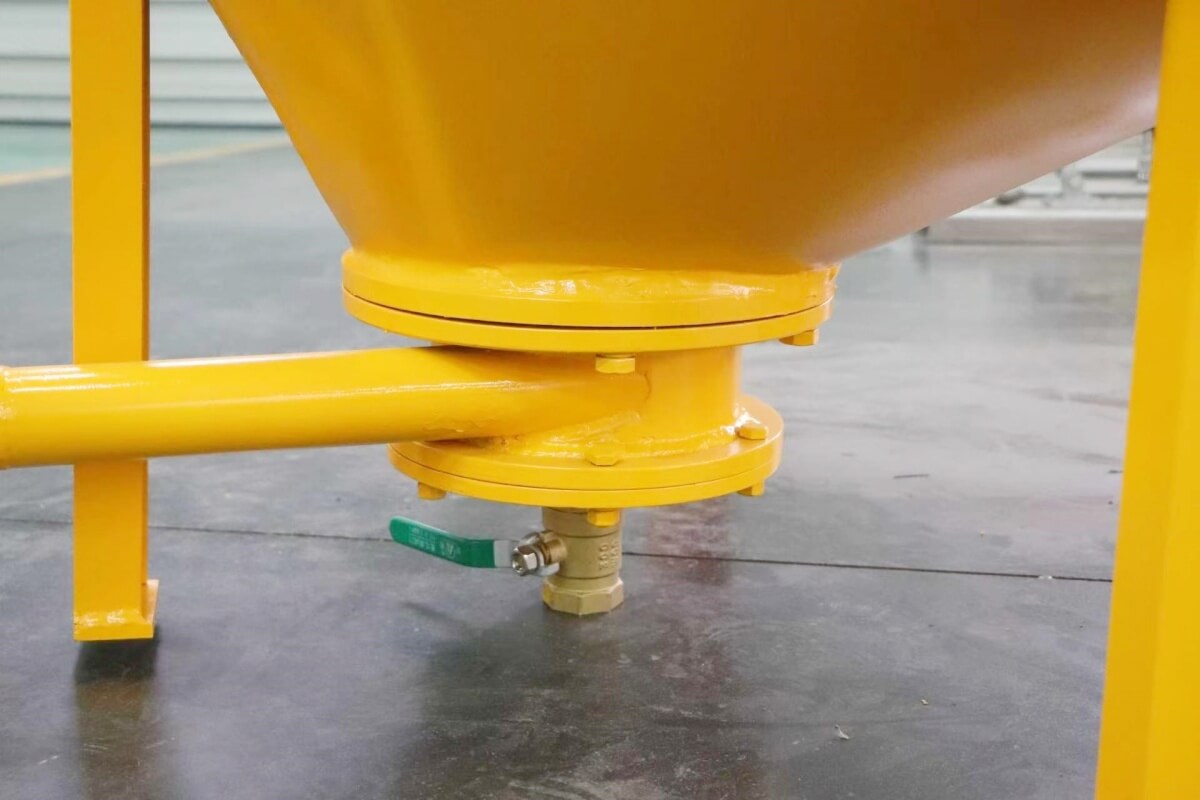
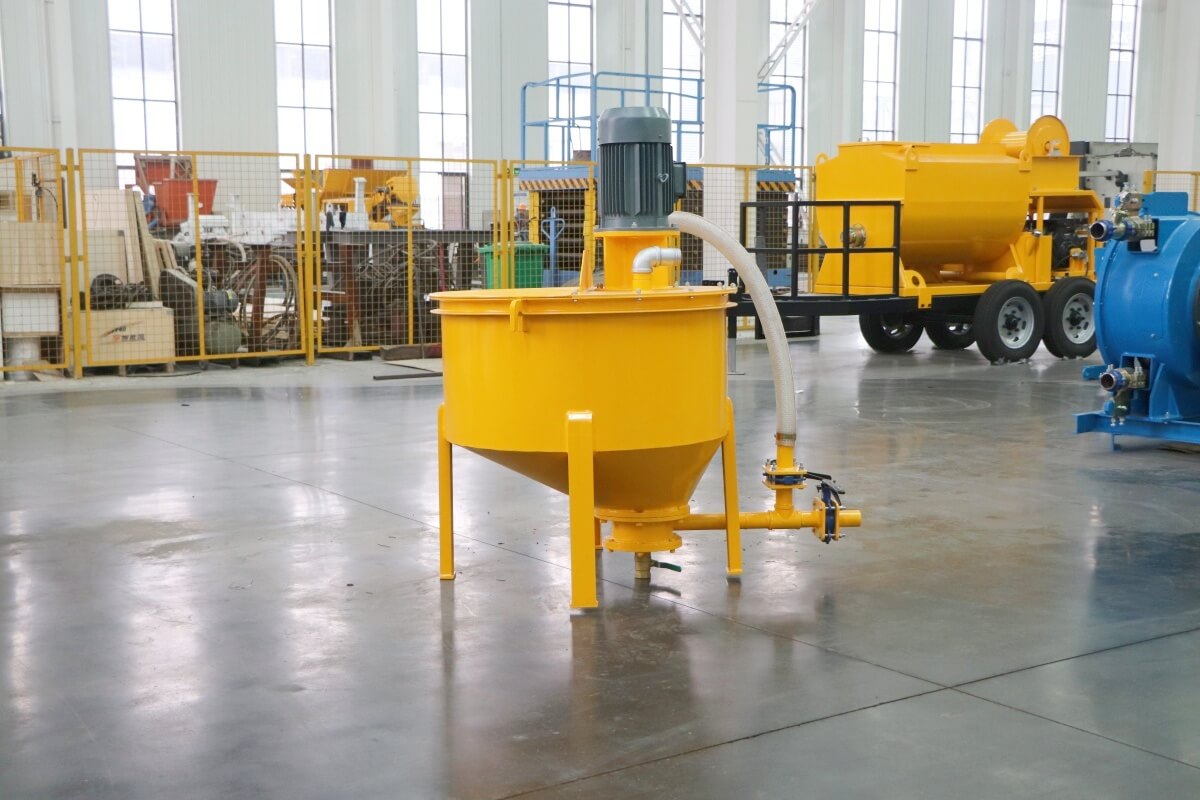
Bentonite grout mixing unit
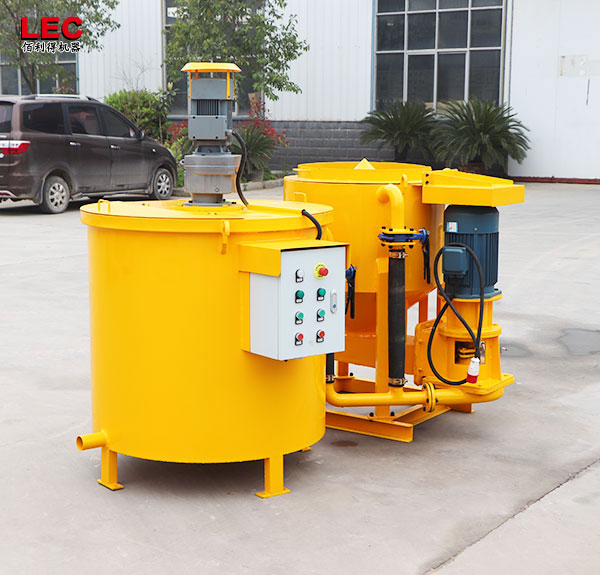
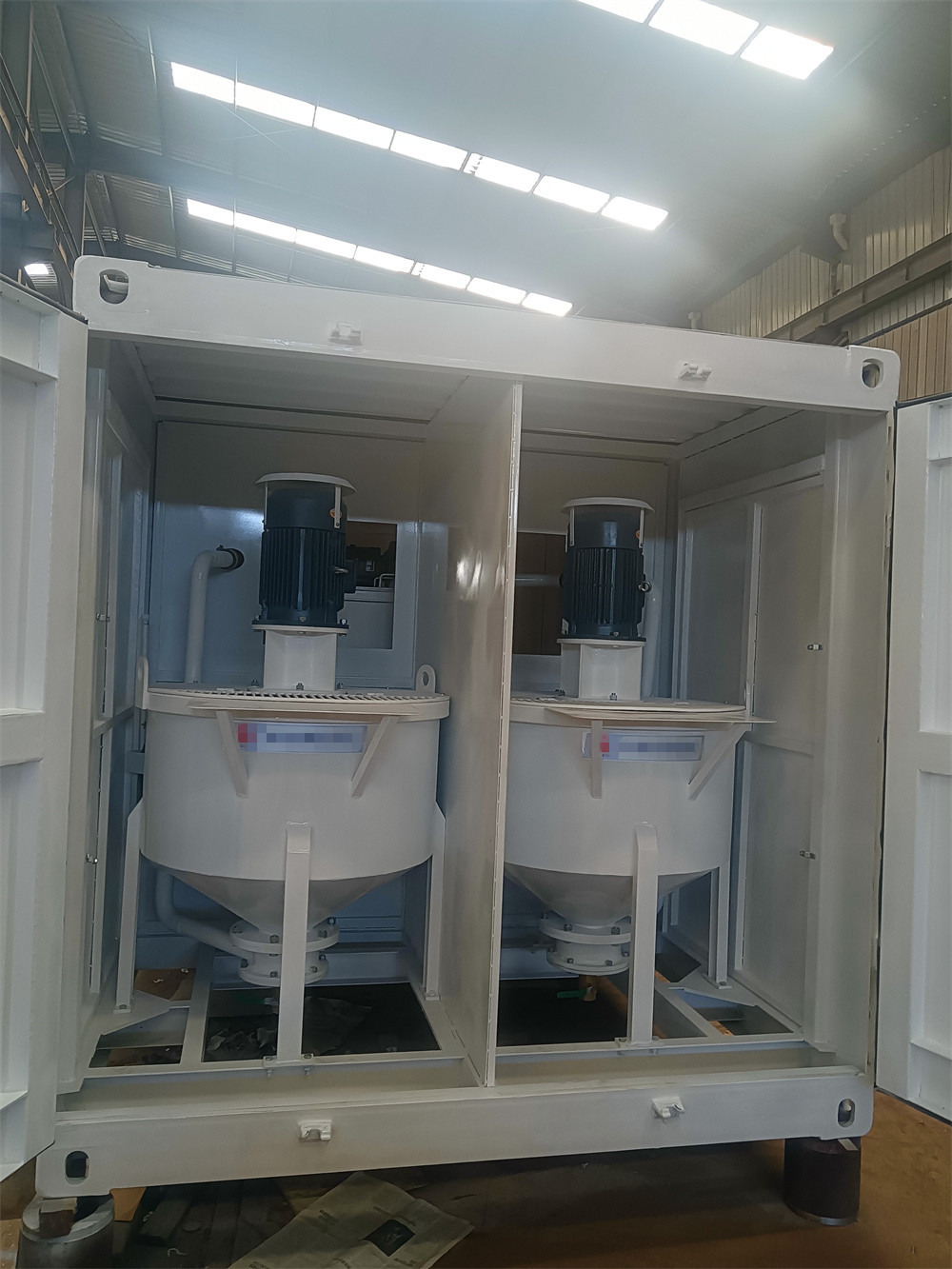
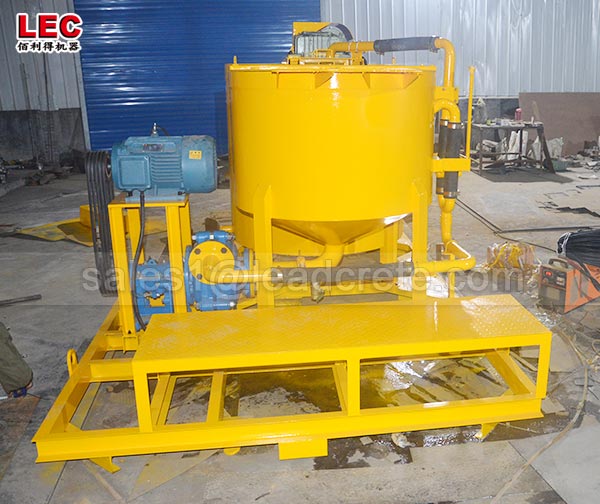
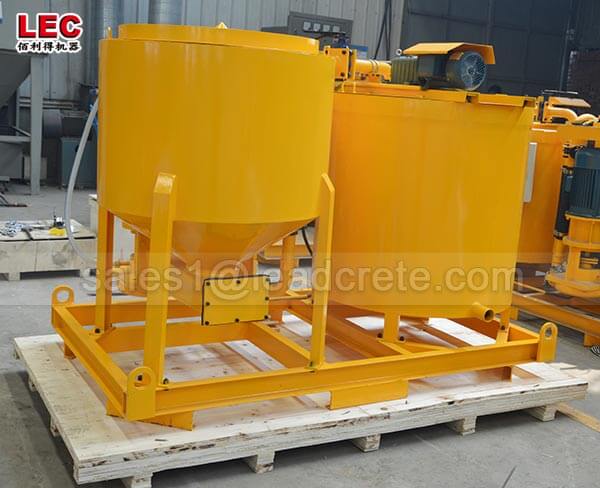
Leadcrete builds bentonite grout mixing units with mixer, storage agitator and grout pump on one frame, in electric or diesel drive. Units suit pipe jacking, microtunneling and contact grouting, with mixer output, agitator volume and pump delivery sized as one set.
Bentonite Grout Mixing Unit: Three Numbers That Must Agree
Buying a bentonite grout mixing unit is not the same as buying a mixer and a pump separately. On one frame the mixer, agitator and pump arrive with a fixed ratio between them, chosen by whoever laid out the skid. If that ratio suits the job, the unit runs as one machine; if it does not, the symptom appears at the pump while the crew adjusts the mixer to solve a problem the mixer did not cause.
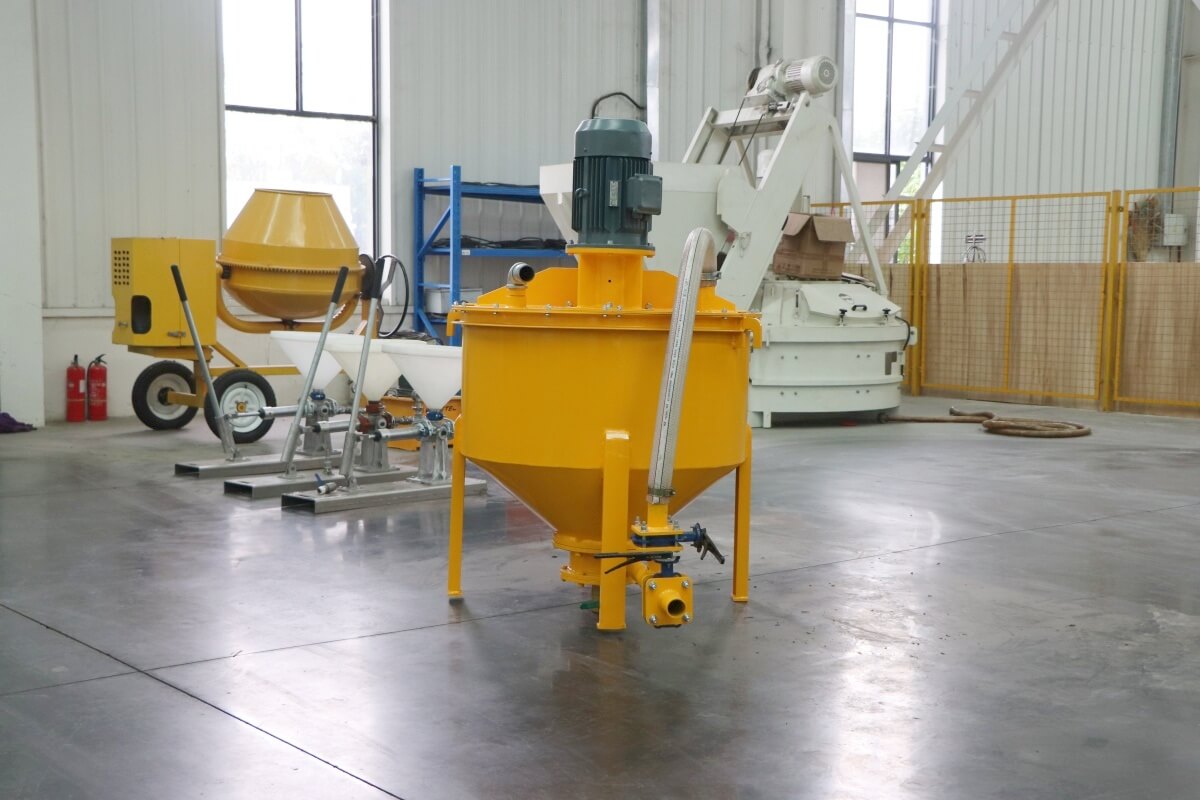
What the frame decides for you
An integrated unit is a trade. You get a compact footprint, one control panel, one operator and a single lifting point. In exchange, the three functions are no longer independently adjustable: a larger pump or more storage means rebuilding the skid rather than buying a component.
The specification stage is therefore the only point where the ratio can be set cheaply, and it matters more than component quality, since a well-built unit with a mismatched ratio still underperforms.
The three numbers that have to agree
Take the published configuration of our LGP400/1000/90DPL-E grout plant as an example, since it is a real set of figures rather than an illustration: mixer 400 L producing 6 m³/h, agitator 1000 L, grout pump 90 L/min at up to 100 bar.
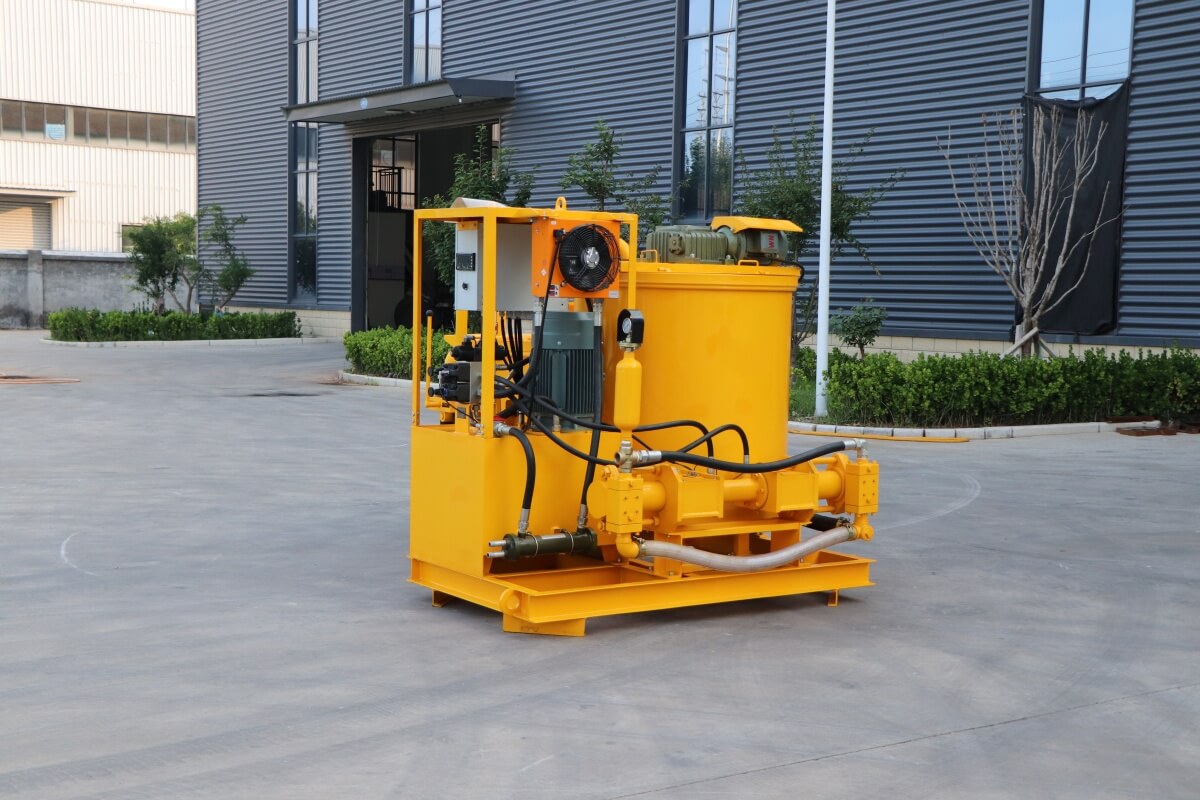
Three checks follow from those numbers, all of them arithmetic a buyer can repeat:
- Delivery against production. 90 L/min is 5.4 m³/h, against a mixer that can produce 6 m³/h. The pump can absorb what the mixer makes, with roughly a 10 % margin. That margin is thin enough that any interruption in batching shows up at the injection point, and it is the reason the storage tank exists.
- Buffer time. 1000 L of stored slurry at 90 L/min is about 11 minutes of supply with the mixer stopped. That is the window in which a batch has to be completed and transferred.
- Batch turnaround. 400 L batches at 6 m³/h work out at 15 batches per hour, or about 4 minutes each. Filling, mixing, transfer and a density check have to fit inside that 4 minutes, and the 11-minute buffer covers roughly two and a half batches of slippage.
Those figures describe one configuration, not a rule for all units. The point is the method: read the three numbers off the same datasheet and check them against each other before comparing prices, because a cheaper unit usually differs in this ratio rather than in build quality.
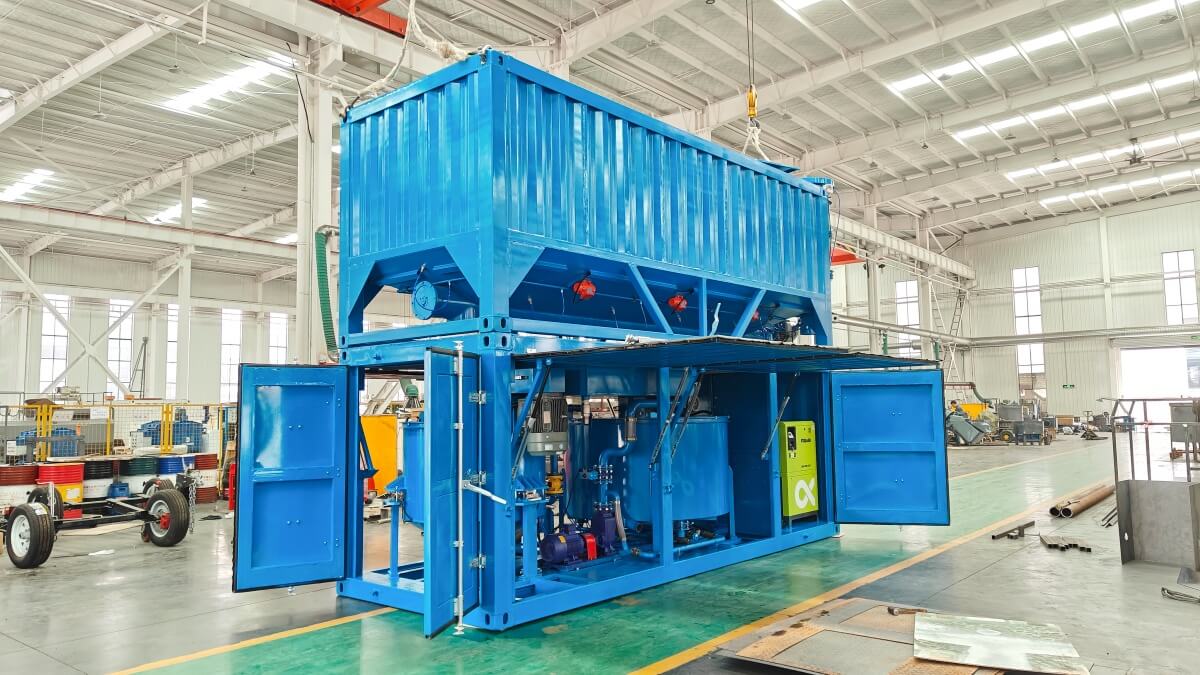
Where the buffer actually goes
An 11-minute buffer sounds generous until the shift starts. Density and funnel checks, a hose move, a bag that will not open, or a change in jacking rate each take minutes out of it. A crew that treats the agitator as storage rather than as buffer runs it empty and then blames the pump for surging.
Two habits follow from the arithmetic. Keep the agitator above roughly half full so a delayed batch does not starve the line, and batch on the injection rate rather than on the mixer’s maximum output, since the pump sets the real demand. On pipe jacking and microtunneling work, where the draw is fairly steady, matching batch size to the jacking rate is straightforward; on contact grouting, where demand comes in bursts, the buffer needs to be larger relative to the mixer.
What the instruments prove
A flow meter and a pressure gauge answer different questions, and units are often bought without noticing which one is fitted.
The flow meter tells you volume delivered, which is what the injection record needs. The pressure gauge tells you resistance in the line: rising pressure at constant flow means the line is packing off or the annular space is tightening, and falling pressure at rising flow usually means a leak or a broken connection. Neither instrument substitutes for the other. A unit without a flow meter can still be run, but volume then comes from tank level, the least accurate method on site.
The site interface
An integrated unit concentrates its demands at one connection point. For the same configuration, our published figures are 380 V three-phase 50 Hz, about 28 kW of connected motor load, a footprint near 3.15 × 1.35 m and a mass around 1755 kg.
Confirm the supply can carry the starting current of that combined load, not just the running load, and that the frame can be set down level and close to the injection point. Water matters as much: a unit mixing 6 m³/h needs water at a rate and pressure that keeps up, and a single garden tap will not.
When a unit is the wrong purchase
Three cases argue against a packaged unit. A site that already has mixing capacity needs only the pump. Work running a few short batches a week rarely justifies the instrumentation and footprint. And where the mix alternates between bentonite slurry and cement blends, separate machines are easier to clean and reconfigure than a shared skid.
What to send with an enquiry
To size a unit against your programme we need: the application and the draw rate at the injection point; the slurry specification, including target density and funnel viscosity; how long the line runs and at what pressure; the power and water available at the plant position; and whether the unit also has to handle cement blends. Send these to sales1@leadcrete.com.