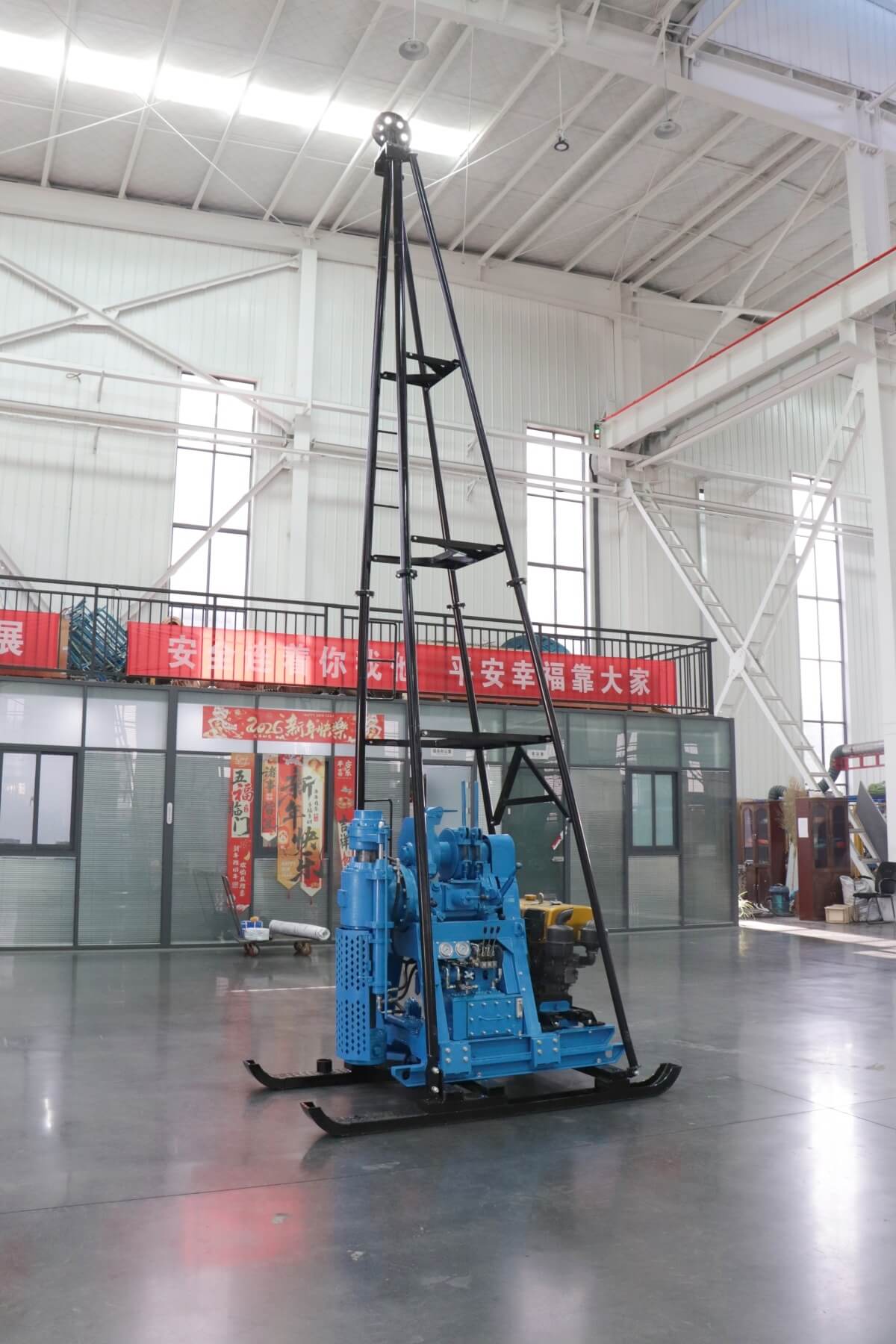
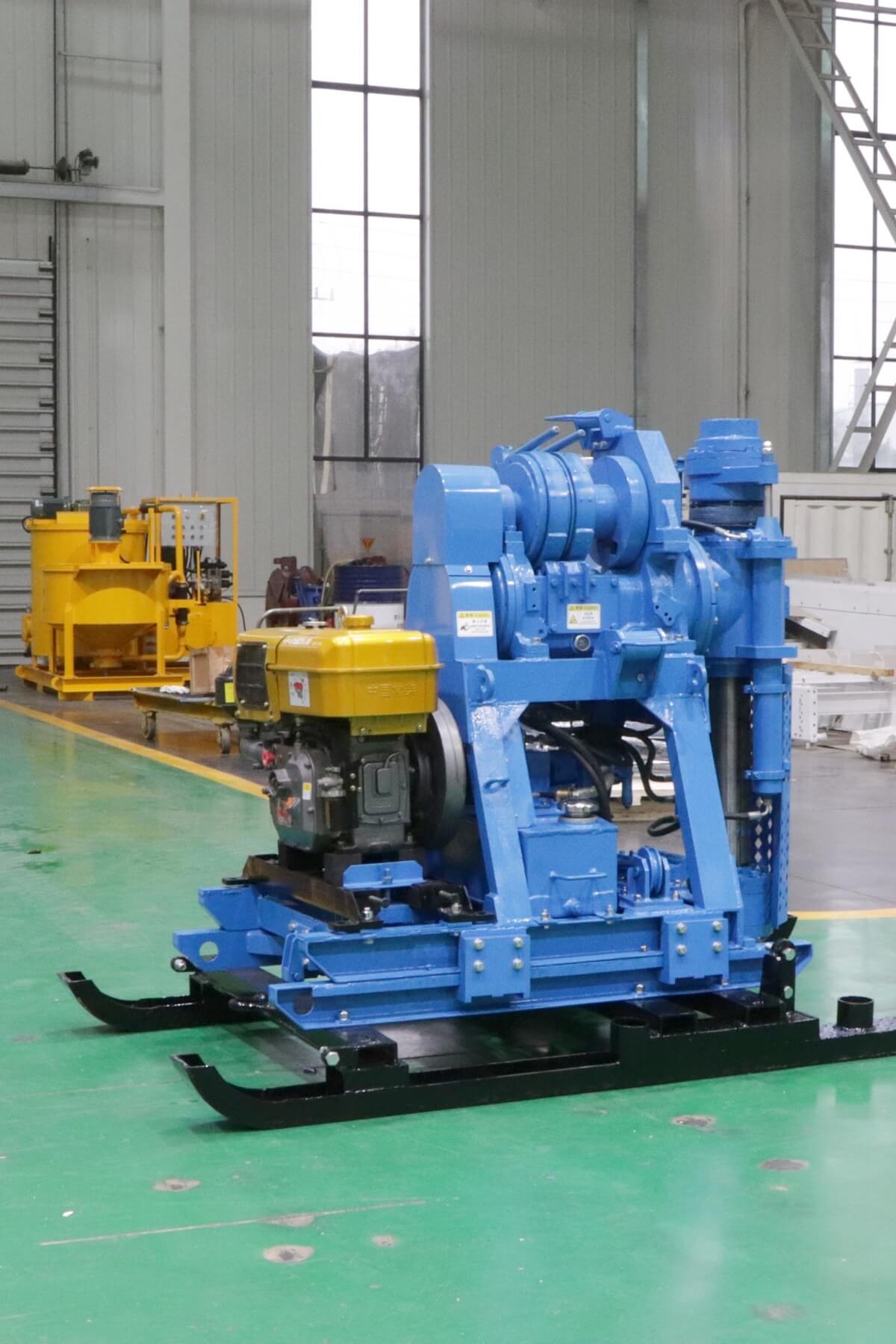
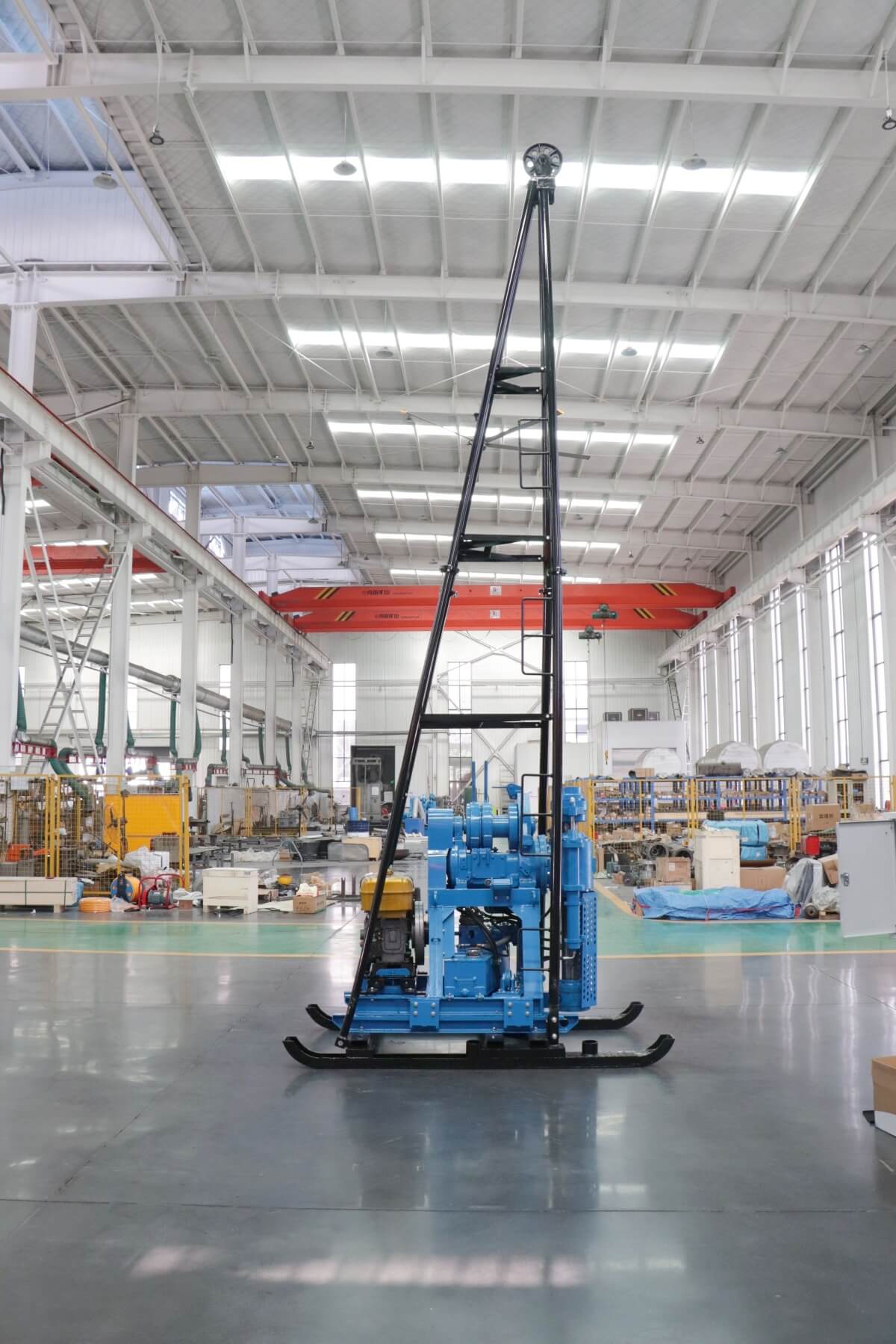
Foundation Investigation Drilling Rig
A foundation investigation is designed from the foundation backwards. The structure decides what has to be proven, the founding level decides where the proof has to be taken, and only then does the hole schedule exist. That order is often reversed on site, with a fixed depth applied across a grid, and the result is holes that are either too shallow to test the founding stratum or too deep to be worth their cost. Choosing a foundation investigation drilling rig starts with understanding that the depth is not a site constant.
The footing sets the depth
The depth of influence below a footing base is commonly taken as one and a half to two times the footing width. That rule of thumb, applied to a real schedule, produces holes of very different lengths.
A 1 m wide strip footing founded 1 m down needs proof to roughly 1 + 2.5 m, or about 3.5 m. A 3 m wide pad at the same founding level needs 1 + 6 m, around 7 m. A raft covering the whole plot pushes the compressible zone deeper still, and the hole has to pass through it rather than stop inside it.
On a site with three footing sizes, the deepest hole may be more than twice the shallowest. A schedule that gives every hole the same depth has therefore either over-drilled the small footings or under-tested the large ones.
Each foundation type wants a different number
A pad or strip footing needs a strength profile through the influence zone and a sample close to the base, because bearing capacity is decided there.
A raft needs compressibility, which means undisturbed samples for consolidation testing rather than SPT values alone. Settlement, not capacity, governs the design.
A piled foundation needs the founding stratum proved, plus several metres of it, and where the pile is socketed into rock, core from that rock. The pile toe is a geological question before it is a structural one.
A basement adds groundwater and heave to the list, which changes what the hole has to measure as well as how deep it goes.
Proving the stratum, not reaching a depth
A hole that stops at the top of the founding layer has measured the wrong material. Practice is usually to penetrate several metres into the stratum that will carry the load, enough to show that its condition is consistent rather than a local patch.
This is where a foundation investigation drilling rig earns its place in a way a general-purpose machine does not. The hole has to change tools at the boundaries: casing through fill, a sampler in cohesive soil, a core barrel in rock. Each change is a trip, and each trip is time.
One hole, three tools
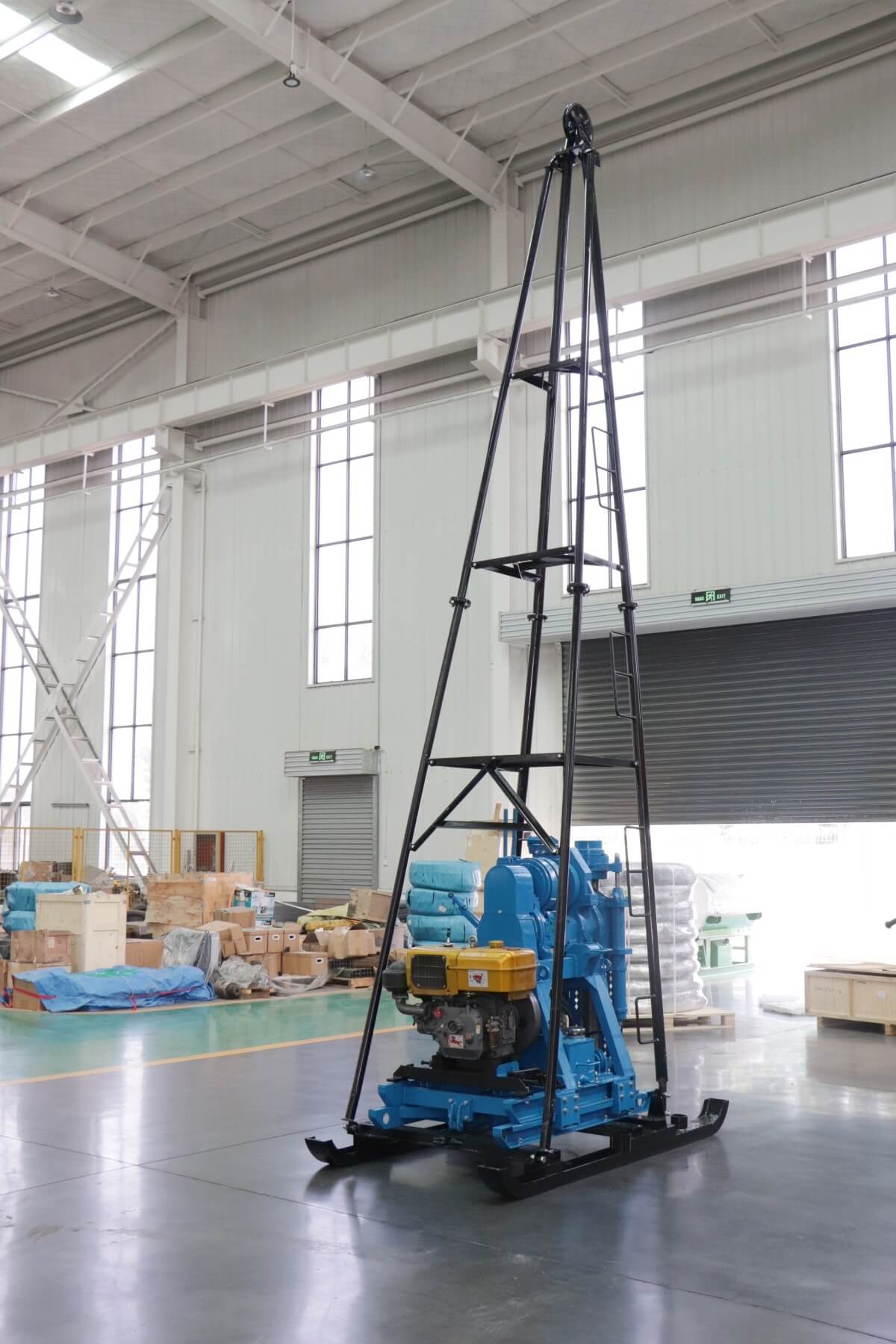
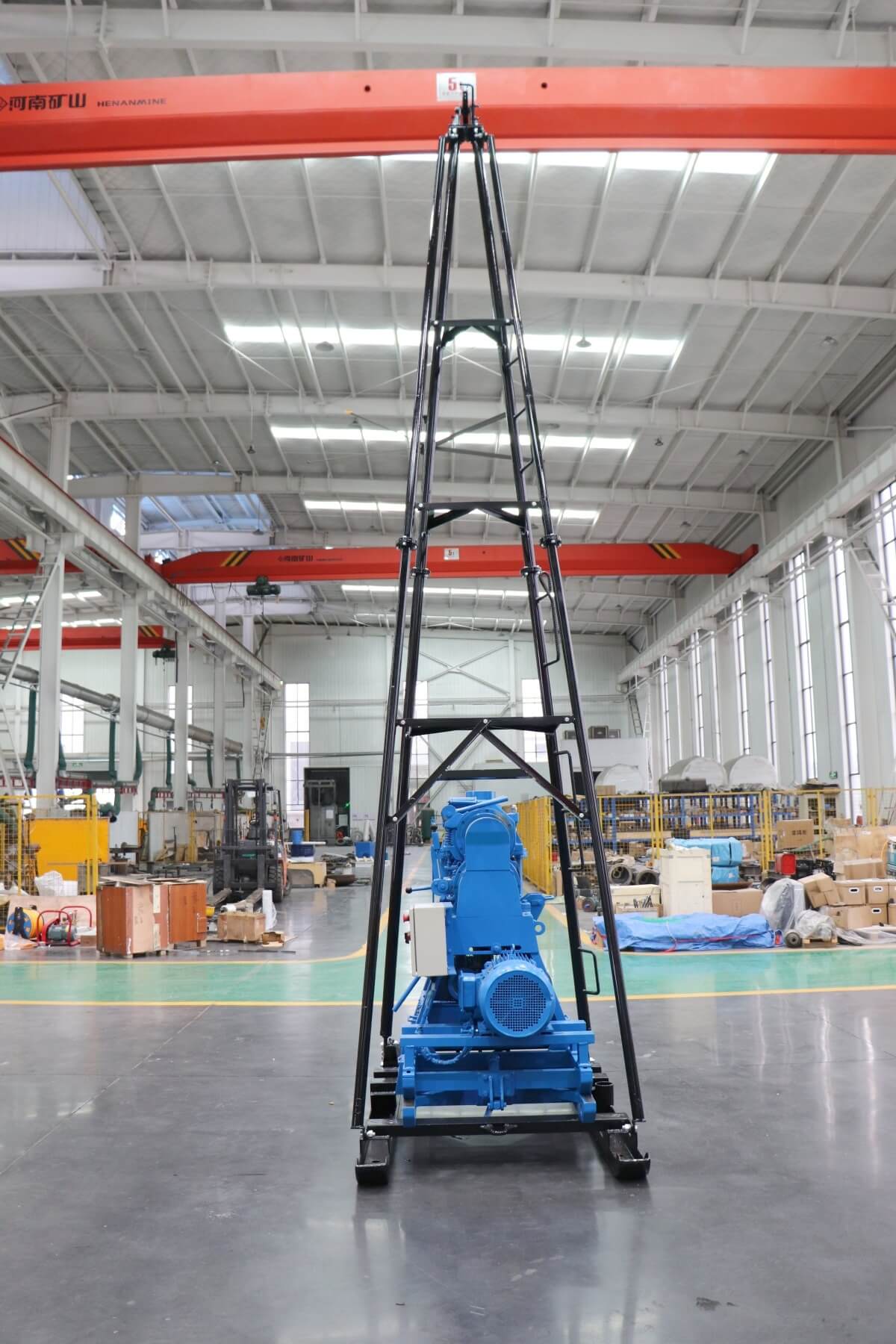
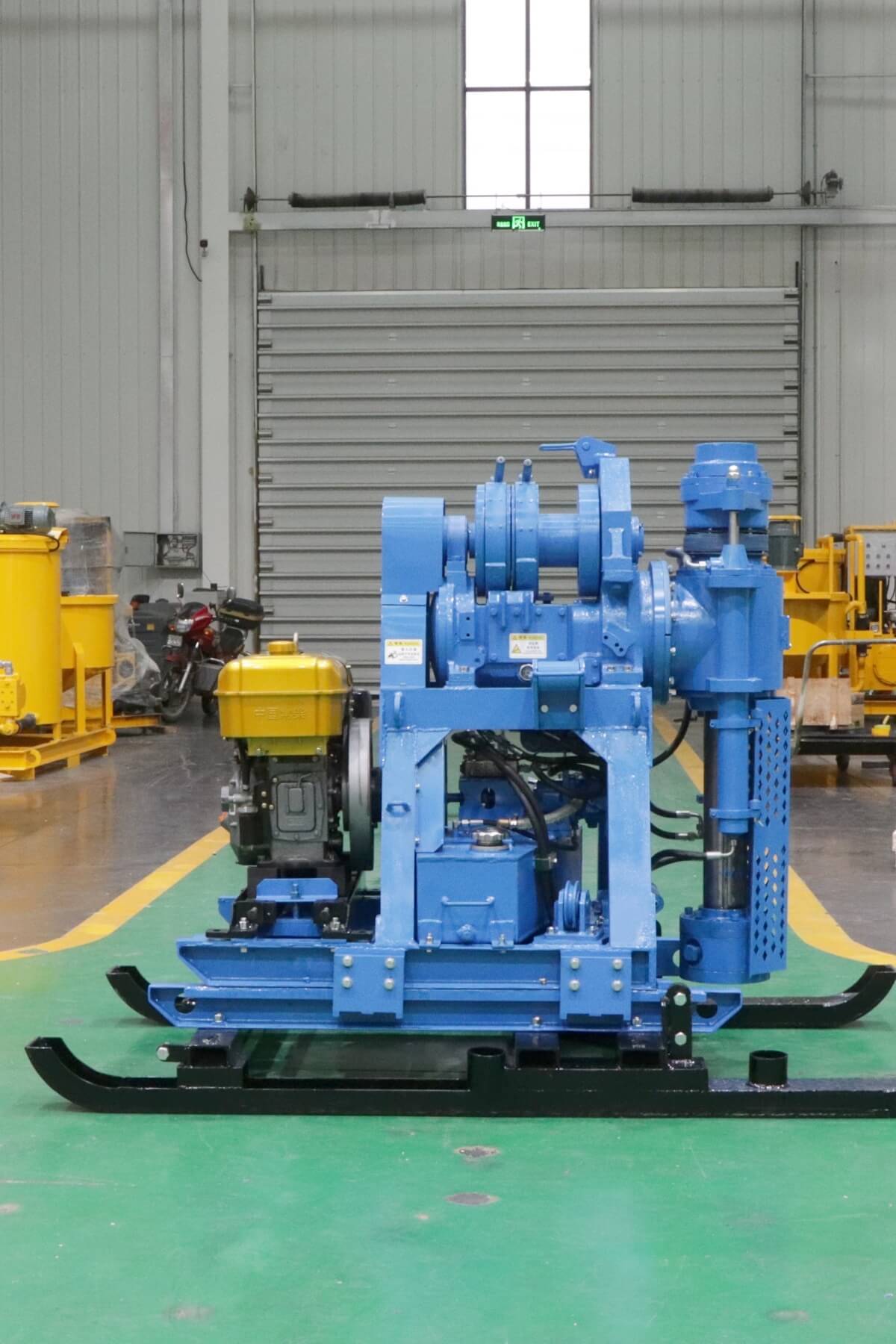
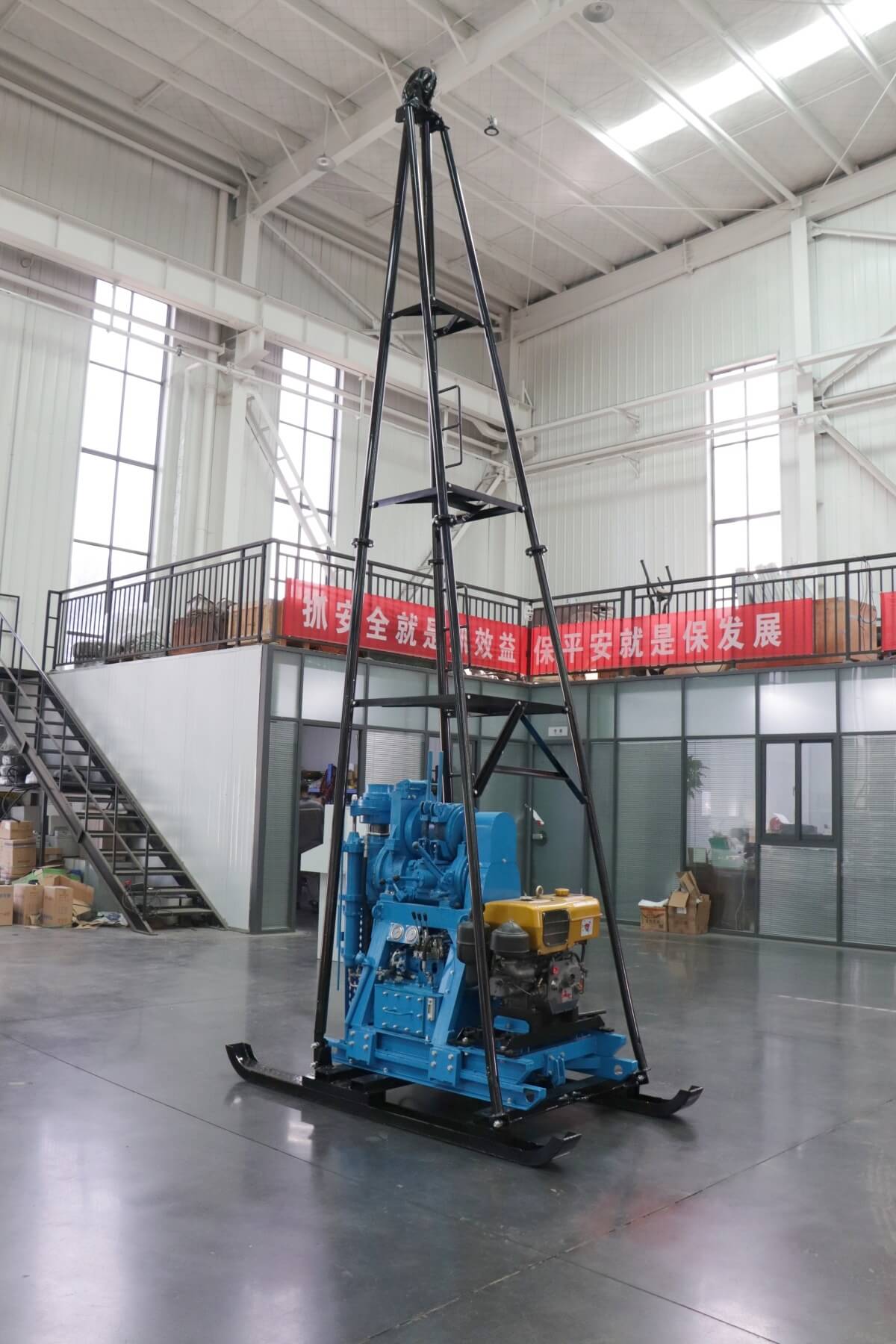
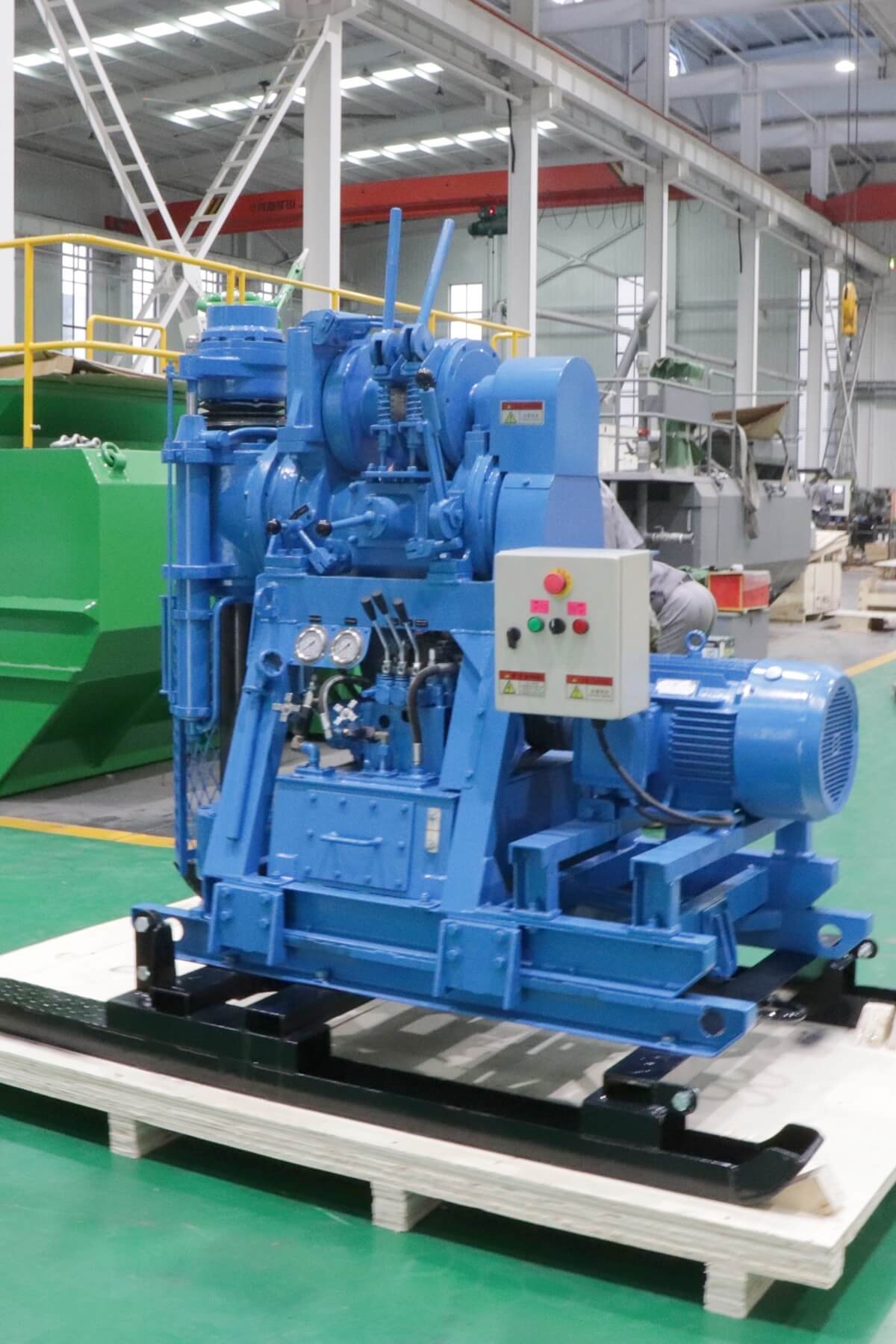
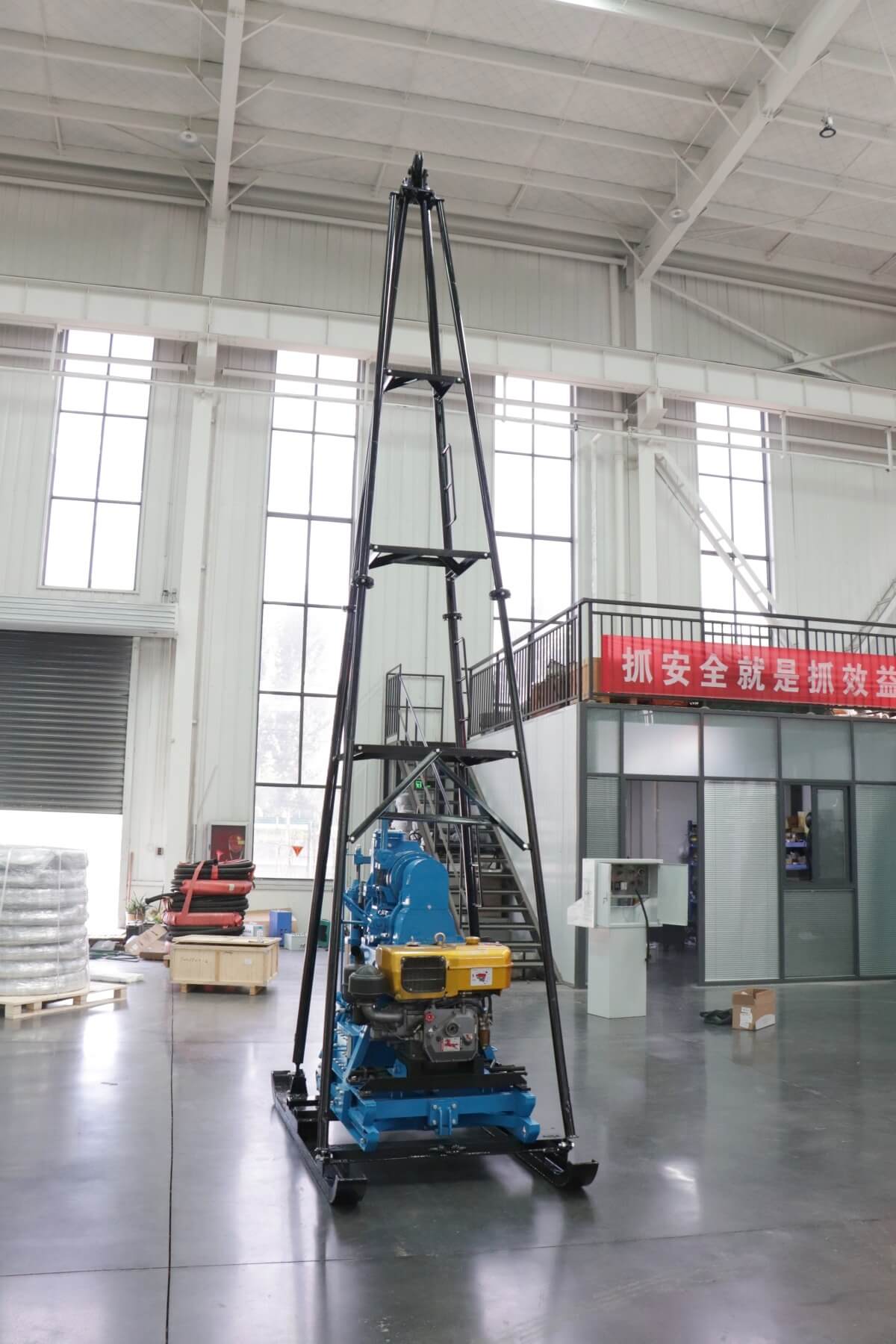
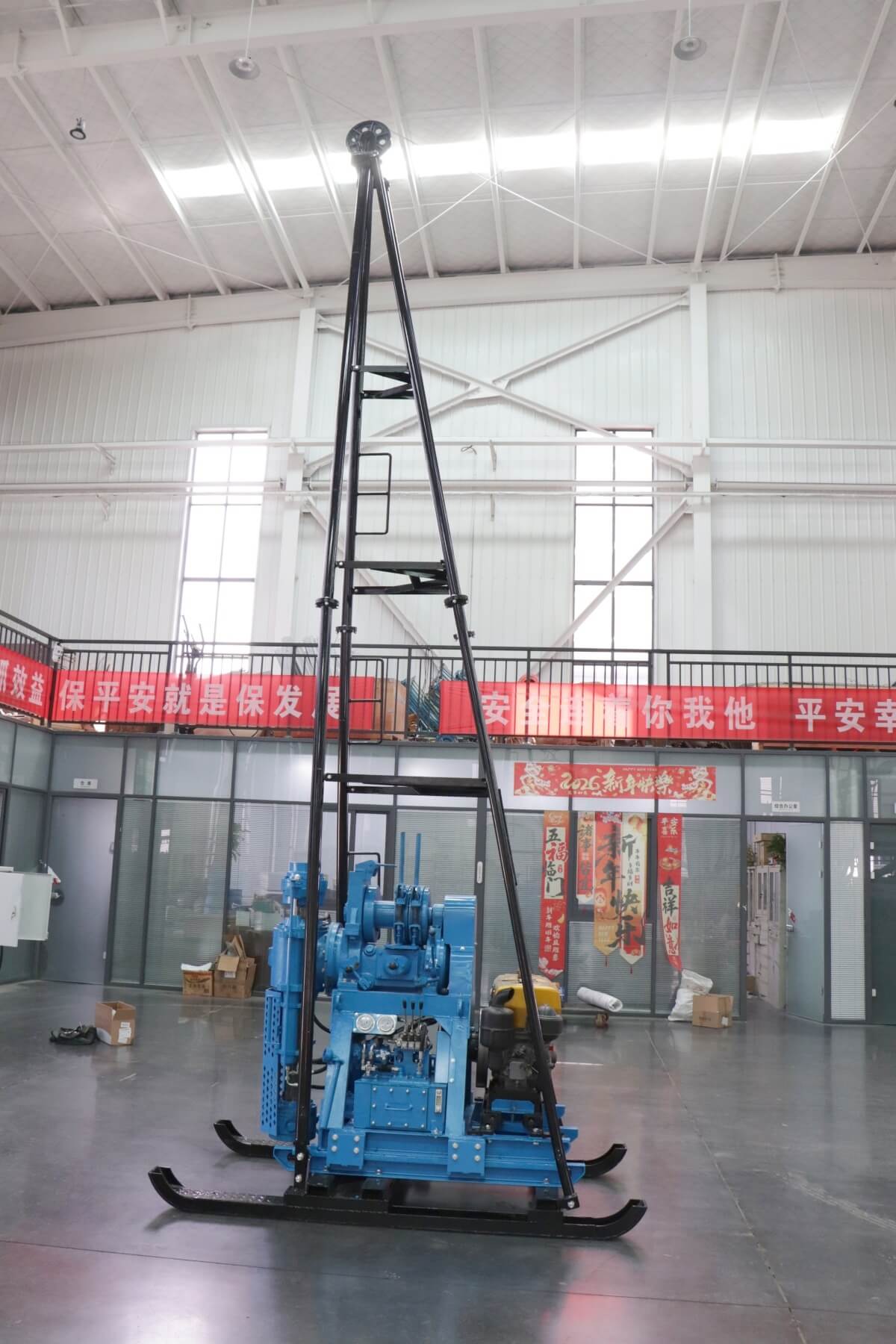
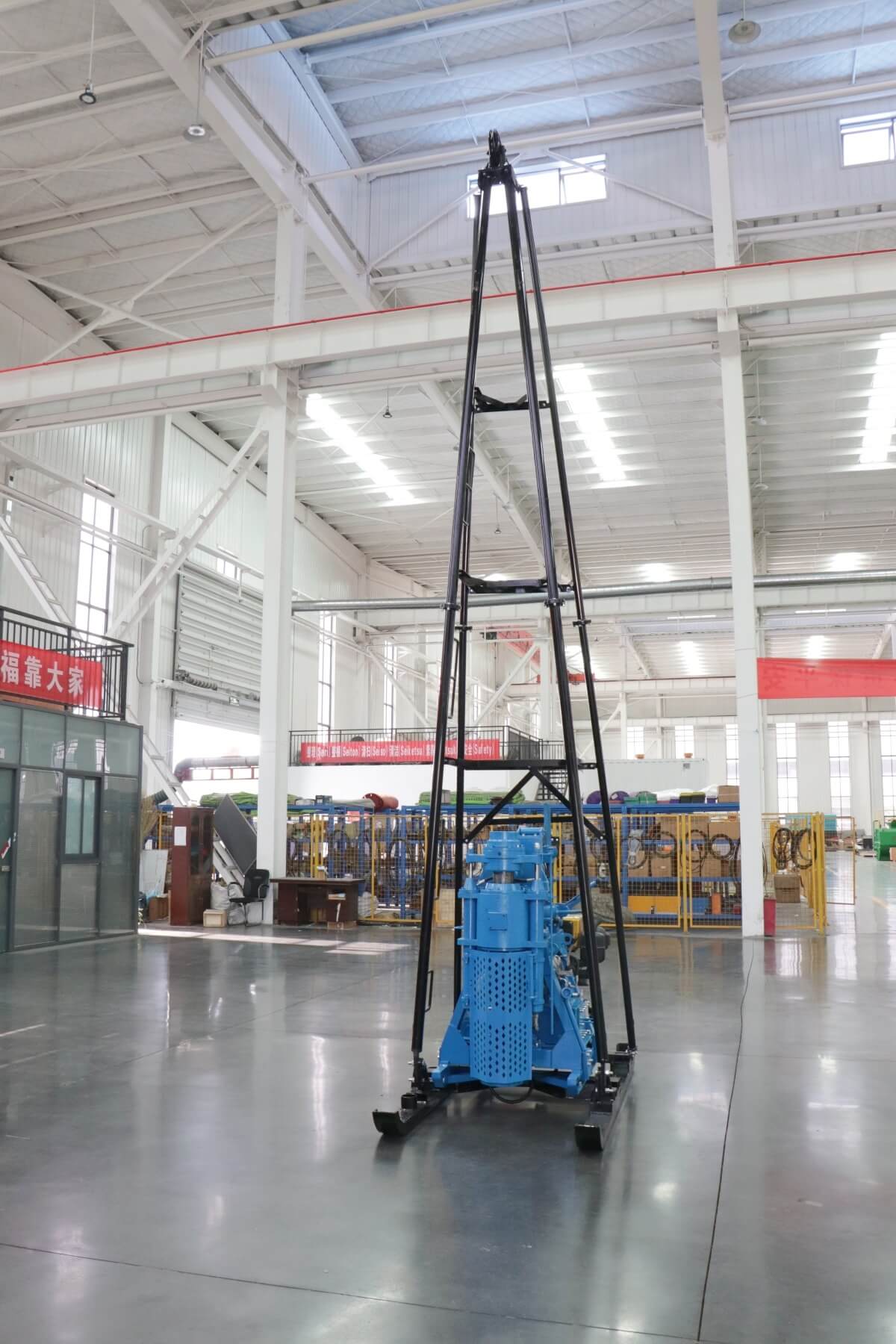
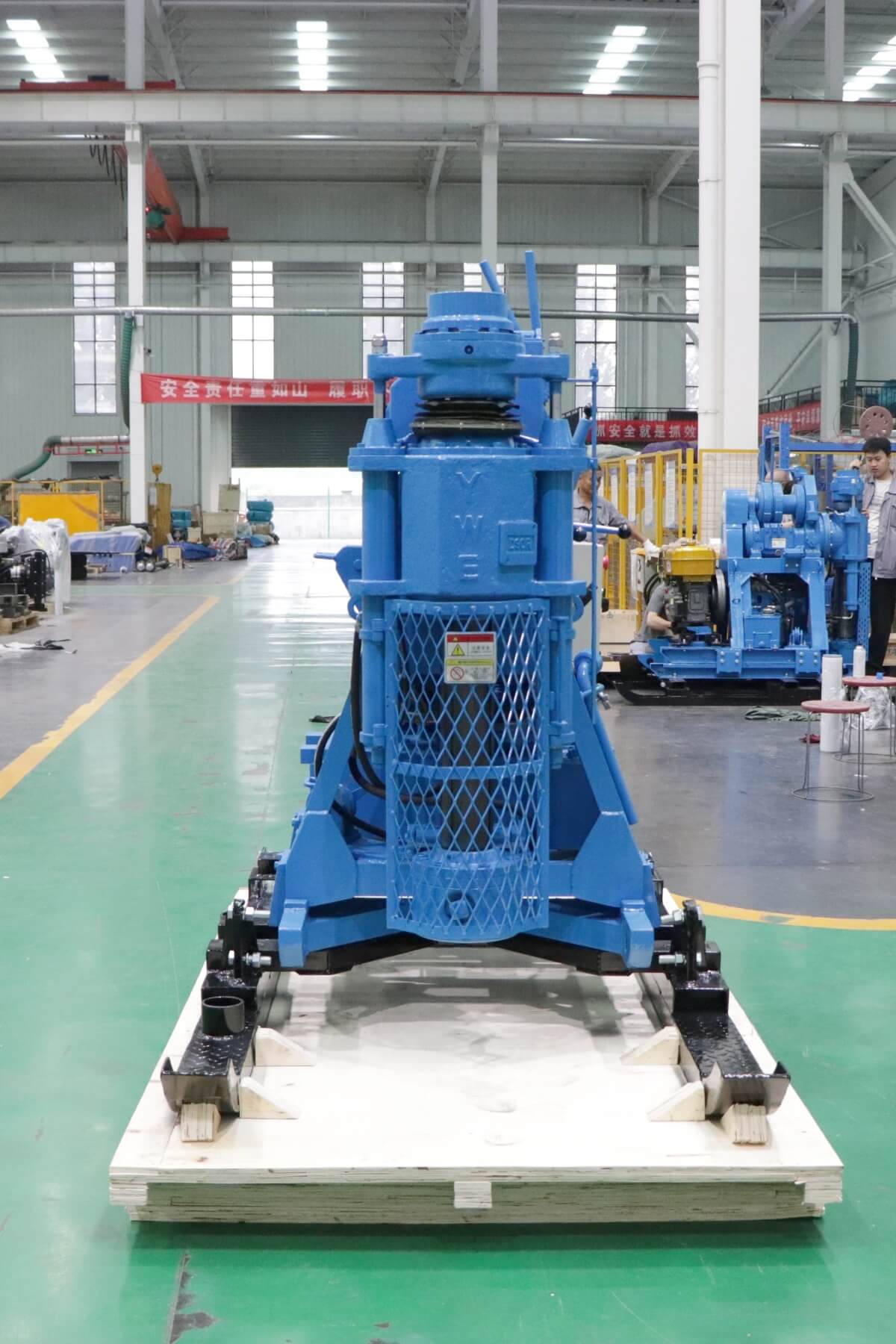
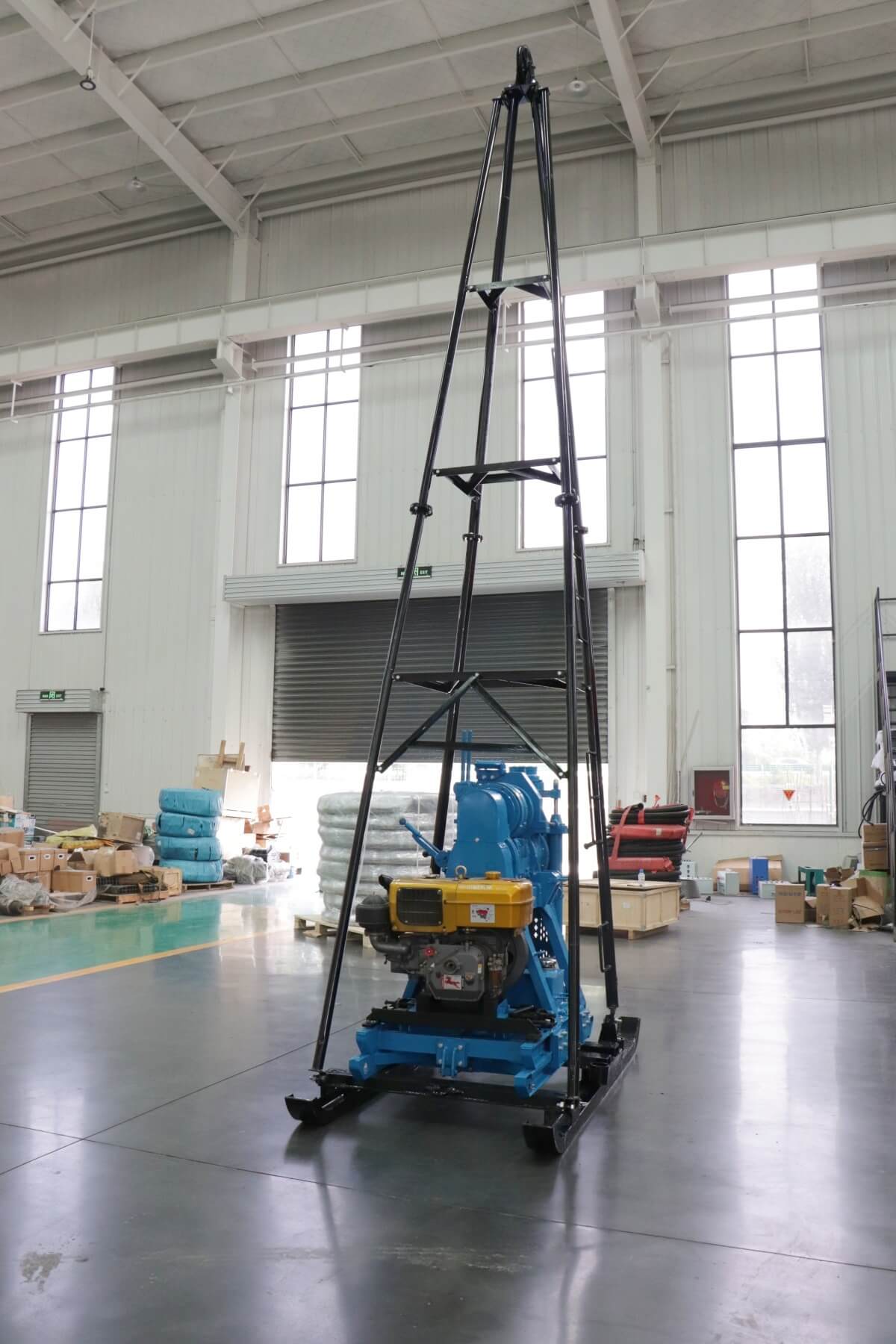
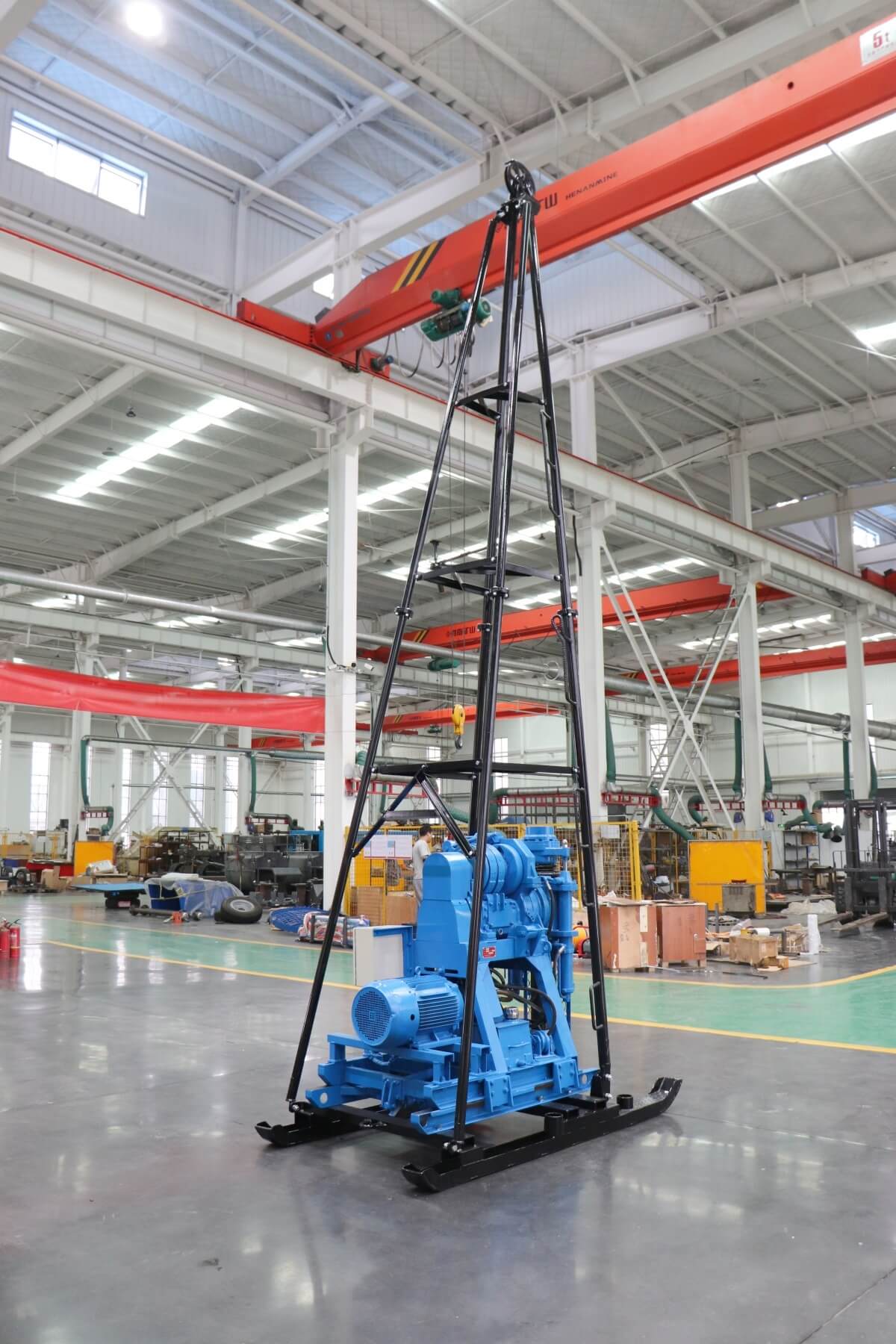
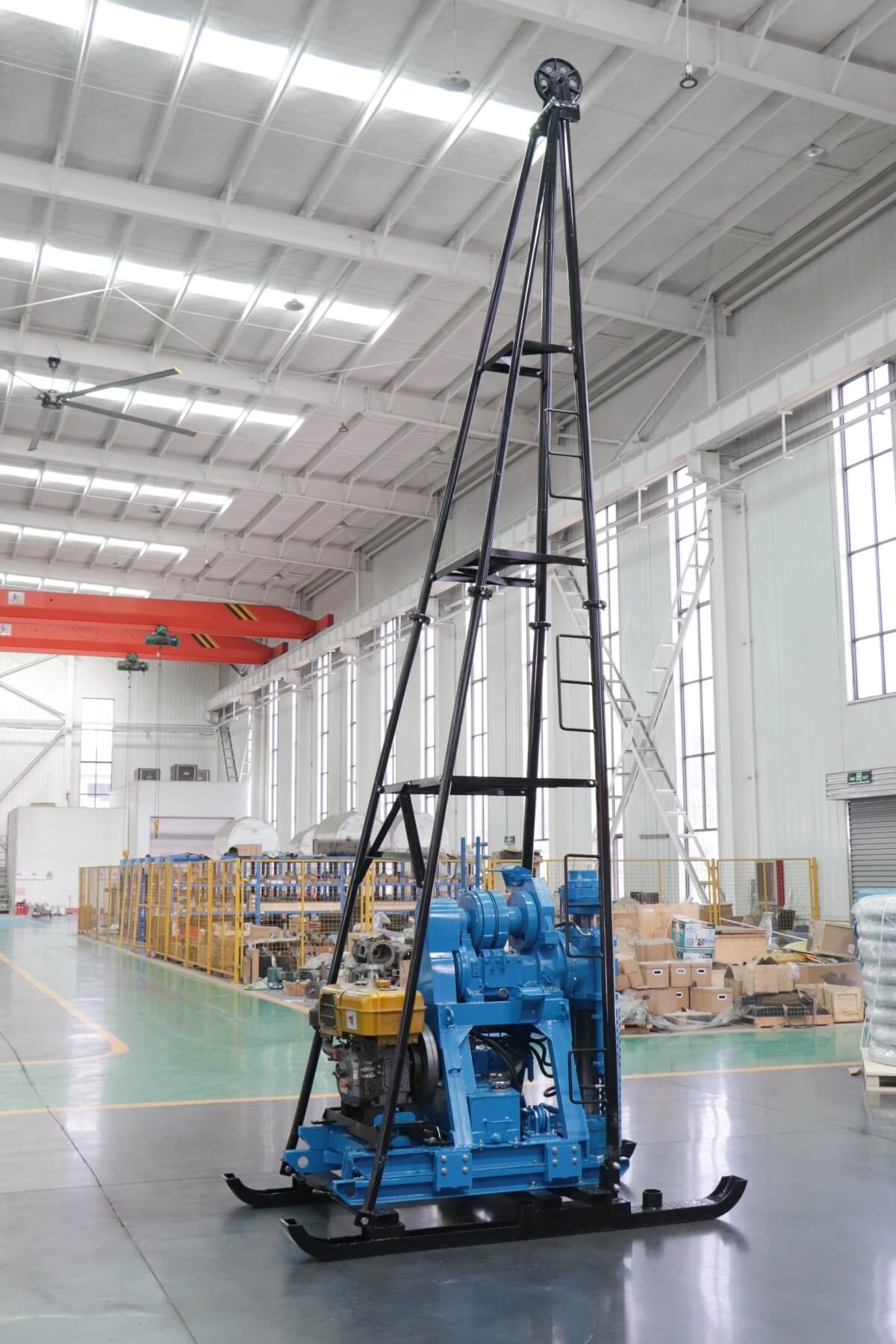
On this machine the transitions are mechanical. A 92 mm spindle bore sets what passes through the head, so casing, sampler and barrel have to be compatible with the same bore. A 500 mm feed stroke means the string is re-chucked frequently, and a manual three-jaw chuck makes each of those hands-on. A 1,500 kg hoist does the pulling, which matters when the casing has to come back out of a clay that grips it.
None of those figures is impressive on its own. Together they decide whether a three-tool hole is a morning’s work or a day’s.
The top two metres are the ones that matter
Fill, made ground, root zones and old services all sit in the upper part of the hole, and that is exactly where the foundation will be. It is also the interval crews work fastest, because it is easy ground.
Two habits fix this cheaply. Log the top of the hole as carefully as the bottom, describing fill thickness and composition rather than writing “made ground” and moving on. And take at least one sample from within the fill, since its properties, not the natural soil’s, may govern a shallow foundation.
Datum discipline
Foundation design works from a level, usually the underside of the footing or a project datum, while the driller works from the collar. The difference between the two is a survey task, and it is the most common source of a wrongly placed founding level.
Record the collar elevation by survey, state the datum on every log, and keep the two consistent between holes. A 0.3 m error at the collar moves the founding stratum by 0.3 m in the design, which is often the difference between a pad and a pile.
When the design arrives late
Pile design frequently lands after the investigation has started, and it usually asks for deeper holes than the original schedule. A foundation investigation drilling rig with capacity beyond the initial schedule absorbs that change without remobilisation. One that is already at its limit turns a design revision into a second site visit, which is the most expensive way to buy a meter of hole.
What to send with an enquiry
The foundation types and their sizes, the founding level or its range, the loads if they are known, the depth required and the tests each interval must support, the groundwater expectation, and the access to each position. With the footing sizes stated, the depth question answers itself. Write to sales1@leadcrete.com.