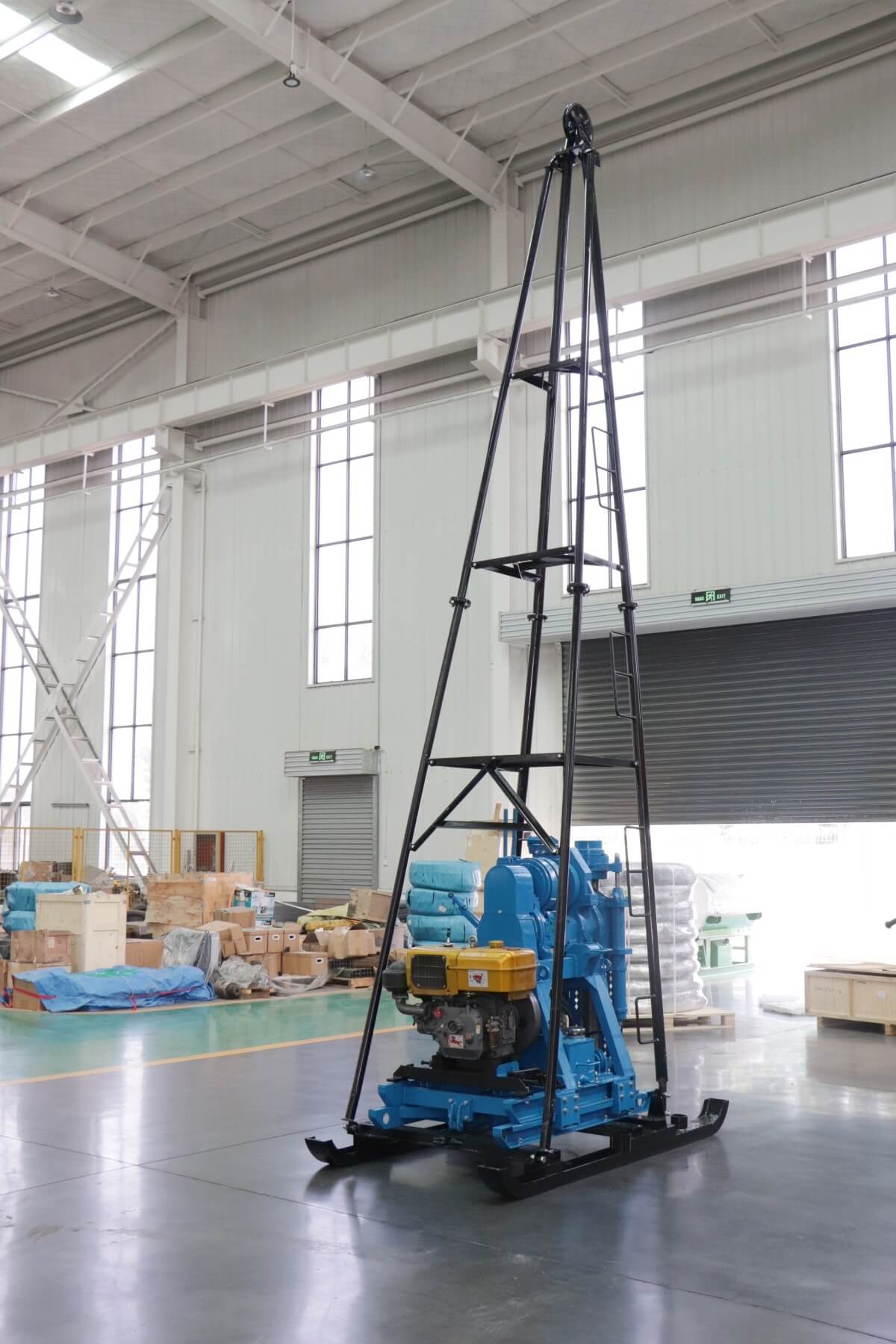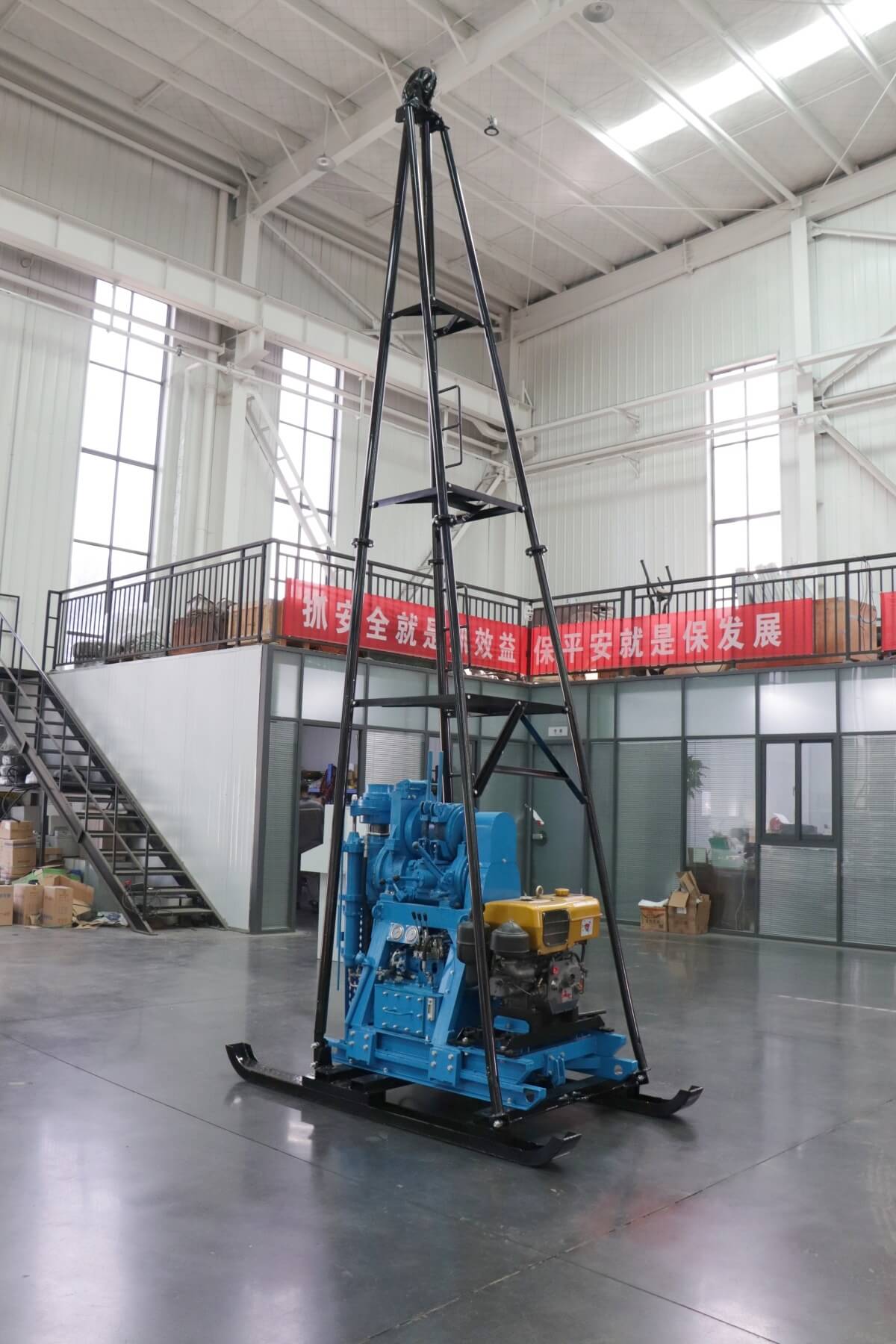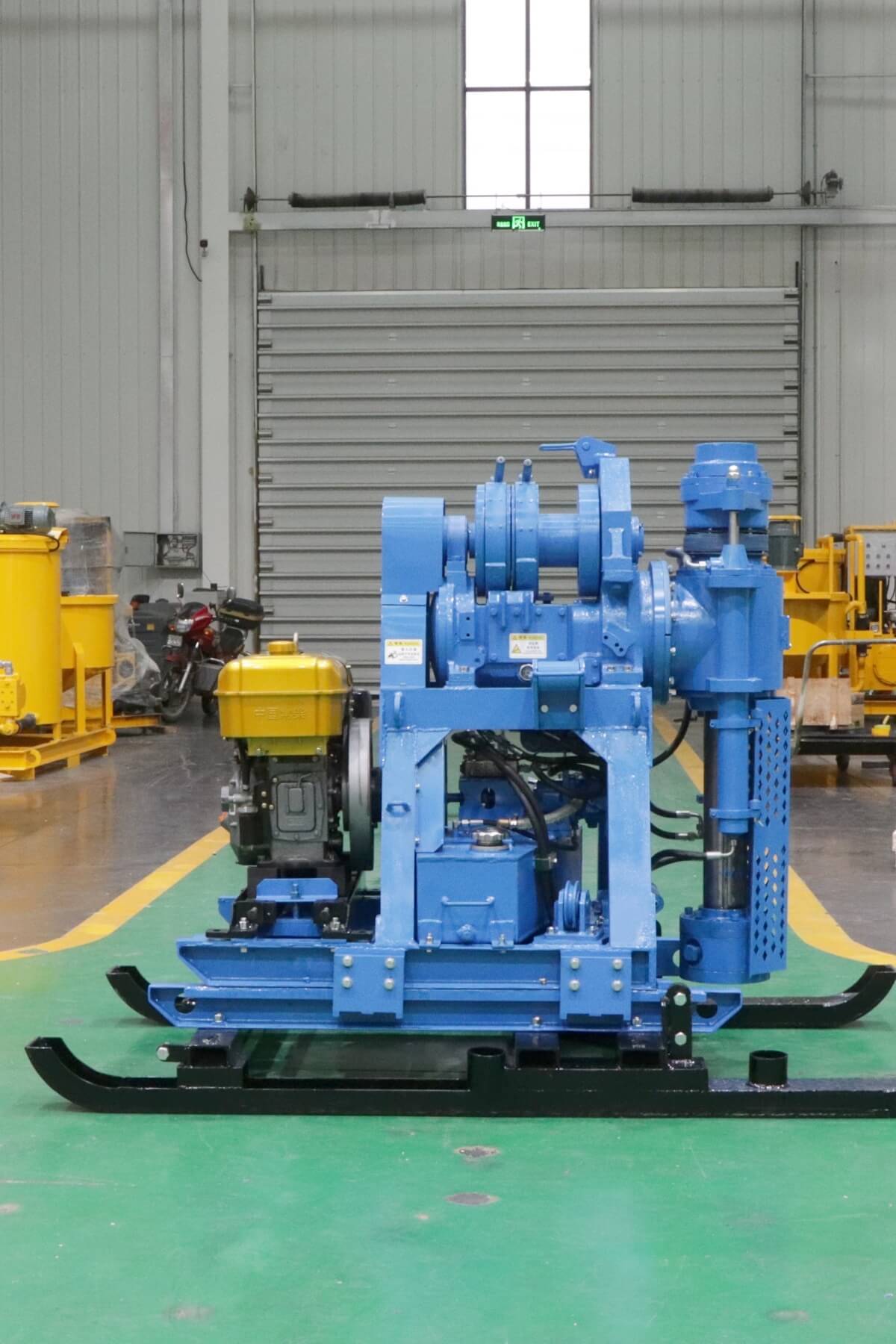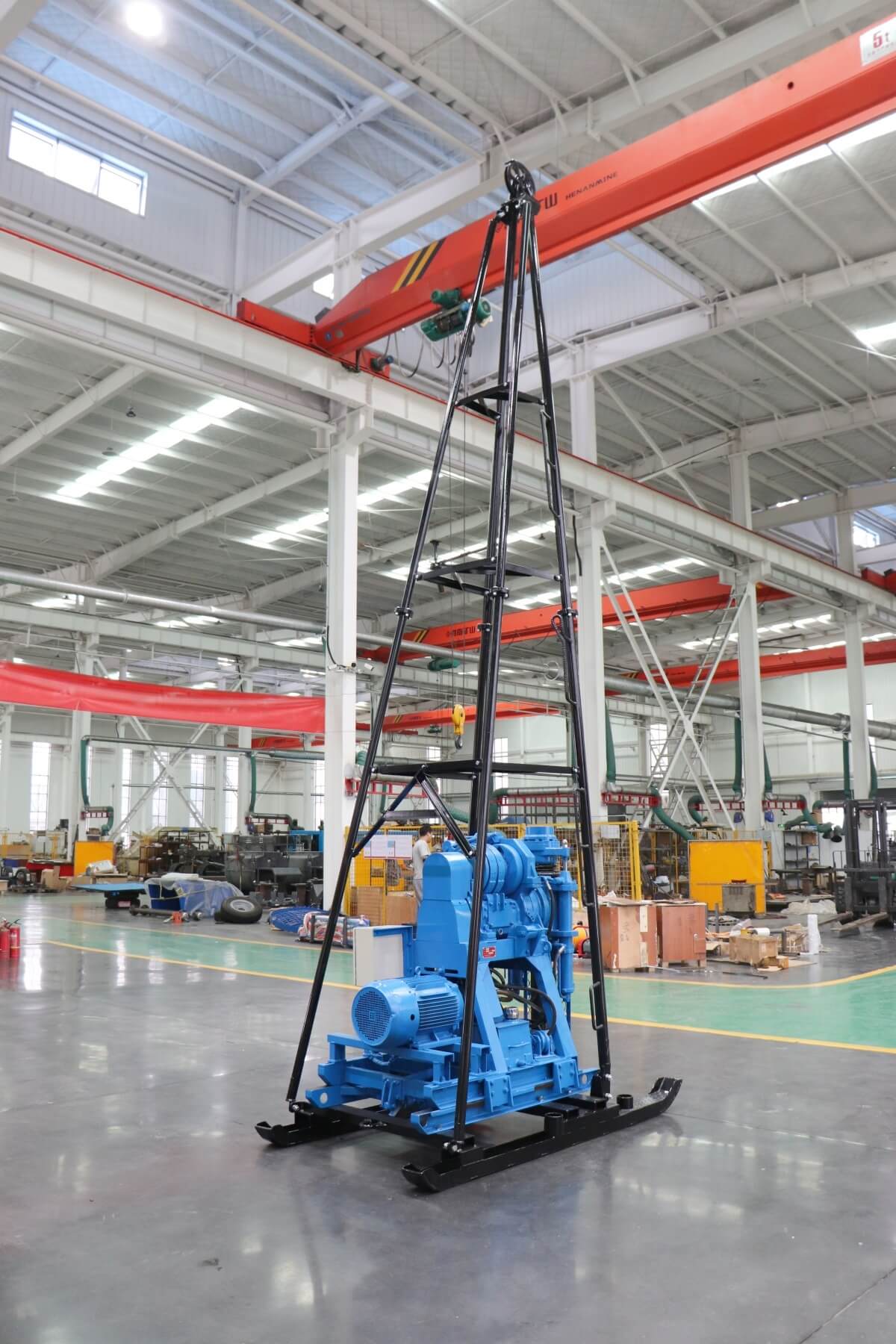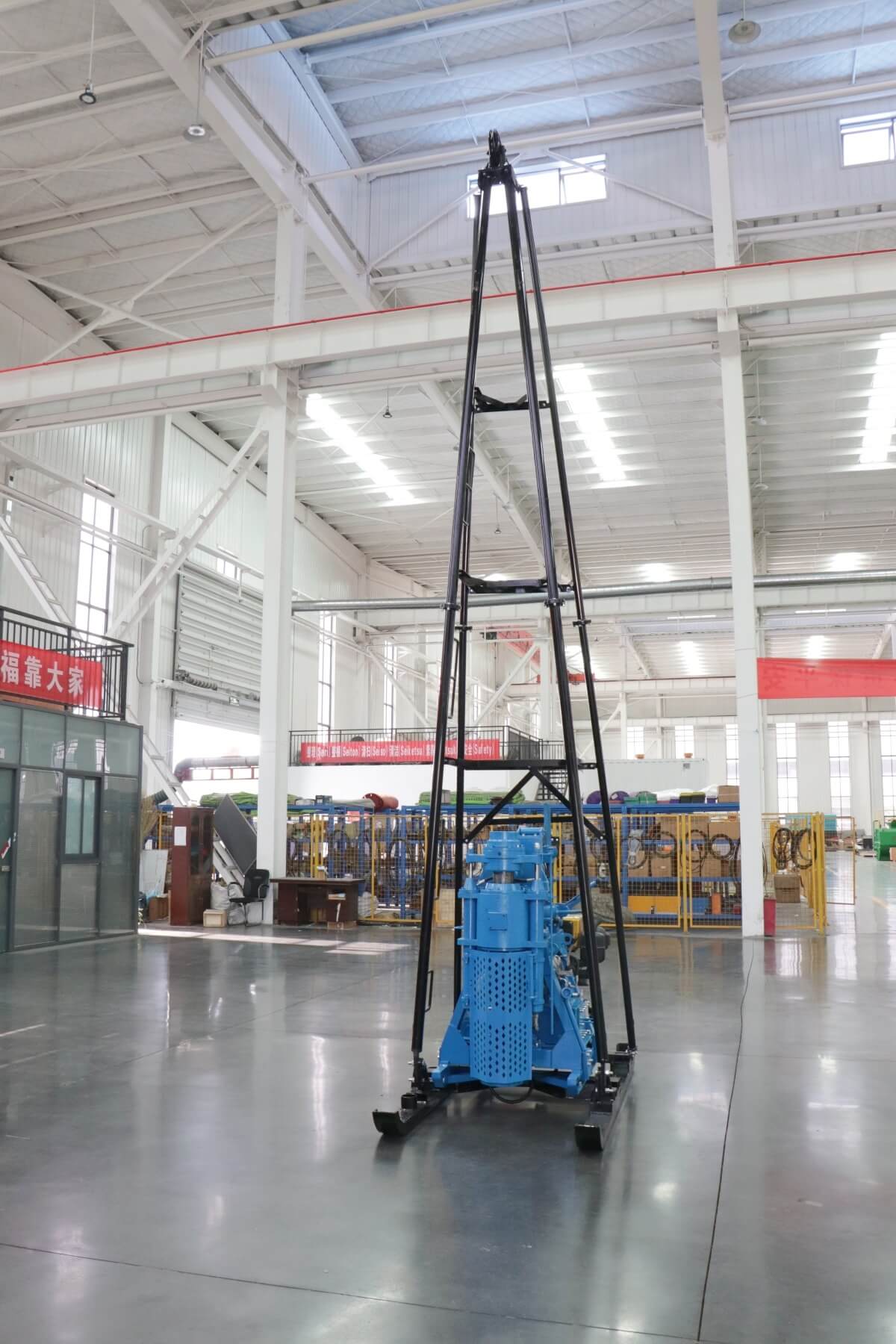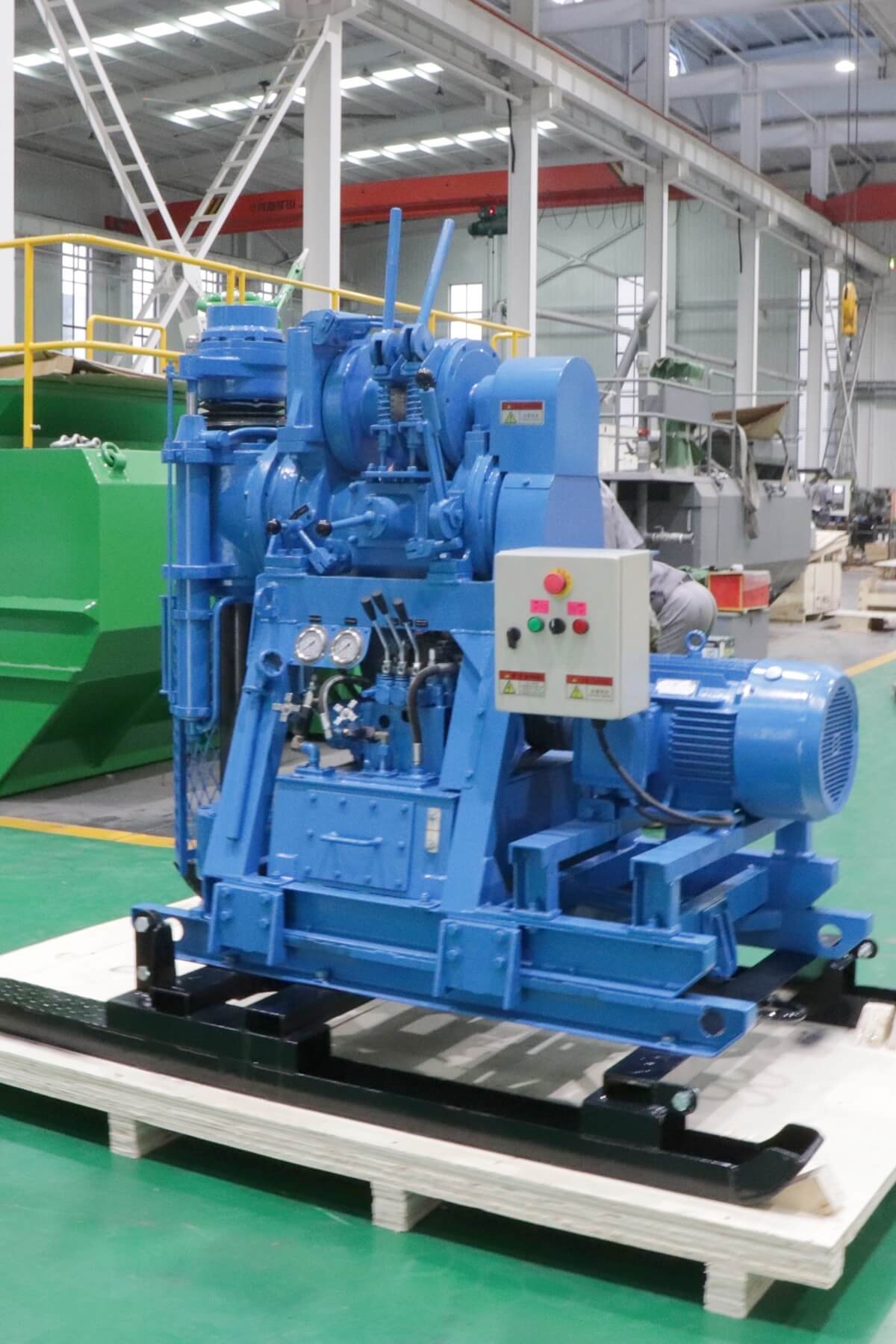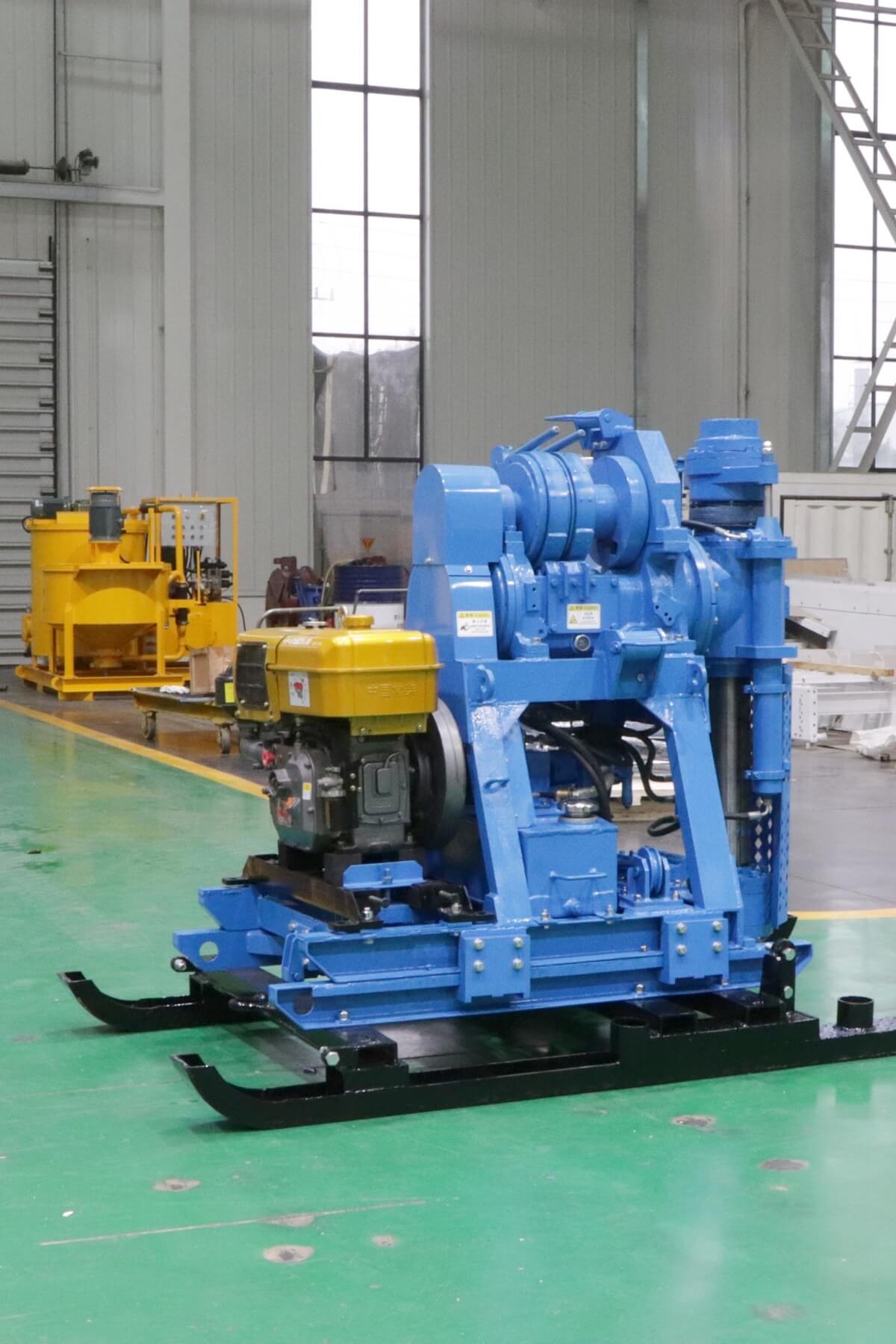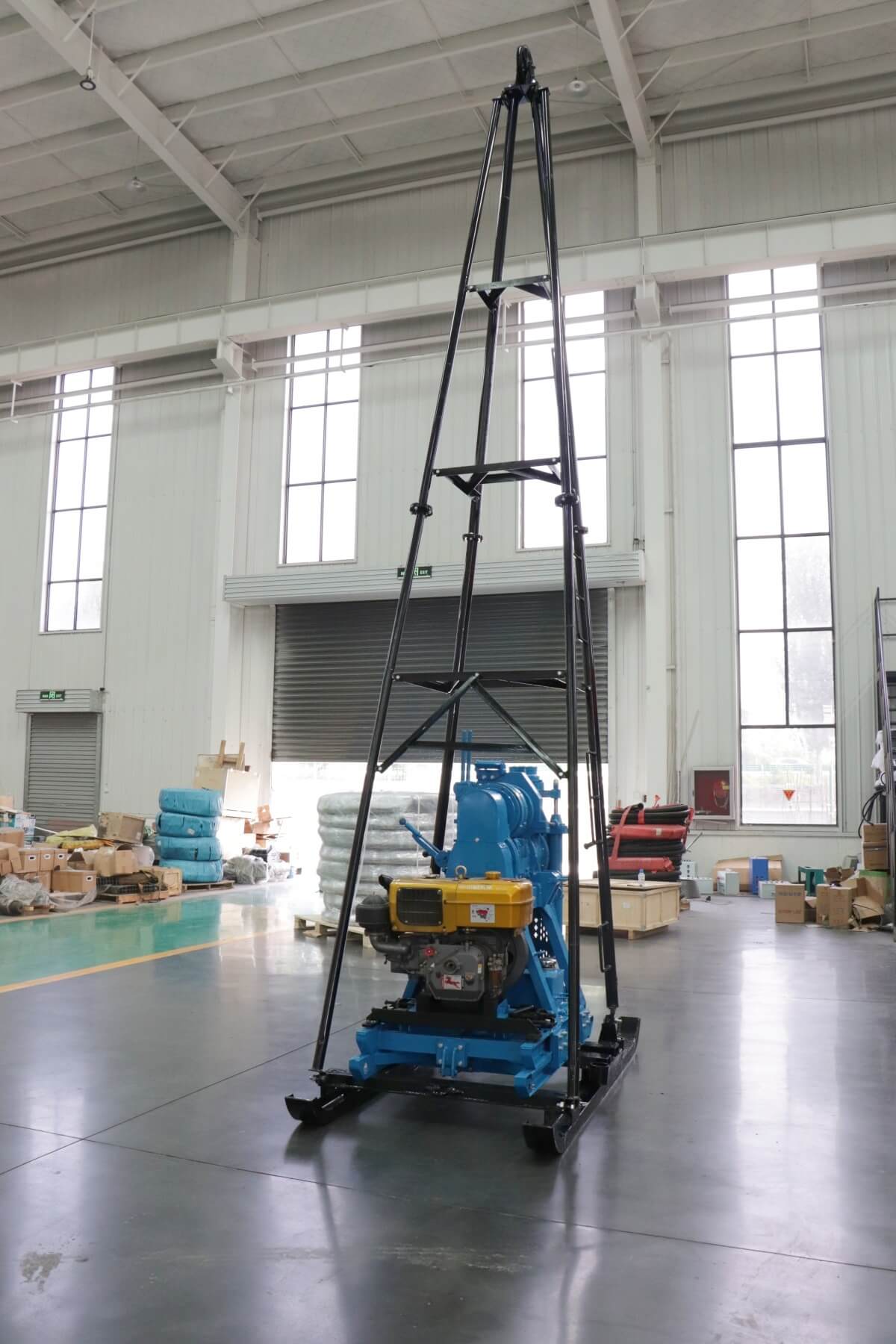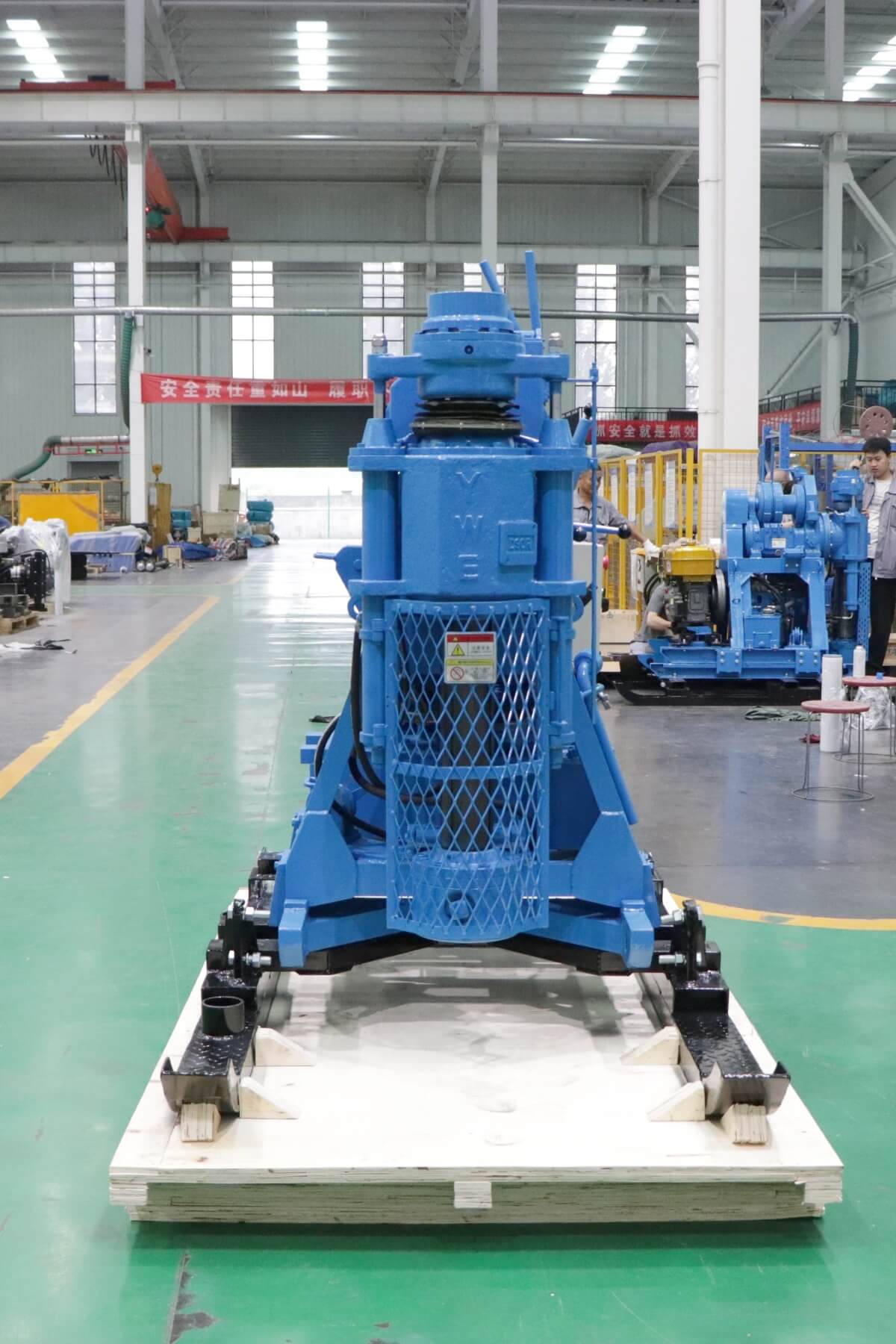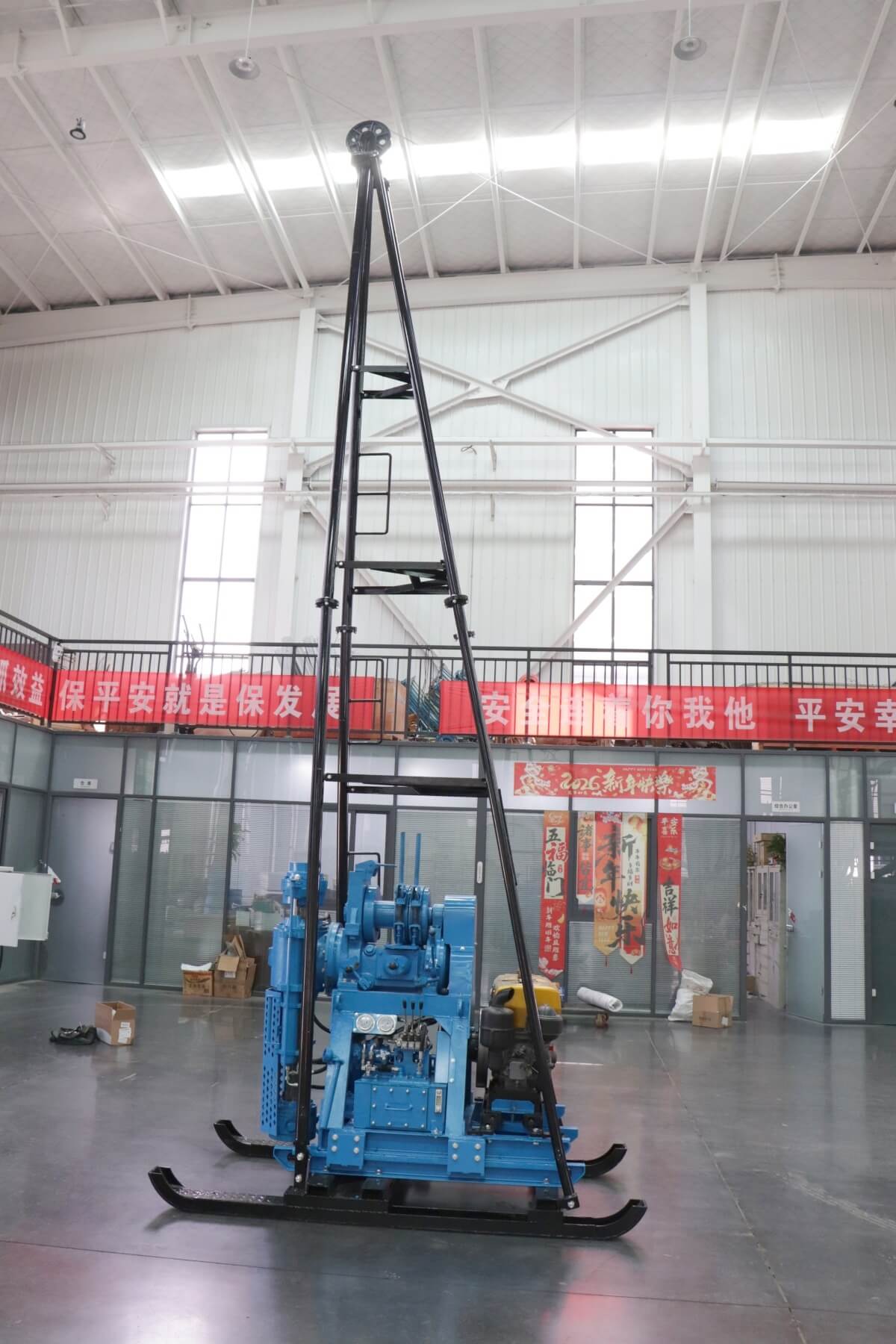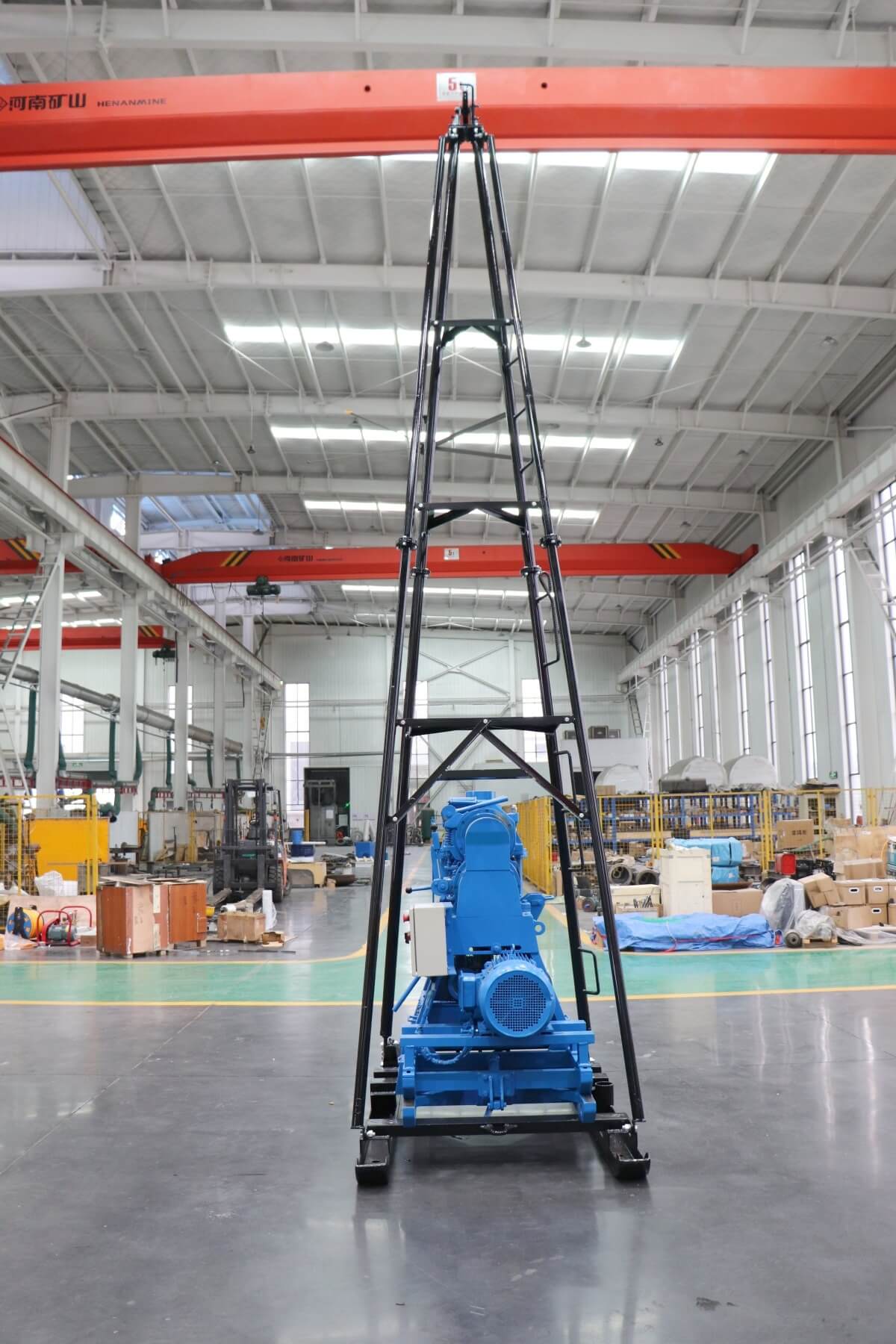
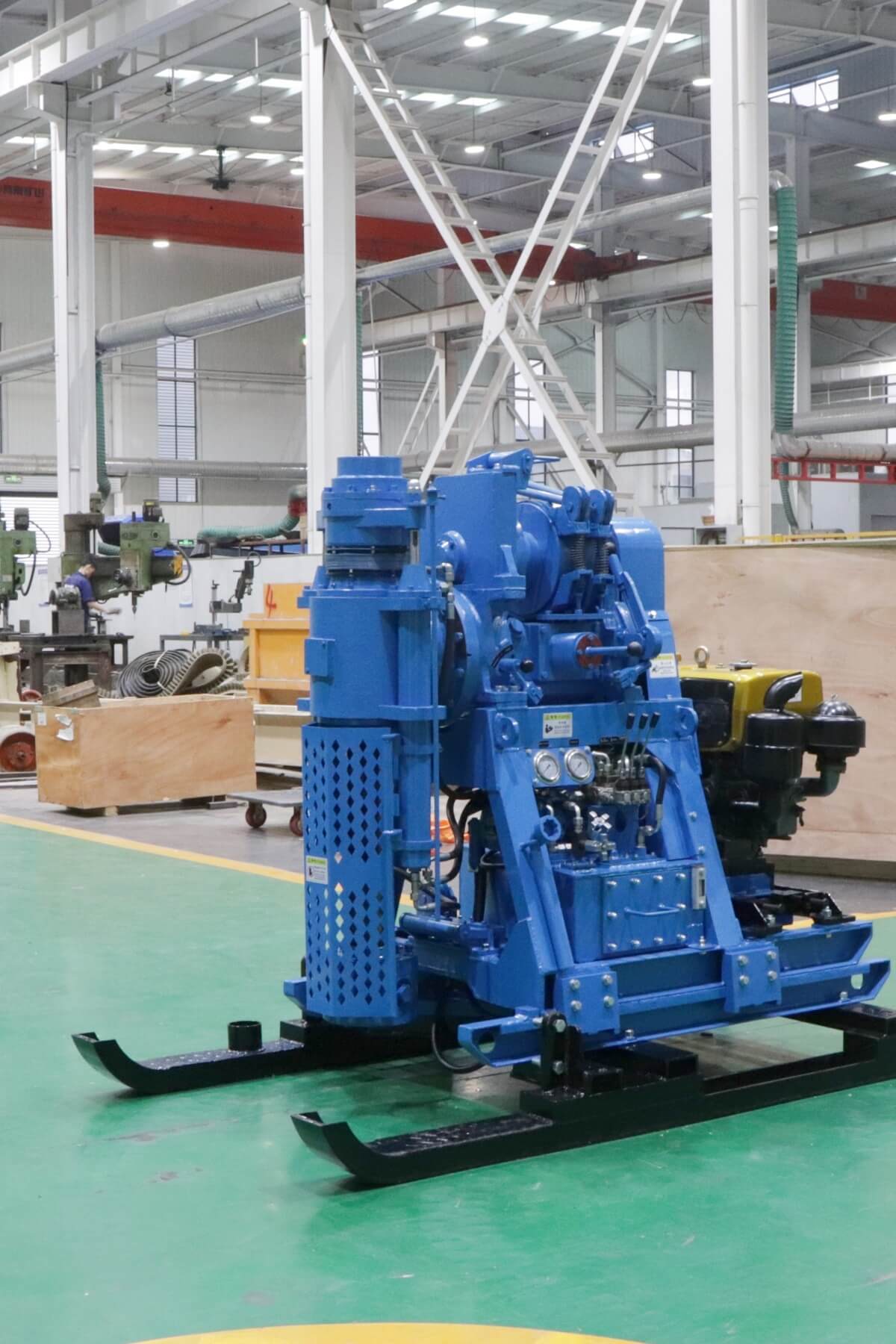
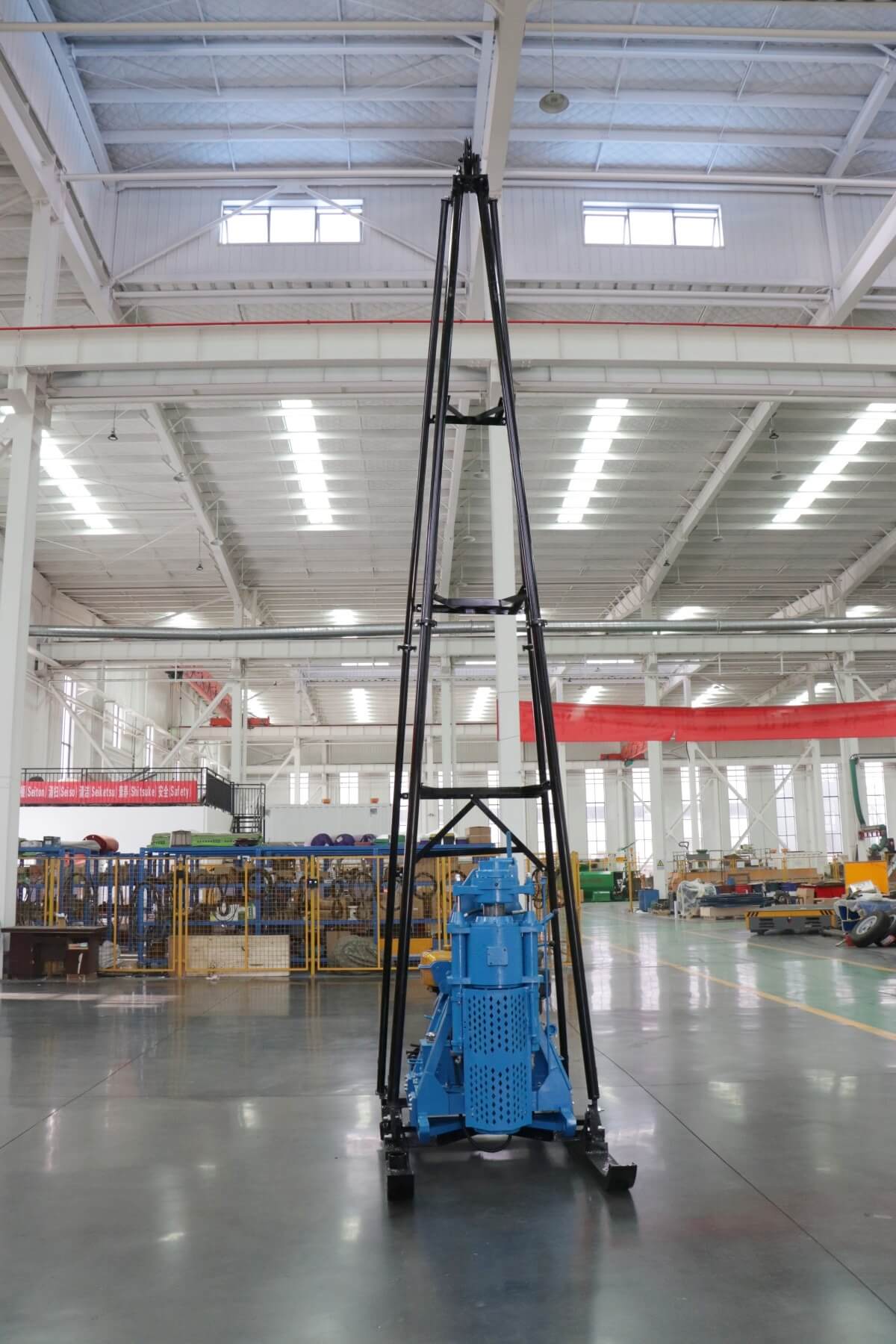
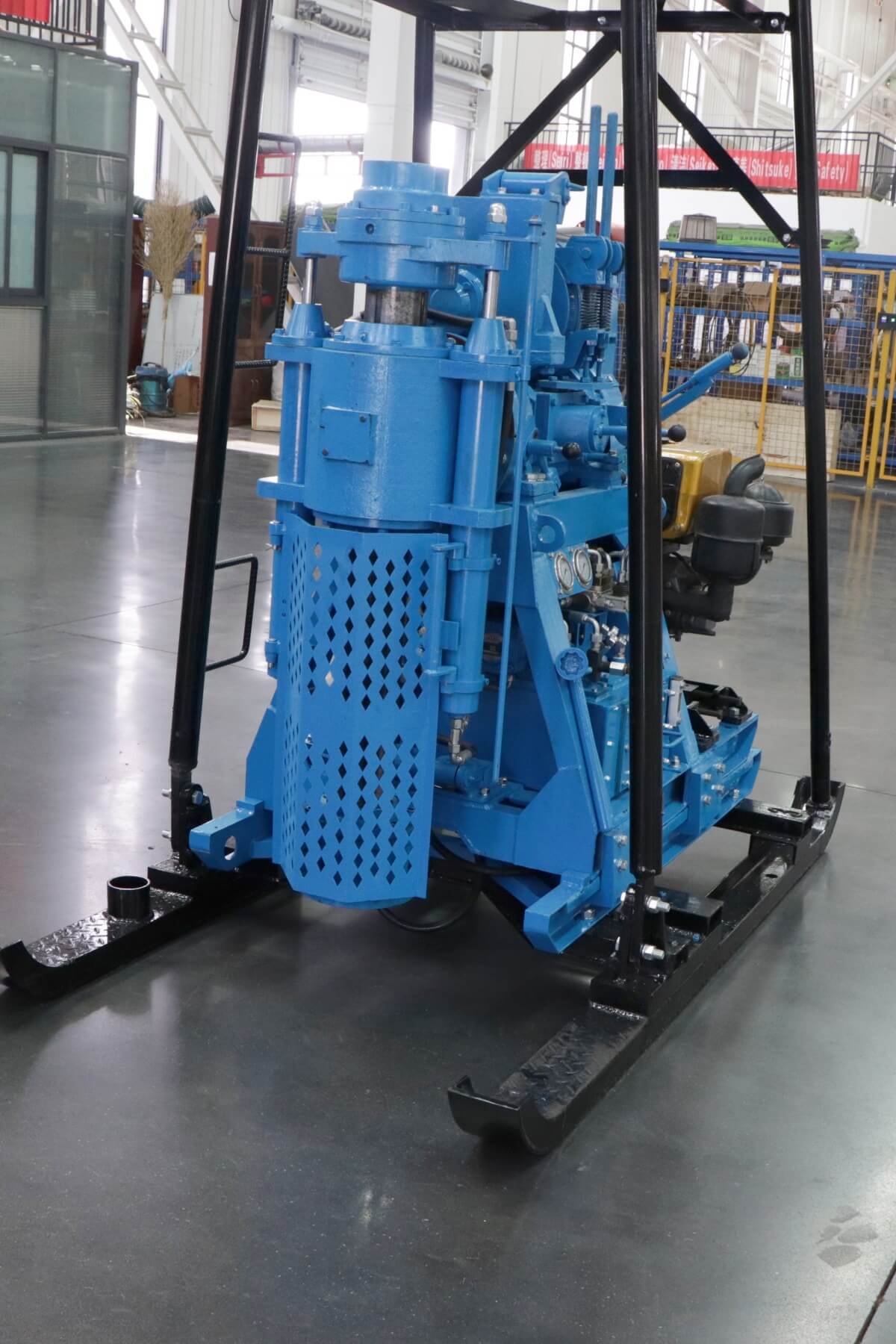
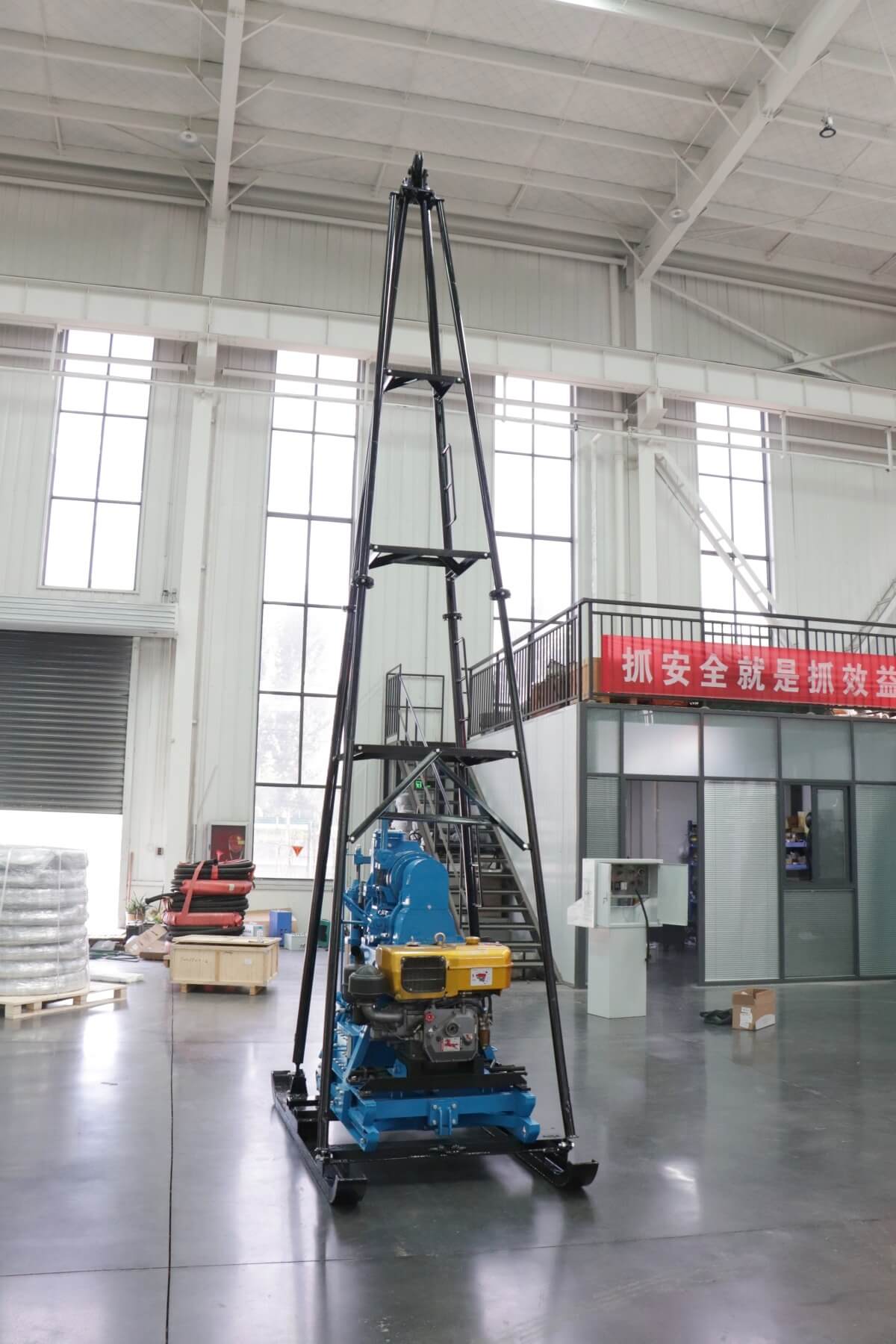
Vertical and Inclined Core Drilling Rig
A machine that drills both vertical and inclined holes is not two machines in one frame. It is one machine whose load path changes the moment the head leaves plumb, and the changes are predictable enough to plan for. Buying a vertical and inclined core drilling rig without understanding those changes is how crews end up with a hole that wandered, a string that slid, or rods that had to be pulled with a winch.
Five things change when the head tilts
Weight on bit stops being free. The string wants to leave the hole at every connection. The reaction at the base is no longer vertical. The hole tends to drop below its designed line. And the cuttings stop being carried out evenly.
Each of those maps onto a part of the machine, and each has a field consequence that shows up in the first week.
Weight on bit becomes a control problem
In a vertical hole, gravity helps. The driller adds feed and the string’s own weight does part of the work. Tilt the hole and a component of that weight now acts along the axis, pushing the bit forward whether or not the driller wants it.
The job inverts: the driller holds back rather than pushes. On our LE90R the upward thrust is quoted at up to 5,580 kgf at 103 bar, and in an inclined hole that figure is best read as the control budget for keeping weight on bit where it belongs.
A machine without that reserve cannot hold a consistent feed in an inclined hole, and the symptom is a hole that alternately over-feeds and stalls.
The string wants out at every connection
Break a connection in an inclined hole and nothing holds the string but the chuck and the brake. On this machine the chuck is a manual three-jaw type, so the driller’s hands are on it while the string is loaded, and the sequence matters more than the strength of any single component.
The planetary hoist with wrap-around brake and clutch bands, operated by over-centre cam levers, is what carries the string between connections. Two habits follow: keep the brake set before the chuck is opened, and never rely on friction alone on a steep hole.
The reaction is no longer vertical
A vertical hole pushes straight down into the skid, and the machine’s 1,300 kg mass resists it. An inclined hole pushes at an angle, so part of the reaction now acts horizontally, trying to slide or rotate the frame.
That has two consequences. Anchoring has to be designed for the horizontal component, not just for lift. And the mass that feels reassuring in vertical work contributes less than the arithmetic suggests. On a slope, the anchor is the specification, not an accessory.
Inclined holes tend to drop
Rods lie on the low side of an inclined hole, and the bit follows the low side. The result is that deviation in an inclined hole has a preferred direction, unlike a vertical hole where it can wander anywhere.
That makes deviation something to plan rather than correct. Set the angle slightly high if the target has tolerance, survey before the hole is too deep to matter, and record the survey with the log. A one degree error in the set angle is half a metre at thirty metres, and no amount of careful drilling later removes it.
Cuttings settle on the low side
Flush that clears a vertical hole will barely clear an inclined one at the same velocity. Cuttings drop out of suspension and build a bed along the low side, and the bed is what grabs the string when the crew tries to pull out.
The answer is more flush velocity, more frequent short trips, and attention to the return at the collar. It is also the reason an inclined hole needs a reliable water supply rather than an improvised one, and the reason a pump is a separate purchase on this class of machine.
Setting the angle, and checking it again
On a vertical and inclined core drilling rig the head swivels to set the angle, quoted at 360°, and that angle has to be verified at the collar rather than trusted from the setting alone.
Check it twice: once before drilling, and once after anchoring, because setting anchors on a slope can move the frame. If the hole is being set out to intersect a target at depth, the second check is the one that matters.
When vertical is the right answer
On a vertical and inclined core drilling rig, inclined holes cost more in every direction: time, flush, rod handling, deviation risk. If the target can be reached vertically, drill it vertically.
Angle drilling earns its place where the target sits under an obstruction, where a slope or a structure has to be investigated across its section, where a fault or contact cannot be met at a useful angle from above, and where surface access is missing over the target.
What to send with an enquiry
The angles you need and whether they are fixed or a range, the depth, what the hole has to intersect, the ground conditions, the space available for anchors, the flush supply at the collar, and whether the holes are on a slope. Send these to sales1@leadcrete.com.