Portable Diamond Drill for Remote Sites
Remote is a logistics word rather than a drilling word. A machine that reaches a remote site has passed the first test and started the harder one, which is running for weeks without a workshop, a supplier or a reliable fuel truck. Judging a portable diamond drill for remote sites means judging it on what it consumes and what it needs, because on those sites a rig that is ten per cent lighter but stops twice as often has made the programme worse.
The chain decides the specification
Every remote job has the same four links: sea freight, inland road, track, and the last hundred metres. Each link has a weight limit and a dimension limit, and the tightest of them sets the specification.
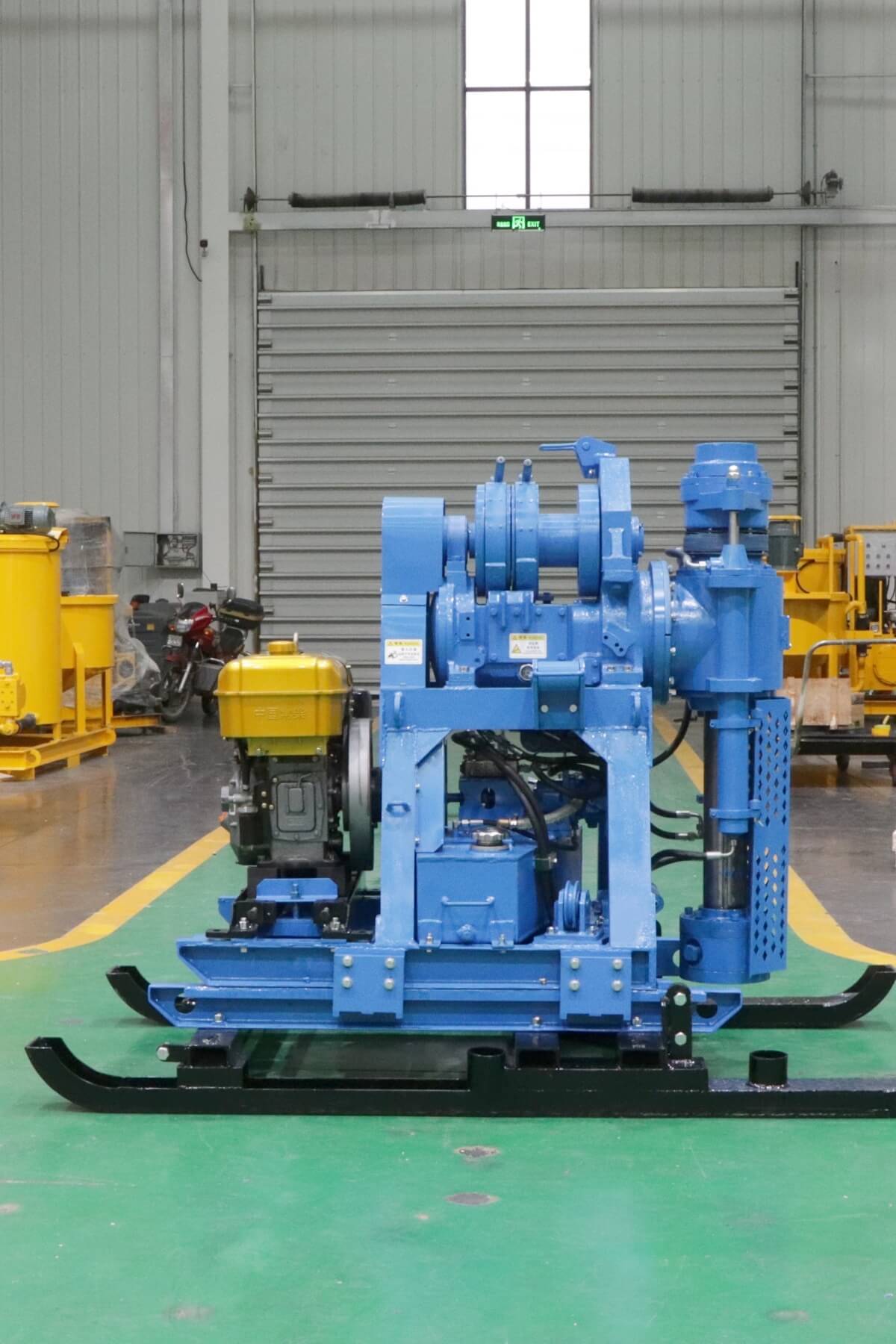
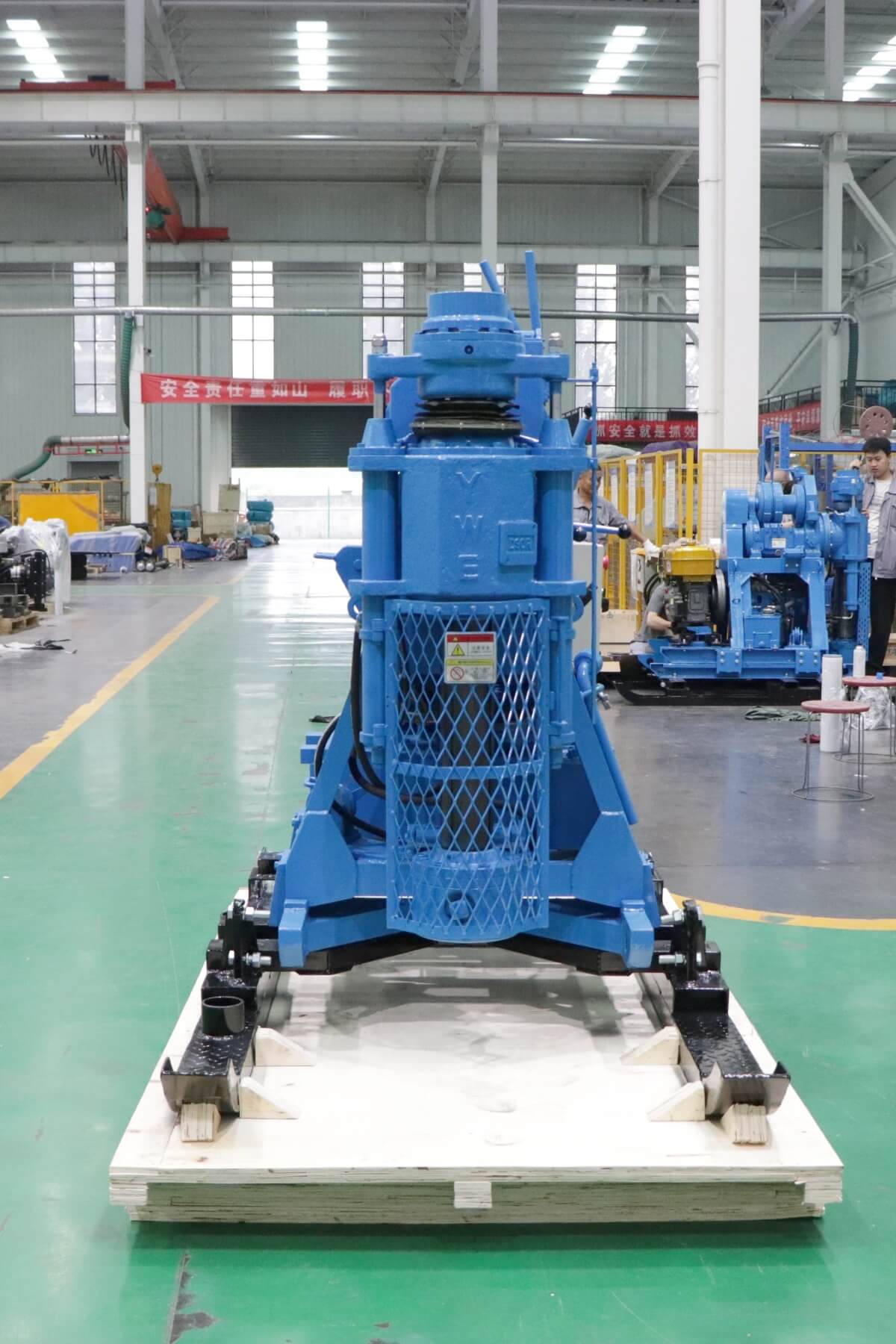
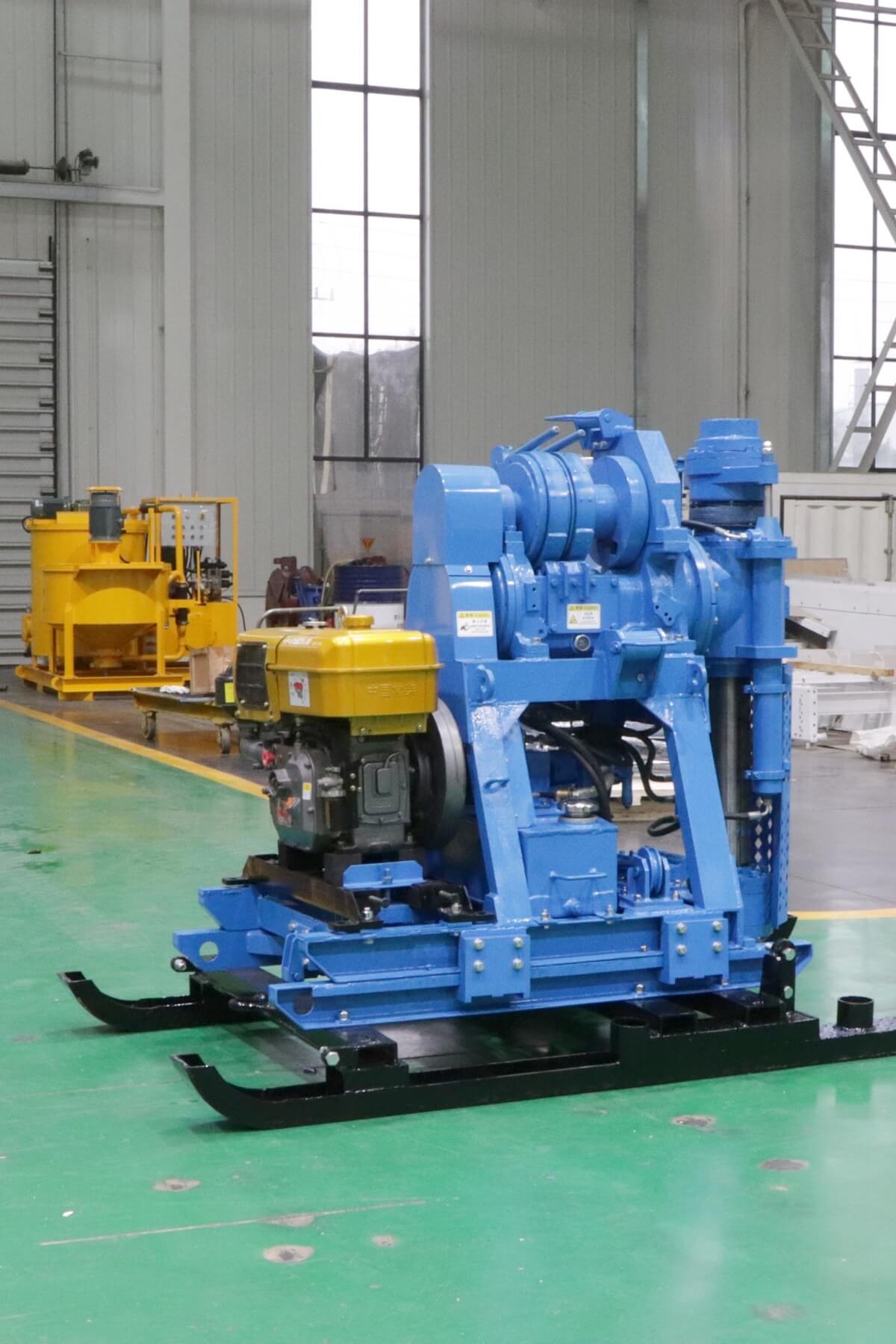
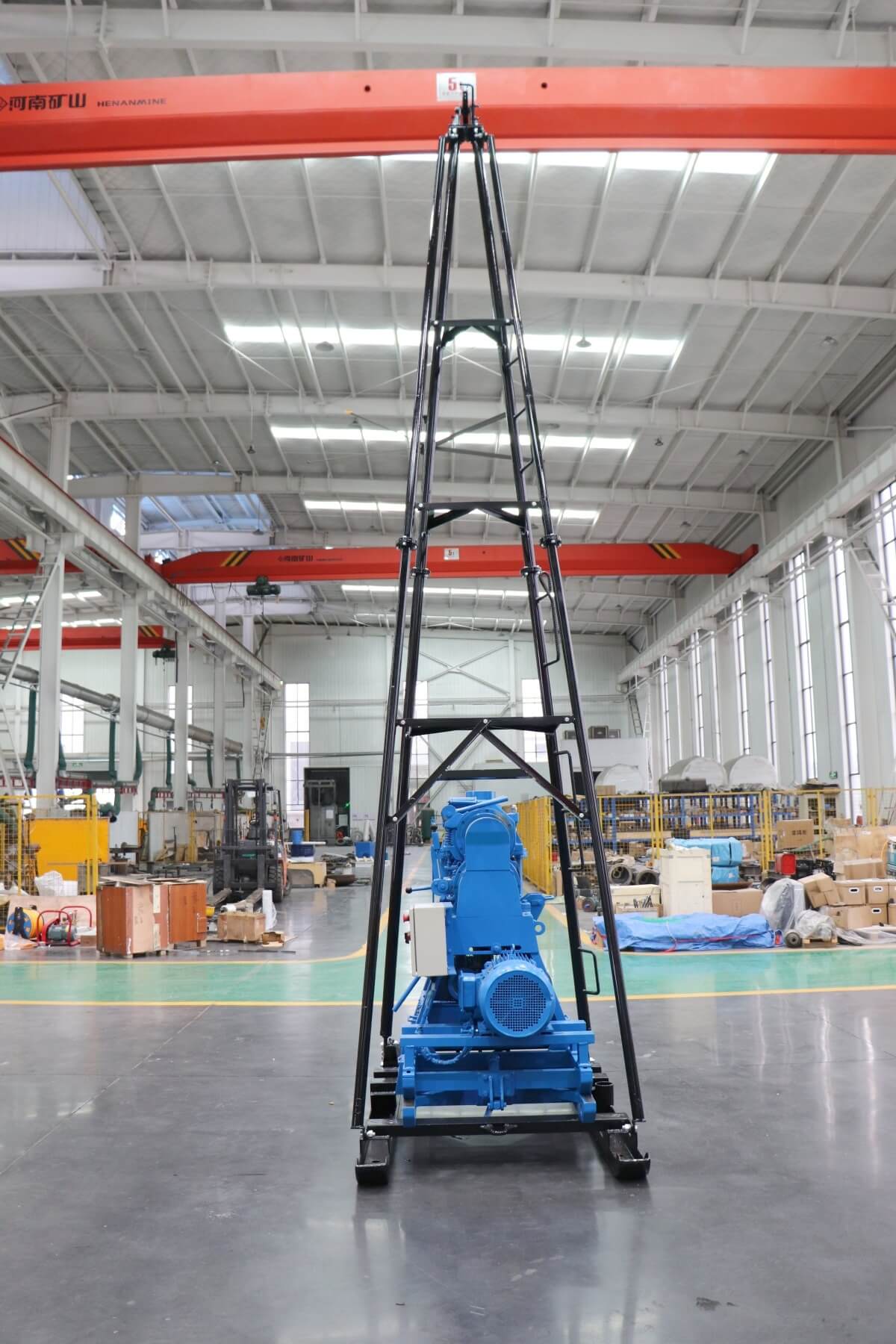
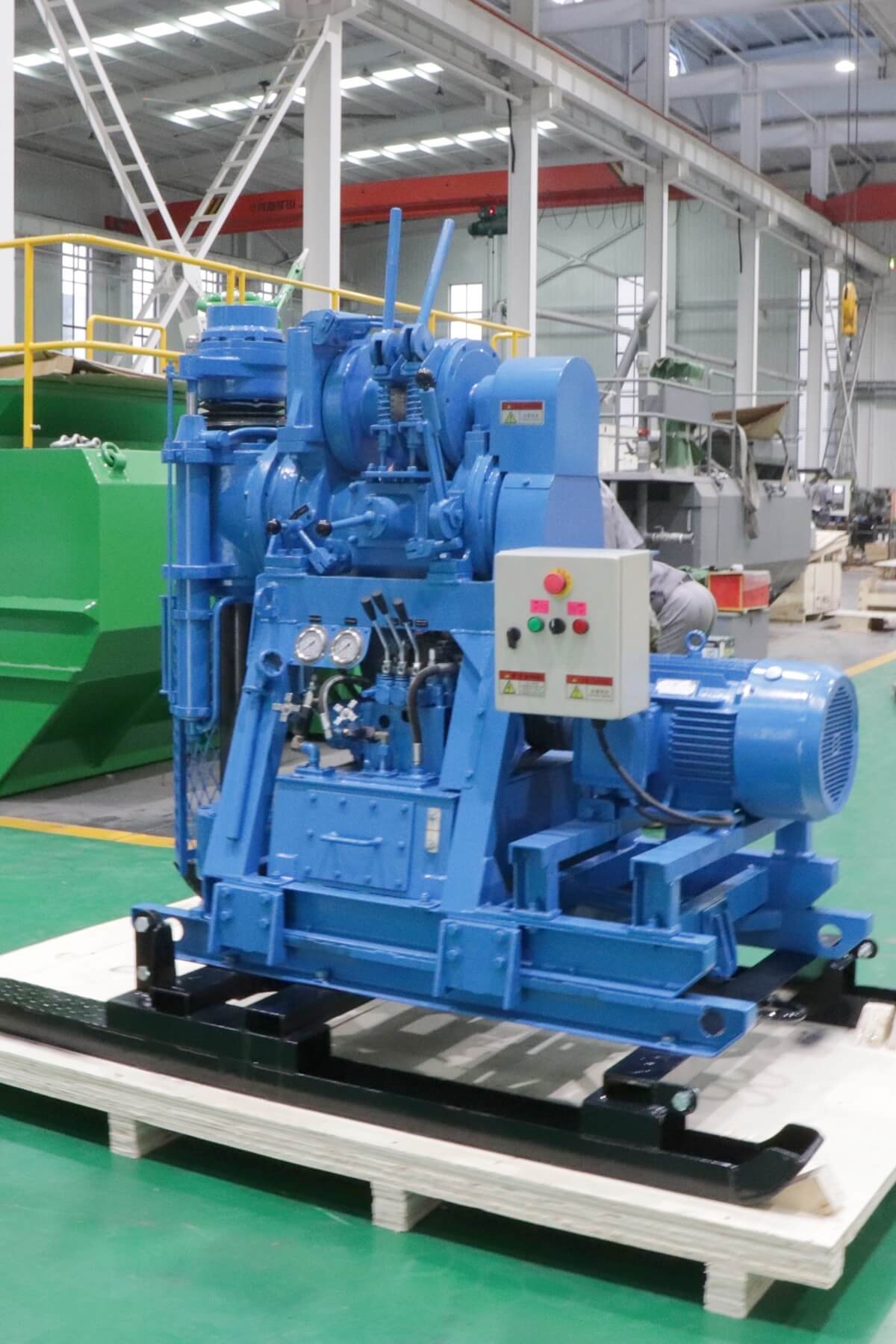
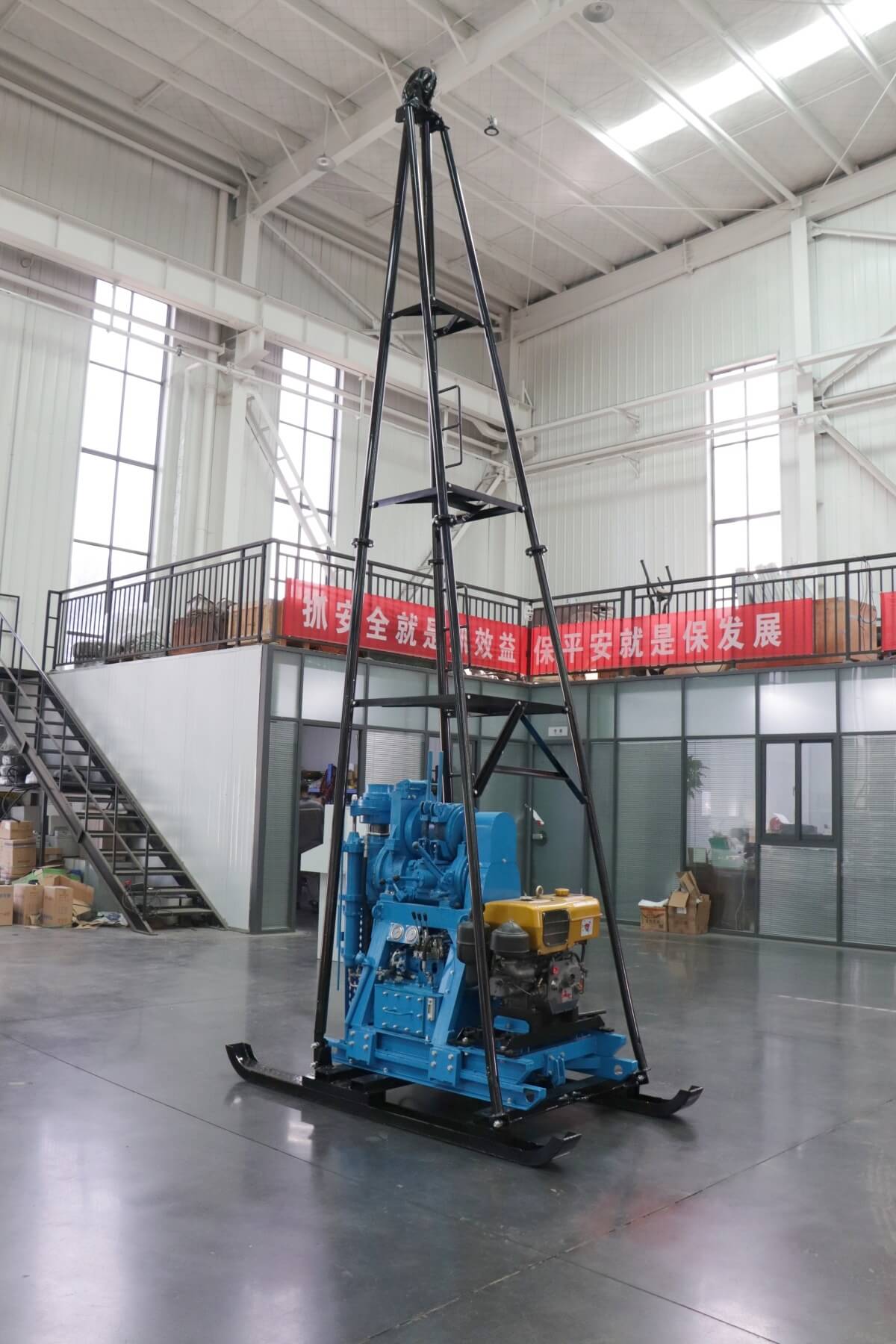
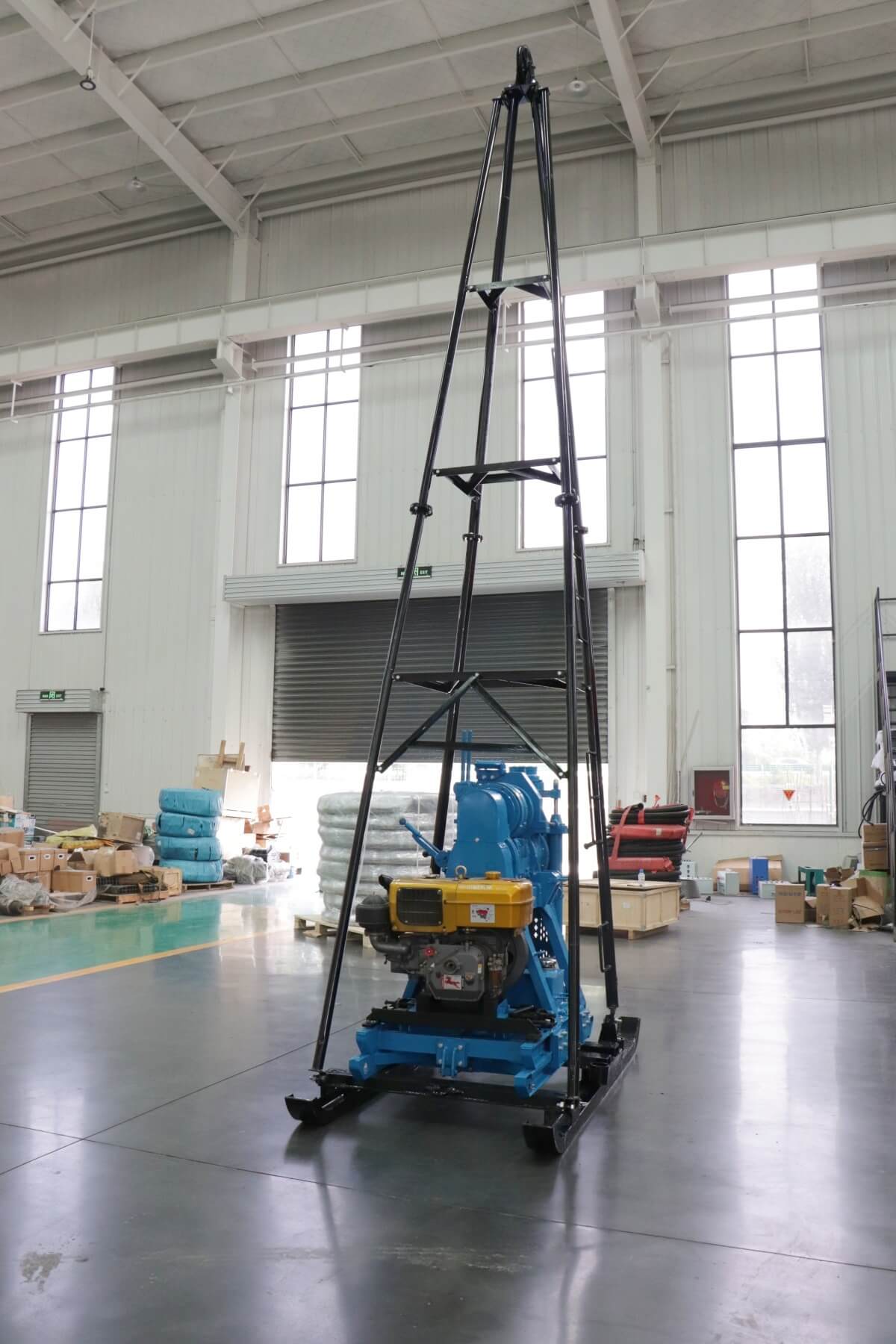
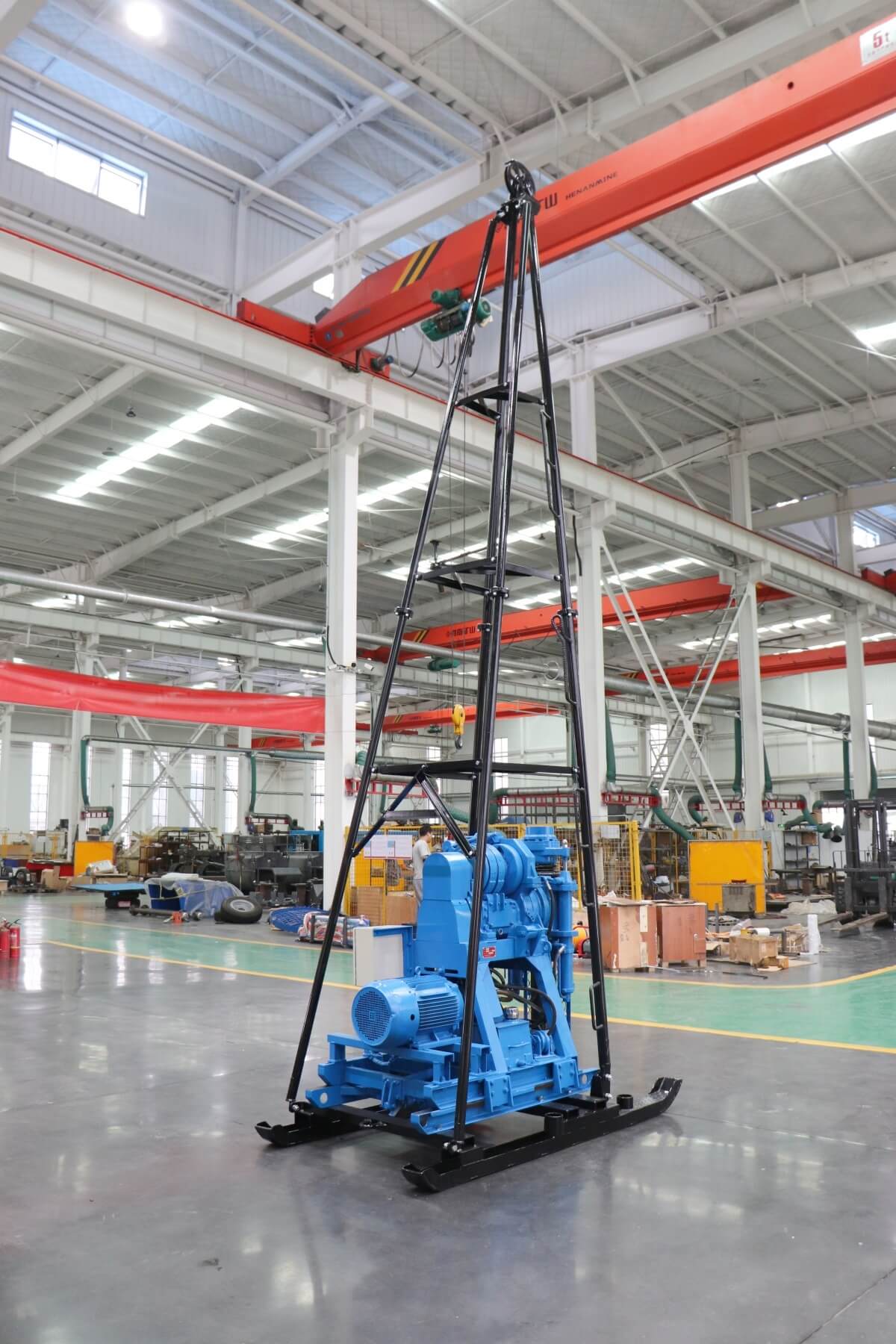
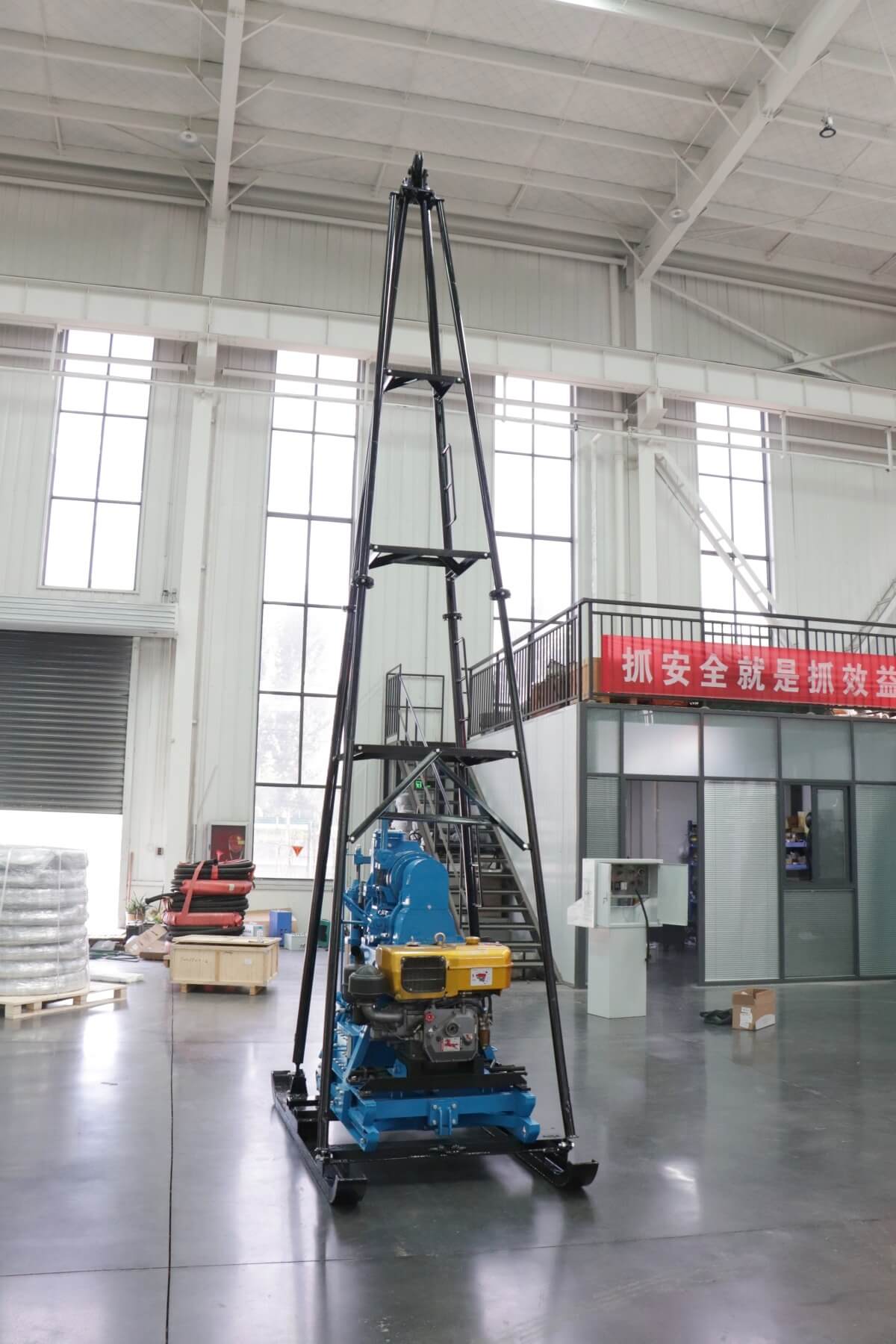
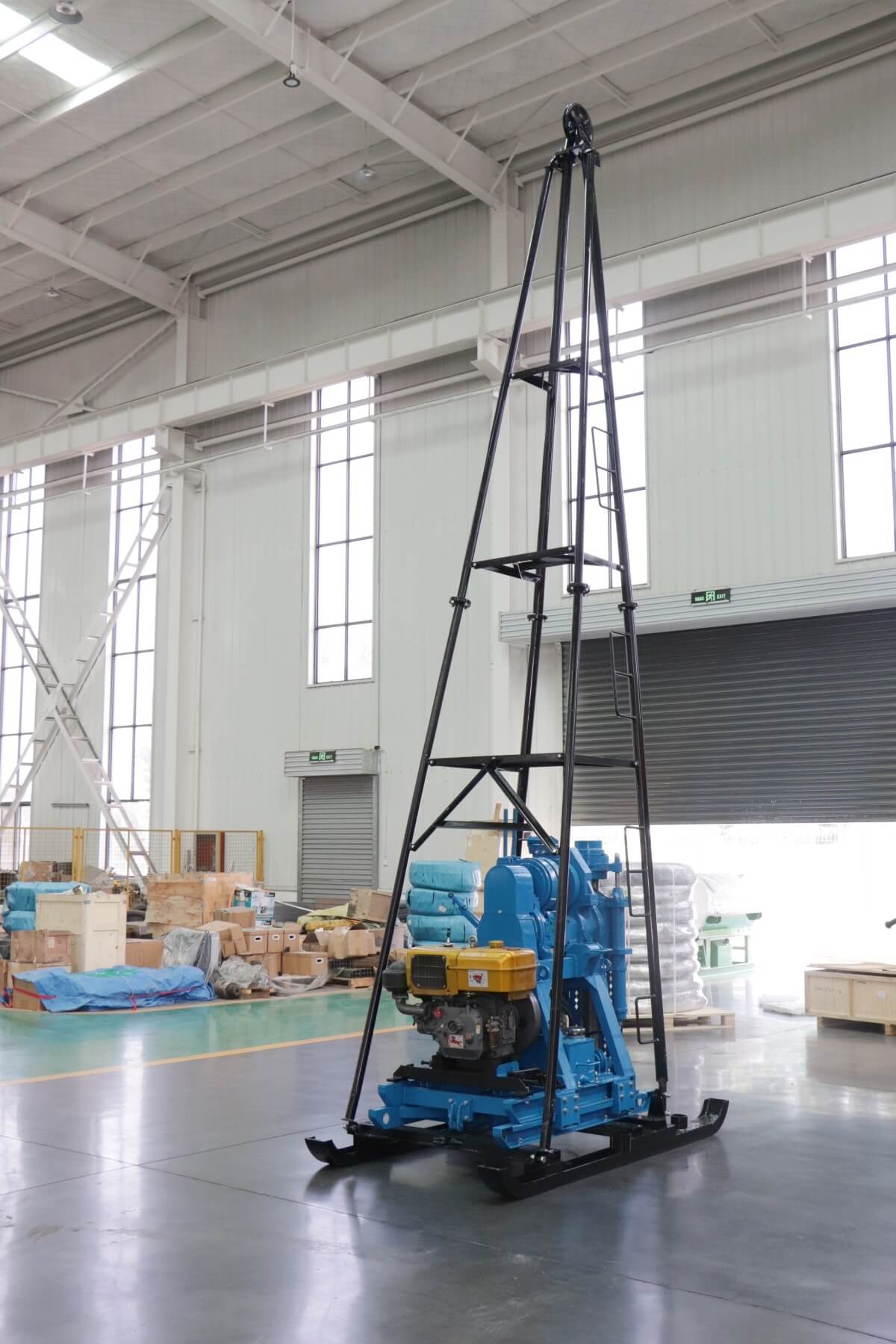
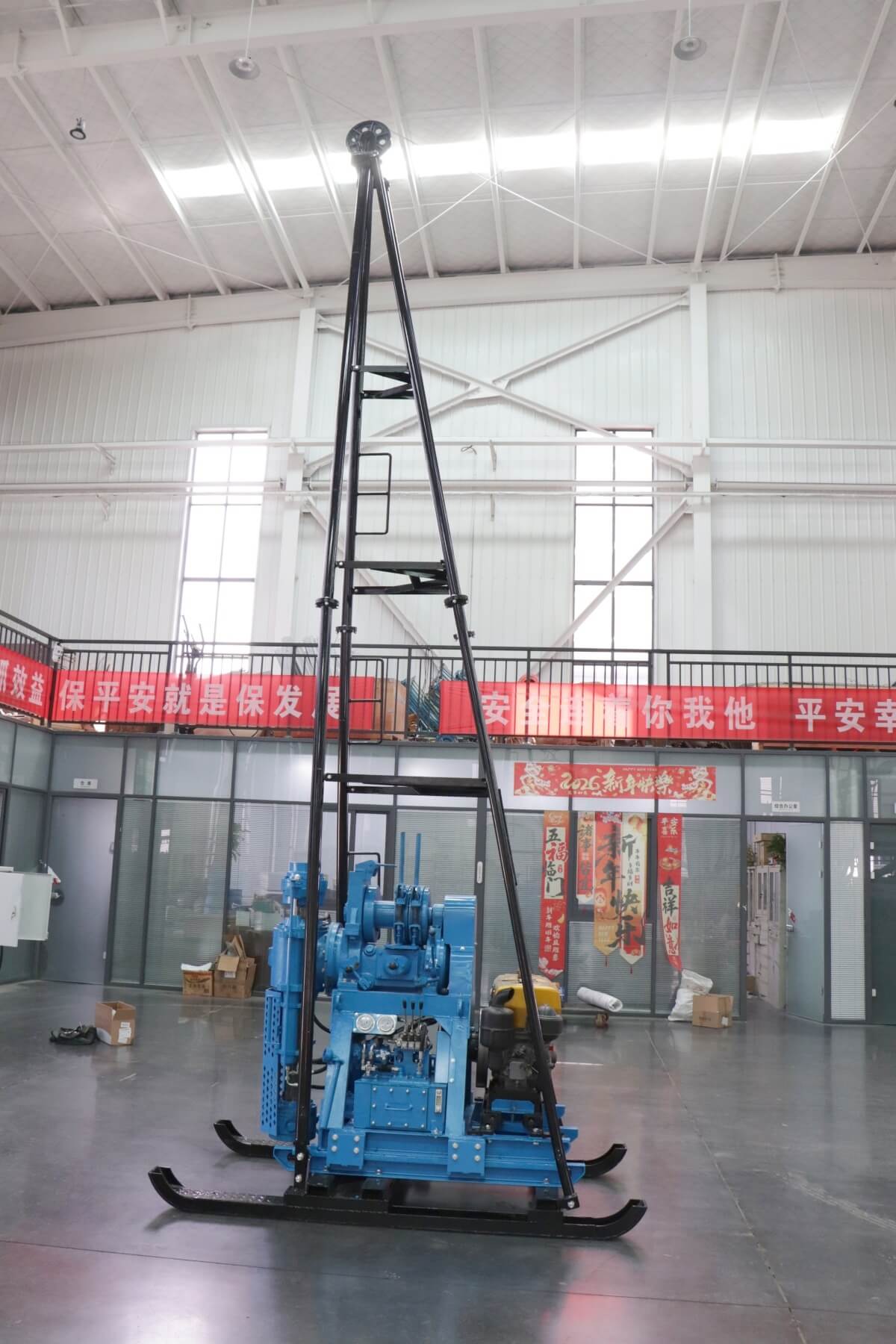
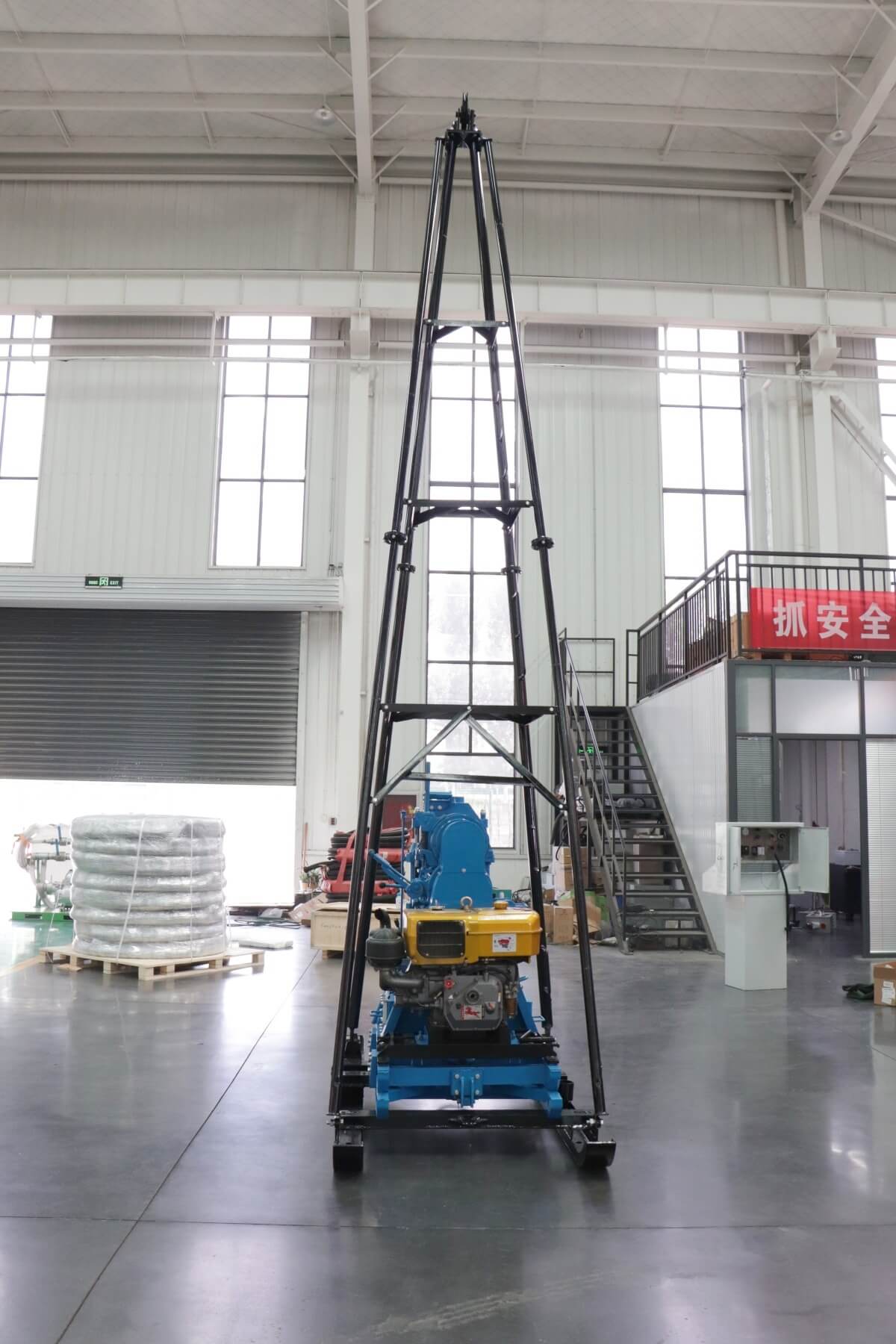
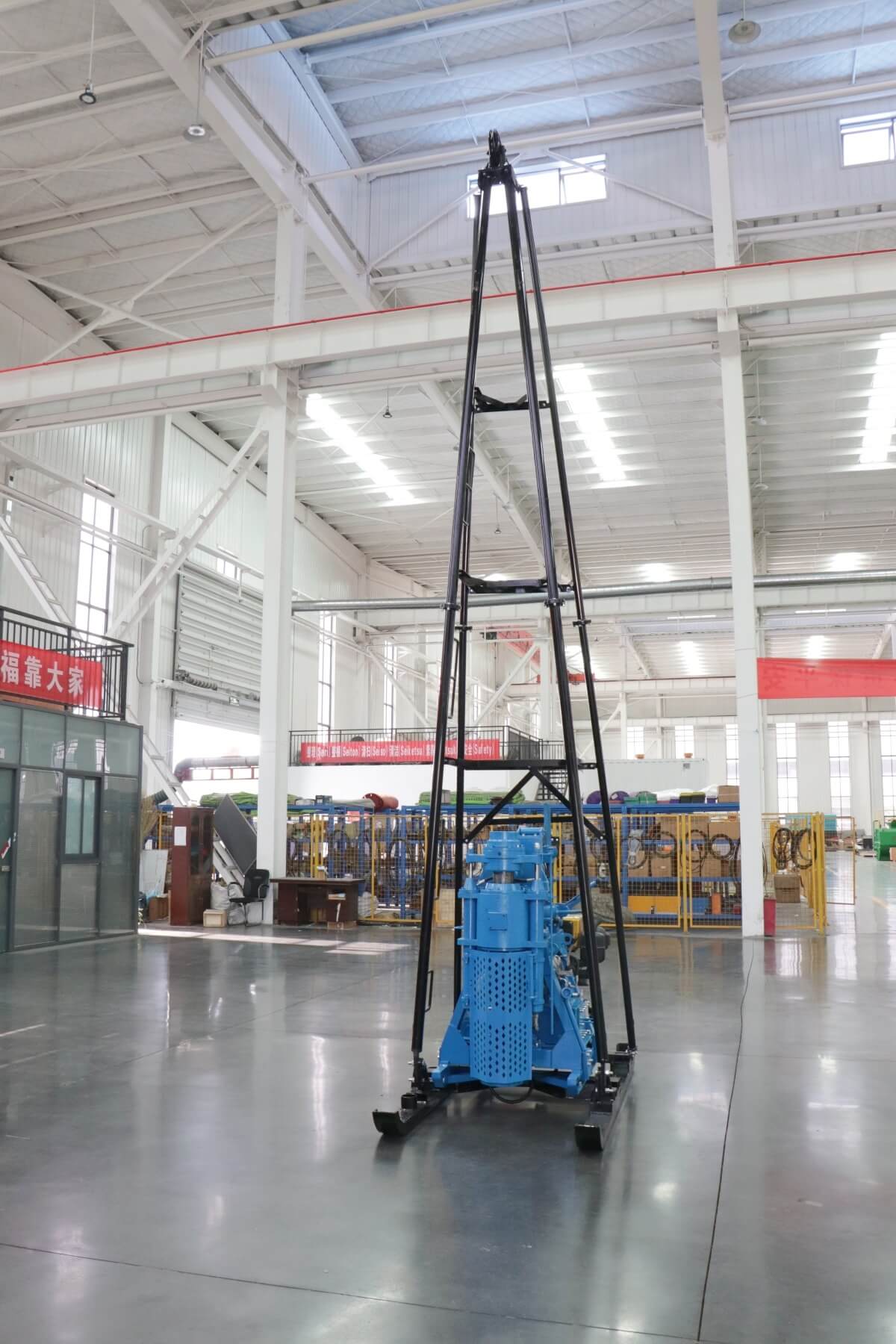
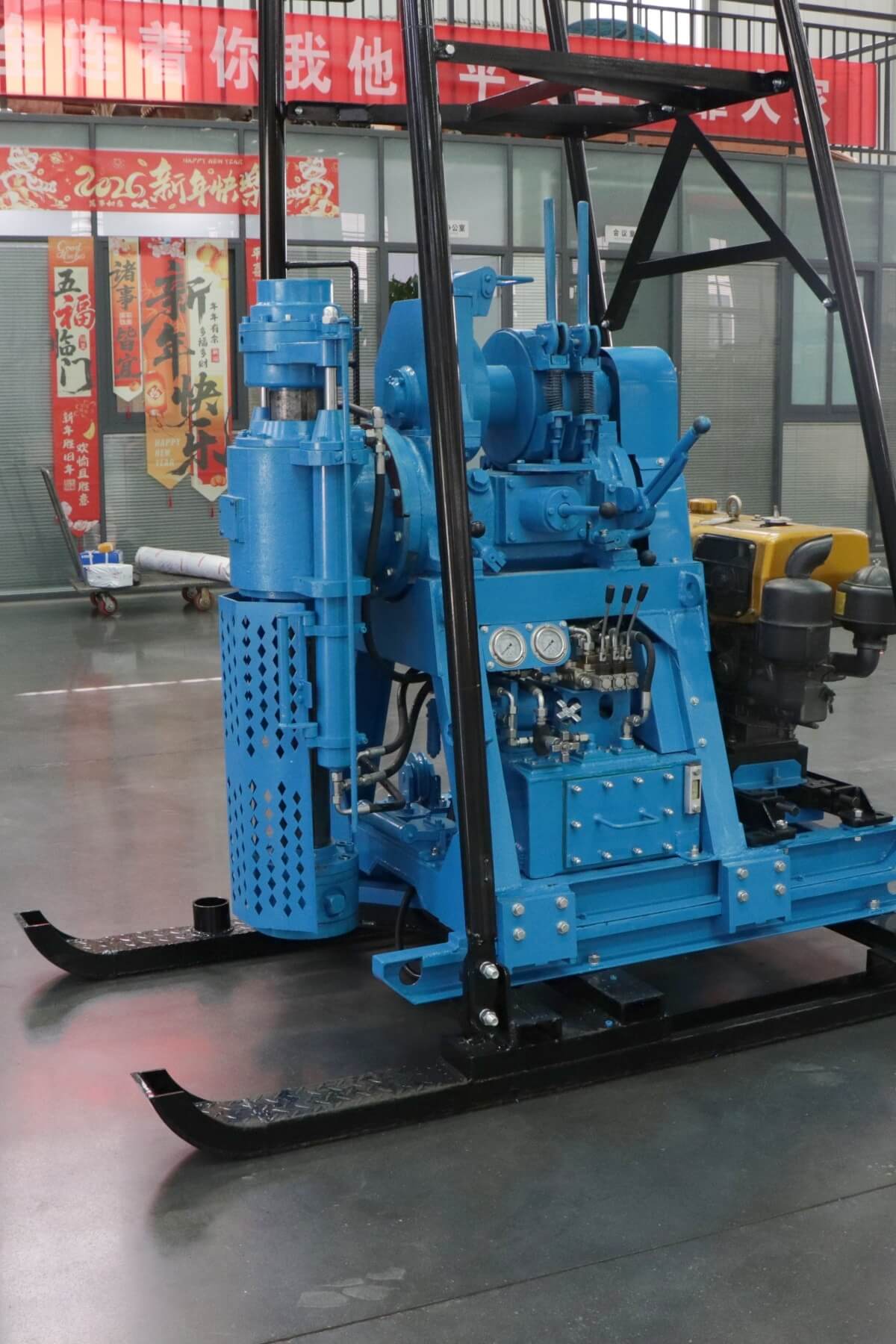
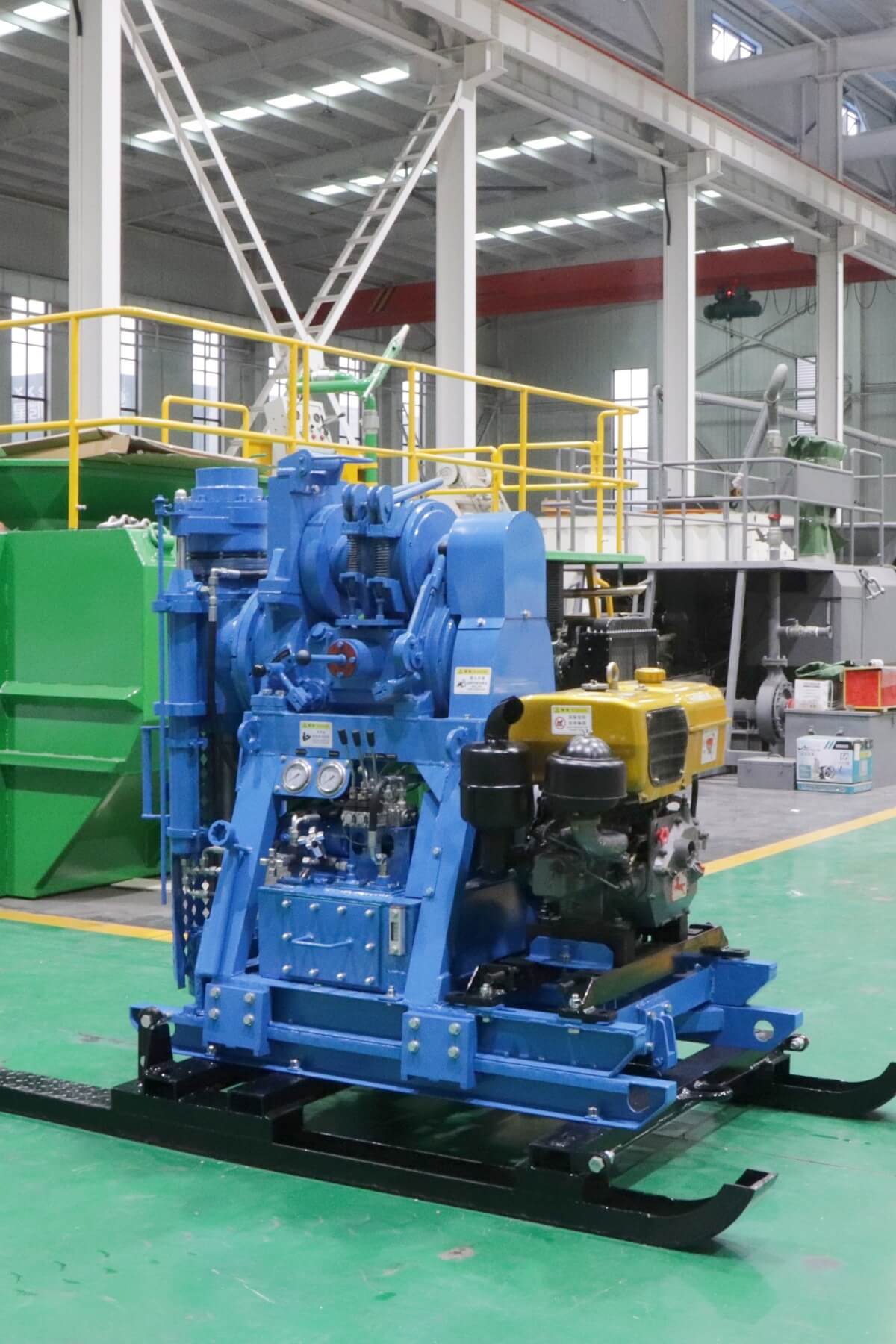
Our LE90R weighs 1,300 kg with skid and engine, and the mast is a separate 170 kg assembly. That mast is 5,750 mm from ground to the crown sheave, which makes it a freight item in its own right: it travels on a long truck bed, inside a container with little margin, or in sections. Which of those applies should be settled when the machine is ordered, because it changes both the packing and the vehicle that meets it at the port.
What the machine eats in a week
A 15 HP engine is about 11 kW, and a small diesel at working load consumes roughly 0.2 to 0.25 litres per kilowatt-hour. That puts the figure at two to three litres an hour, or about 25 litres for a ten-hour shift. Over a three week programme, plan a drum rather than a stack of cans, and plan it per hole so that a difficult hole does not strand the last week.
Water is the second input and the one that stops work first. Flush is consumed as flow multiplied by time, so the honest way to plan is to take your pump’s rate and multiply it by the minutes each run takes. On most remote programmes the water figure, rather than the rig’s mass, is what limits how many holes a day are possible.
Hydraulic oil is the third. The reservoir holds 30 litres, and a leak on a remote site is not an inconvenience; it is a stoppage measured in days. Carry spare fluid and the two seals most likely to fail.
Altitude and heat take the power back
A naturally aspirated diesel loses approximately three per cent of its output for every 300 m above about 1,000 m. At 2,500 m that is around fifteen per cent, which turns a 15 HP engine into something nearer 12 or 13 HP.
The practical consequence is that a machine sized comfortably at sea level becomes marginal on a plateau, and the symptom is not an obvious failure. It is slower penetration, a driller leaning on the feed to compensate, and core that suffers for it. If the site sits high, size the machine for the altitude rather than for the brochure.
Heat is the companion problem. The hydraulic system holds 30 litres, and in high ambient temperatures that oil works harder. Shade, a check on oil temperature and clean cooling surfaces cost nothing and prevent the most common mid-shift stop.
Bring two of what you cannot get
Lead time to a remote site is measured in weeks. That changes the spares decision from a cost question into a schedule question: the price of a spare part is trivial next to the cost of a stopped programme.
Three categories are worth carrying. The wear items that are consumed by normal work, such as chuck jaws and core lifters. The consumables that run out at the worst moment, meaning bits and casing shoes in the sizes actually specified. And one critical assembly whose failure would end the programme, chosen by asking the factory which single part is most likely to stop the machine.
Setting up where there is no pad
A drag skid needs level ground and something to anchor against. On a slope, the rig is levelled and the mast brought plumb, and the accuracy of that last step is easy to underestimate.
A one degree error over a thirty metre hole puts the bottom about half a metre off line. On a shallow investigation that is noise; on a programme where two holes must intersect a target, or where a hole has to stay inside a lease boundary, it changes the answer. A spirit level on the mast and a check before each rod is cheap insurance, and a portable diamond drill for remote sites is only as accurate as its setup.
When portability is the wrong priority
If the site is remote but the programme is deep, a larger rig moved by helicopter or by road in a few loads can be cheaper than many shallow holes drilled by a small one. Portability buys access, and access is only worth paying for when the alternative is no hole at all.
What to send with an enquiry
The access chain with the weight and dimension limit at each link, the site altitude and ambient temperature range, how fuel and water reach the collar, the depth and ground conditions, and whether one machine has to cover several sites. Send these to sales1@leadcrete.com.